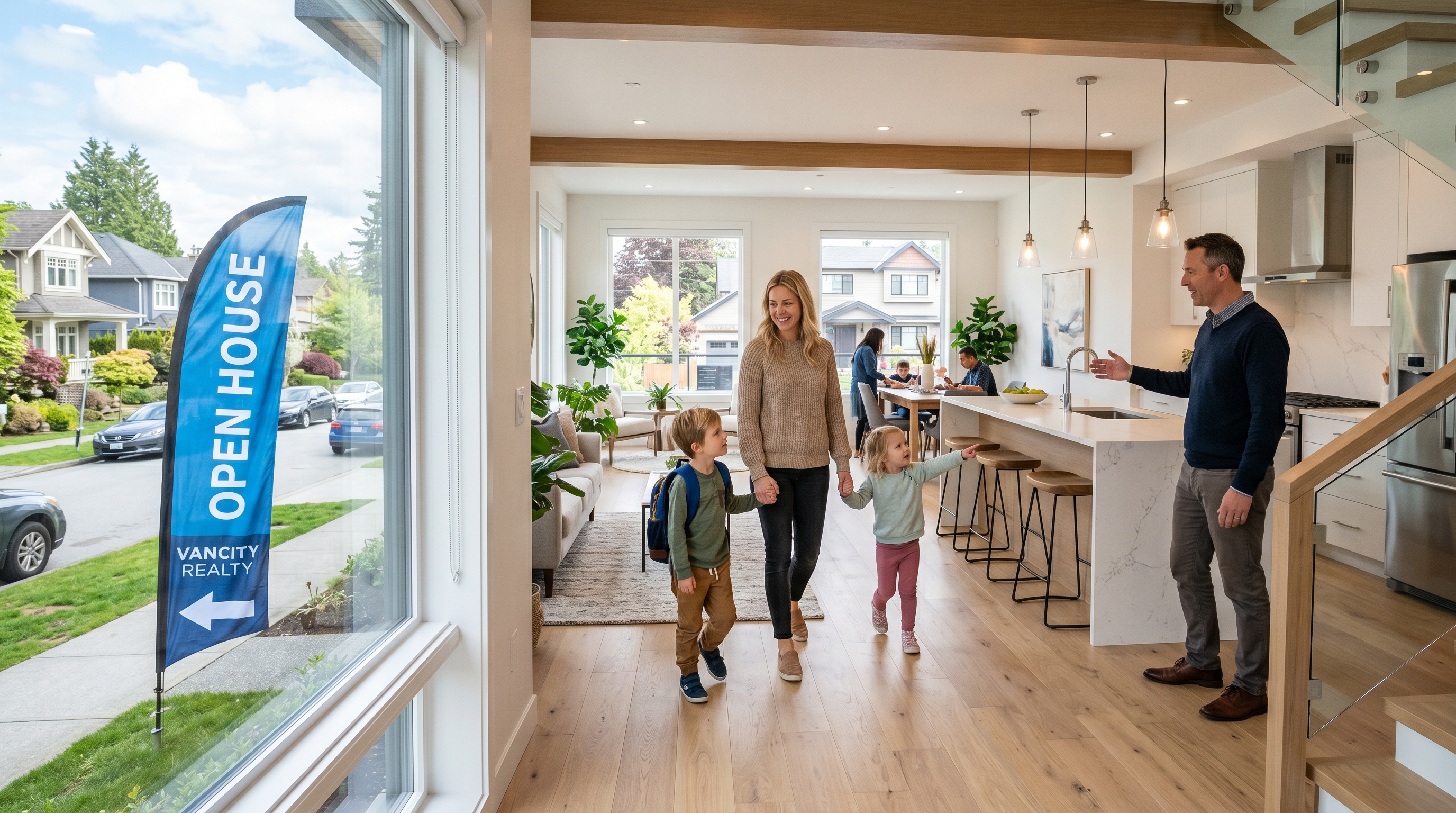
Reading Multiplex Listing Photos: What the Wide Lens Hides
How to read multiplex listing photos before you book a showing: lens tricks, staging, the rooms that are missing, and what BC's rules say about accuracy.
By MultiLiving Editorial · September 21, 2026
The first thing you will ever know about a multiplex home for sale is a photograph. Before the floor plan, before the price per square foot, before the strata documents, there is a picture of a kitchen island with two stools and a bowl of lemons, and it is doing a job. This is an opinion piece about how to read those pictures so that the showing does not disappoint, and so that you notice what the photographer decided not to show you.
We look at hundreds of listing photo sets a month, on this site and on the boards we watch, and the patterns repeat. None of what follows accuses anyone of anything. Listing photography is a craft with conventions, and once you know the conventions you can read through them.
The lens is the whole trick
Almost every listing interior in Metro Vancouver is shot with a wide-angle lens. The lens is chosen because it fits the whole room into one frame from the corner, and the side effect is that it stretches the foreground and pushes the far wall away. A living room that measures 10 feet by 14 feet photographs like a room twice that size, and a hallway that two people cannot pass in looks generous.
This matters more in a multiplex home than in a detached house, because multiplex homes are narrower. A side-by-side home in a row of four is often 16 to 20 feet wide inside, and the whole design lives or dies on how that width is used. The wide lens erases the question. Our guide to reading a multiplex floor plan exists because the plan is the only document that puts the width back.
So our first rule: look at the floor plan before you look at a single photo, and if there is no floor plan with dimensions, ask for one before you book a showing. A listing that will not produce dimensions is asking you to buy the photograph.
Read the set, not the picture
A listing photo set is edited, and the editing is where the information is. Here is what we look at, in order.
Count the rooms. A three-bedroom home should show three bedrooms. If the set shows the primary bedroom twice from different angles and the other two bedrooms once each, or not at all, the second and third bedrooms are small. If there is no photo of a bathroom, the bathroom is dated or windowless or both.
Look for side windows. A middle home in a row of four has windows at the front and the back and nowhere else. The set will show you the front windows and the back windows, in daylight, with the curtains open, and you will come away with an impression of a bright home. Count how many photos show a wall with a window in it and how many show a wall without. Then check the site plan to see whether your home is a middle or an end.
Look for the front door from outside. Multiplex listings love the rendering of the whole building from across the street. What they show less often is your door, at eye level, with the neighbour's door beside it. That photo tells you how private the entry is, whether there is a covered spot for a stroller, and how close the neighbour's mail is to yours. If it is missing, ask.
Look for the view out of the windows. A photo composed so that every window is a white rectangle has been exposed for the room, which is normal, and it also hides the view. What is out the back window of a Vancouver multiplex home is often the back of the next building or a shared walkway. Ask for a photo taken from the window, looking out.
Look for the shared wall. In a stacked home, one household lives above another. In a side-by-side home, the shared wall is one of the two long walls. Neither shows up in a photograph, and neither is mentioned in most listings. Our post on sound and privacy in a multiplex explains what to listen for at the showing; the photos will not tell you.
Staging, and what small furniture does
Staged homes are furnished with pieces chosen to make the room read big. A double bed in a room labelled "primary," a loveseat where a sofa would go, a two-seat table where a family of four would eat. None of this is wrong; it is how staging works. It does mean your furniture will not fit the way the photos suggest.
The test is to measure your own bed and sofa and lay them onto the floor plan. If the primary bedroom is 10 feet by 11 feet, a king bed with two bedside tables fills it. If the living room is 11 feet wide and the photo shows a sectional, the sectional is smaller than yours.
Virtual staging, where furniture is added to a photo of an empty room with software, has become common in pre-sale and newly completed listings. We think it should be labelled every time, and a listing that says "virtually staged" in the caption is being straight with you. One that does not is asking you to guess.
Renderings, and the gap between the picture and the site
Pre-sale listings run on renderings, because there is nothing to photograph yet. Renderings are honest about the design and silent about the surroundings: the power pole at the front, the neighbour's garage at the back, the slope of the street. Our post on what a pre-sale walkthrough covers explains what you can and cannot see before completion.
Two things to do with any rendering. First, find the address on a map and look at the street view from the same angle as the rendering; the difference between the two images is what the developer left out. Second, ask which home in the building the rendering depicts, because a rendering of the corner home does not tell you what the middle home's light is like.
What BC's rules say about accuracy
British Columbia regulates real estate advertising, and the standard is plain. In the words of BCFSA, the provincial regulator, "An agent's listing must not contain a false or misleading statement or misrepresentation." The same page gives an example that fits multiplex buyers exactly: a listing that promises a "mortgage helper" suite should prompt you to verify the legal status of the suite and its ability to produce rental income.
Our reading of where the line sits: a wide lens is a lens, and no regulator treats it as misleading. A photo set that leaves out the fourth wall is closer to the line but still an editorial choice. A photo that has been altered to remove a power line, or a caption that calls a den a bedroom, or a suite described as rental income when it cannot legally be rented, is over it. If you think a listing crossed the line, BCFSA has a complaints process, and the regulator publishes its decisions.
The practical point is that the rules protect you against lies, and photography is rarely a lie. It is a frame. Your job is to ask what is outside it.
The three questions to ask before you drive across town
We have watched buyers spend a Saturday driving to three showings that a two-minute message would have ruled out. Before you book, send the listing agent these:
- Can you send the floor plan with room dimensions, and the site plan showing which home this is in the building?
- When were the photos taken, and are any of them virtually staged or renderings?
- Which walls are shared with a neighbour, and is there a window on either side wall?
An agent who answers all three quickly has a home worth seeing. An agent who answers none has told you something too.
At the showing, undo the lens
Bring a tape measure. Measure the living room's width and the primary bedroom's width, and write them on the listing printout. Stand in the corner where the photographer stood and look at the room, then stand in the middle and look again. The second view is the one you will live in.
Open the curtains the photographer closed and close the lights the photographer turned on. Listen for the neighbour. Walk to the front door from the street and back. Our guide to what to expect at a multiplex open house has the full checklist; this post is about the ten minutes before you go.
A note on our own listings
We run a marketplace, and we ask the developers and agents who list here for floor plans with dimensions, site plans, and a photo of the building from the street. Not every listing has every one of those, and when one is missing we say so on the page instead of filling the gap with a rendering. If you find a listing on MultiLiving where the photos raise a question this post would ask, tell us and we will get the answer from the seller.
What this comes down to
- Nearly every listing interior is shot with a wide-angle lens from the corner, which makes narrow rooms look wide. Read the floor plan first and the photos second.
- Edit the set in your head: count the bedrooms shown, look for side windows, look for your front door from outside, look for the view out of the windows, and look for the shared wall.
- Staging uses small furniture. Lay your own bed and sofa onto the plan.
- Renderings are honest about design and silent about surroundings. Check the street view from the same angle.
- BC's rule is that a listing must not contain a false or misleading statement or misrepresentation. A lens is not a lie; an altered photo or a mislabelled room is.
- Ask three questions before you book: dimensions and site plan, photo date and staging, shared walls and side windows.
Questions buyers ask about listing photos
Why do rooms look bigger in listing photos than in person?
Because they are shot with a wide-angle lens from the corner of the room, which stretches the foreground and pushes the far wall away. The effect is strongest in narrow rooms, which is why multiplex homes disappoint at showings more often than detached houses do.
How can I tell if listing photos have been edited?
Look for windows that are perfectly exposed while the room is bright, skies that are the same blue in every exterior shot, and lawns greener than the neighbours'. Ask the agent directly whether any photo has been altered or virtually staged. Under BC rules, a listing must not misrepresent the property.
What is virtual staging and should it be disclosed?
Virtual staging adds furniture to a photo of an empty room with software. It is common in new and pre-sale listings. In our view it should be labelled in the caption every time; if a listing does not say, ask, and ask for an unstaged photo of the same room.
What should I look for in a multiplex listing's photos specifically?
Side windows, which tell you whether the home is a middle or an end; your own front door from outside; the view out of the back windows; and any photo that shows where the shared wall is. The absence of these photos is as informative as their presence.
Why is the floor plan more important than the photos?
The floor plan carries dimensions, and dimensions are the one thing a lens cannot change. Lay your own furniture onto the plan before you book. A listing with no floor plan, or one without room sizes, should get a request for one before a showing.
Are renderings of pre-sale homes accurate?
Renderings are accurate about the design and silent about the surroundings: power poles, neighbouring garages, the slope of the street. Compare the rendering with a street-view image from the same angle, and ask which home in the building the rendering depicts.
What does BC's regulator say about misleading listings?
BCFSA, which regulates real estate professionals in BC, states that an agent's listing must not contain a false or misleading statement or misrepresentation, and advises buyers to verify claims such as a suite's legal status before relying on them. The regulator publishes its disciplinary decisions.
Can I complain about a misleading listing?
Yes. BCFSA accepts complaints about licensed real estate professionals and publishes its decisions. Before you complain, gather the listing as it appeared, the photos, and what you found at the showing, so the difference is documented.
What should I ask the agent before booking a showing?
Three things: the floor plan with dimensions and the site plan showing which home this is; when the photos were taken and whether any are virtually staged or renderings; and which walls are shared and whether the side walls have windows. Quick answers mean a home worth seeing.
Do listing photos show the shared walls in a multiplex?
Almost never. A photo cannot show that a wall is shared, and most listings do not mention it. Use the site plan and strata plan to identify the shared walls, then at the showing stand against each one and listen for the neighbour.
Why do some listings have so few photos?
Sometimes the home is a pre-sale with nothing to photograph yet, and sometimes the missing rooms are the ones that would not help the listing. A set with no bathroom, no second bedroom and no exterior door is a set to ask questions about.
Should I bring a tape measure to a showing?
Yes. Measure the living room's width and the primary bedroom's width and write them on your printout. Those two numbers, compared with your own sofa and bed, tell you more about whether the home works for your family than any photograph will.
Look at the plan first, then come and look at the home
The photos get you to the listing. The plan and the site plan tell you whether to book. If a multiplex home on this site has caught your eye, open its floor plan on the property page before you do anything else, or ask us for the dimensions, the site plan and the photo date on any home you are considering.
Clicking “Share on LinkedIn” opens the suggested post text so you can edit it before sharing.