How Prefab Keeps a Multiplex Build on Schedule
Why prefab multiplex builds stay on schedule better than traditional ones: parallel work, indoor building, and fewer weather delays. A plain-language look for BC families.
By MultiLiving Editorial · August 10, 2026
Delays are the quiet cost of building. Every extra month adds financing costs and stress, and pushes back the day your family moves in. One of the strongest reasons to choose prefab is that it keeps a multiplex build on schedule. Here is why, in plain words.
Two slow steps become one
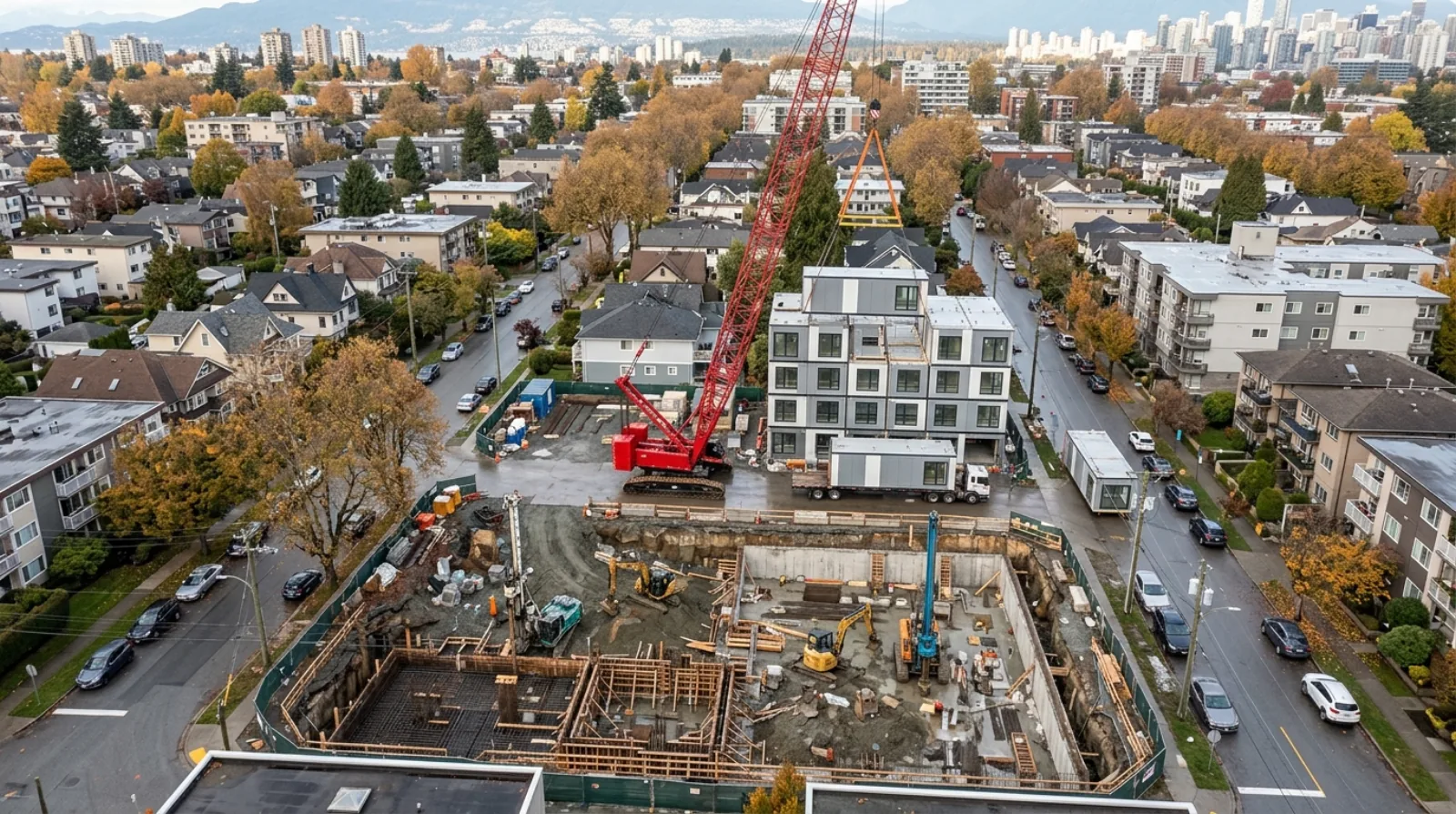
In a traditional build, the work happens in sequence: prepare the site, then frame, then finish. Each step waits for the one before it. With prefab, the factory builds your home at the same time your lot is prepared. Two slow steps run side by side instead of one after the other. That overlap is the single biggest reason prefab finishes sooner. We show the full sequence on our timeline page.
Building indoors removes weather delays
A traditional build is exposed to rain, cold, and wind, which is a real issue in Greater Vancouver. Wet weather stops outdoor framing and can damage materials. A factory build happens indoors, on a schedule the weather cannot disrupt. Your materials stay dry and the crew keeps working regardless of the forecast.
Factory work is more predictable
A factory builds homes the same way every time, with the same tools and steps. That repeatability makes the schedule more reliable than a one-off outdoor build, where each site brings surprises. When the factory says a module will be ready on a date, that date holds up better than a weather-dependent site estimate.
Fewer trades waiting on each other
On a traditional site, trades often wait for each other: the framer finishes before the electrician starts, and so on. Delays ripple down the chain. In a factory, the work is organized so these steps flow smoothly, which removes a common source of lost time.
What prefab does not speed up
To be fair, prefab does not shortcut everything. Design, permits, and approvals take their usual time, and permits are often the longest single step in Greater Vancouver. Prefab also asks you to lock the design early, since changes are hard once the factory starts. So prefab keeps the build on schedule, but the paperwork still runs at its own pace. See prefab vs traditional for the balanced view.
Why the schedule matters for your budget
A shorter, more reliable build is not just convenient. Every month of construction financing costs money, so finishing sooner lowers your total. It also means you can move in, or start collecting rent, earlier. On a multiplex with several homes, that adds up. Our cost guide explains how time ties into the budget.
What this comes down to
- Prefab overlaps site prep and building, so two slow steps run at once.
- Building indoors removes weather delays, which matter in Greater Vancouver.
- Factory work is repeatable and predictable, so dates hold up better.
- Permits and design still take their usual time, so plan those early.
Want a build that stays on schedule? Tell us your plan on our contact page and we will match you with BC prefab builders who can map out realistic dates, or start with our full prefab multiplex guide.
Frequently asked questions
Why is prefab faster than traditional building?
Because the factory builds your home while your lot is prepared at the same time, so two slow steps overlap. Building indoors also removes weather delays.
Does prefab really stay on schedule better?
Yes, for the building stage. Factory work is repeatable and protected from weather, so dates are more reliable than a one-off outdoor build. Permits still take their usual time.
How much time does prefab save?
The factory stage can turn months of on-site work into weeks, plus a day or two to set the modules. The full project still takes many months once permits are included.
Does weather affect a prefab build?
Much less than a traditional build. The main construction happens indoors. Site work and delivery can still be affected, but the core build is protected.
What is the longest part of a prefab project?
Usually permits and approvals, which can take several months in Greater Vancouver and are similar for prefab and traditional builds.
Why do I have to lock the design early?
Because once the factory starts building your modules, changes are hard and costly. Settling the design early keeps the schedule smooth.
Does a faster build save money?
Yes. Fewer months of construction financing means lower interest costs, and you move in or start collecting rent sooner. See our cost guide.
Can delays still happen with prefab?
Yes, mainly in permits, site work, or delivery access. But the core building stage is more reliable, which removes a big source of delay.
Is a bigger multiplex much slower to build?
Not proportionally. The factory can build modules in parallel, so a fourplex is not four times slower than a duplex. Permits and site work are similar regardless of size.
How do I get a realistic schedule?
Tell us your lot and plan on the contact page. We will match you with BC builders who can give you dates for each stage.
Clicking “Share on LinkedIn” opens the suggested post text so you can edit it before sharing.