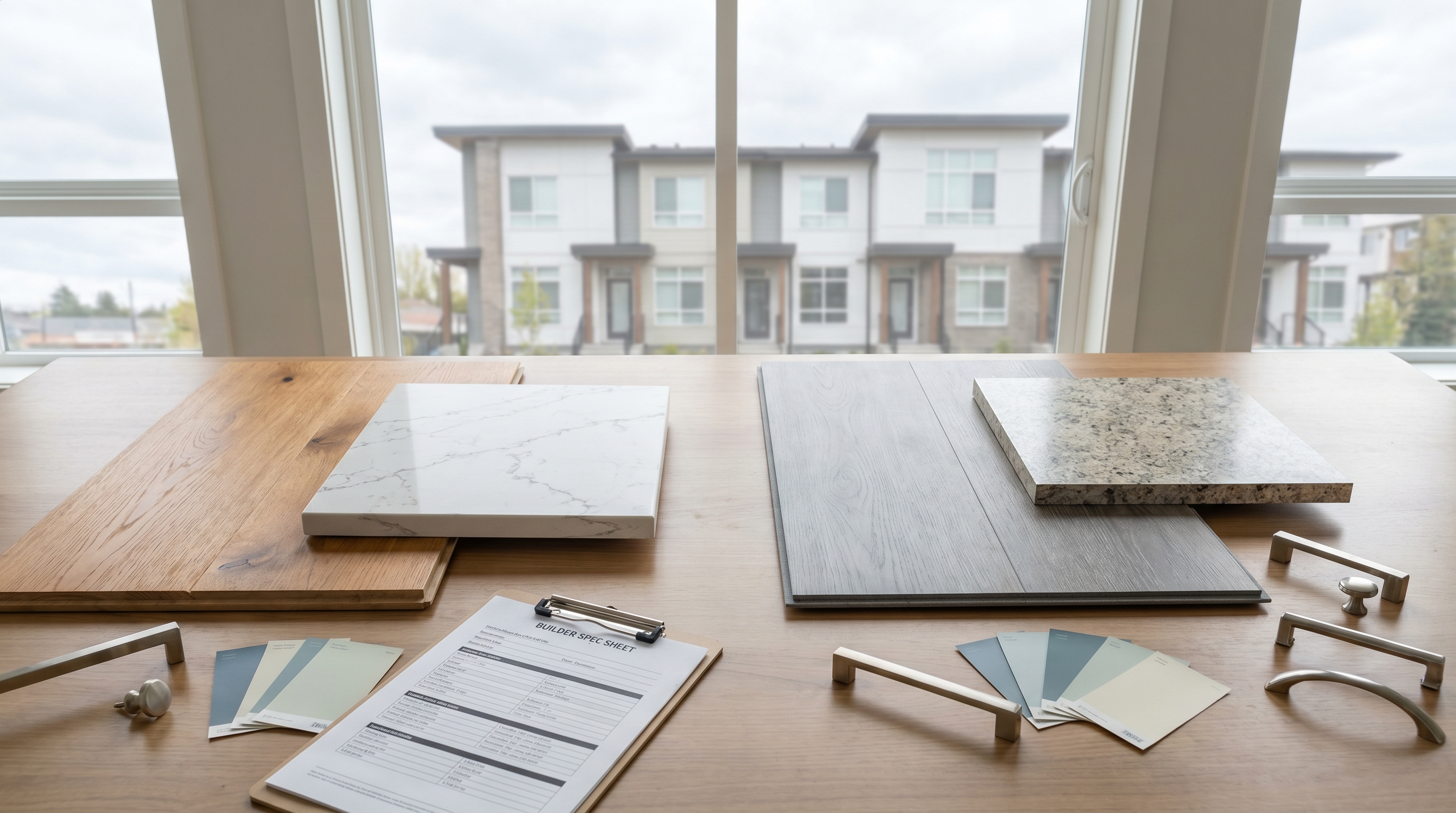
What's Actually Included in a Brand-New Multiplex Home (and What Costs Extra)
What comes standard in a new BC multiplex home (appliances, EV-ready parking, the 2-5-10 warranty), what is usually an upgrade, and what to confirm in writing.
By MultiLiving Editorial · August 15, 2026
A couple we worked with last year fell for a show suite in East Vancouver: motorized blinds, a fridge with a screen in the door, closets fitted out like a boutique. They assumed that was the home they were buying. It was not. The blinds were an upgrade, the fridge was the display model, and the closet organizers belonged to the staging company. None of it was in the contract, and the contract is the only thing that counts.
Nobody had lied to them. This is simply how brand-new homes are sold everywhere, and buyers who know the pattern shop calmly while everyone else gets surprised at the walk-through. So here is the honest map: what typically comes standard in a new BC multiplex unit, what usually costs extra, and exactly what to confirm in writing before you sign. We wrote separately about how to read a finish sheet line by line; this post is about the more basic question underneath it, which is what you actually get.
The one rule that governs everything
If it is not written in your purchase contract or the documents attached to it, it is not included. Not the listing photos, not the show suite, not something a salesperson said on a Sunday. For a pre-sale purchase in BC you will also receive a disclosure statement, a legal document describing the home and the project, and it outranks every conversation you have had. Read it, and have your lawyer read it. Everything else in this post is detail under that rule.
What almost always comes standard
Every project is different, but across the new multiplex homes we list and tour in Greater Vancouver, these are the normal inclusions. Treat this as a checklist of things to confirm, not a promise.
- Kitchen appliances. A fridge, range, dishwasher, and hood fan are included in nearly every new multiplex unit we see, usually as a named appliance package. The contract should list brands and model numbers, not just the word 'appliances'. If the unit contains a lock-off suite, confirm the suite's appliances are listed separately.
- Washer and dryer. In-unit laundry is standard in this kind of home. Stacked units are the norm; confirm whether yours is stacked or side by side if that matters to you.
- Heating, and often cooling. Many new multiplex units come with a heat pump, which both heats and cools. But not all do, and summer upstairs bedrooms are where buyers feel the difference. Ask the direct question: does my unit cool itself, and is that in the contract?
- The 2-5-10 warranty. Every brand-new home in BC carries mandatory 2-5-10 home warranty insurance under the Homeowner Protection Act, regulated by BC Housing: two years on labour and materials, five years on protection against water getting in, and ten years on the structure. It comes with the home, you do not pay separately for it, and we cover what it does and does not do in our guide to the 2-5-10 warranty.
- An EV-ready parking stall, in Vancouver. Vancouver's parking rules require every resident parking stall in a new home to include an energized outlet capable of Level 2 charging, per the City of Vancouver's parking bylaw. Note the wording: the outlet is required, the charger you plug into it usually is not. Other cities have their own rules, so outside Vancouver, ask.
- Basic landscaping. The yard, walkway, and fencing that appear in the project's plans are normally finished before you move in, because the project cannot close out without them. What counts as 'finished' varies a lot, which is why it belongs on your written-confirmation list below.
- Paint, flooring, and fixtures at the standard level. The unit arrives painted, floored, and lit as described in the finish schedule. Standard means the base version of each item, not the version you saw staged.
What usually costs extra
Now the other column. None of these are scams; they are simply upgrades, and sellers price them separately because plenty of buyers do not want them.
- Window coverings. This is the one that surprises almost everyone. Blinds and curtains are usually not included in a brand-new home, and a full unit's worth can run into the thousands. Budget for it, or negotiate it in.
- The EV charger itself. The wall outlet is required in Vancouver; the charging unit that hangs on the wall is typically your purchase, either as an upgrade from the seller or bought on your own after completion.
- Appliance upgrades. The show suite often displays the upgraded package. The gap between standard and upgraded appliances is real money and real difference; decide on paper, not in the show suite lighting.
- Closet organizers and built-ins. Staging, usually. Standard is often a single shelf and rod. If the closet systems matter to you, price them as an upgrade or plan an aftermarket install.
- Extra landscaping, decks, and privacy screens. The base yard is included; the dream yard is not. Side-yard fencing between units is usually included, but confirm who maintains what once the strata exists.
- Second parking, storage lockers, and bike room spots. Some multiplex projects include one stall per home and sell or assign anything beyond that. Confirm what is legally attached to your unit versus assigned informally.
Our opinion, after watching many buyers go through this: take the standard appliances, spend the upgrade money on cooling if it is not already included, and buy your own window coverings after move-in. Comfort beats finishes, and blinds are cheaper outside the contract than inside it.
The show suite is marketing, and that is fine
A show suite exists to help you imagine living there, and it works. Just translate it correctly. Assume every visible item is either an upgrade or staging unless the contract says otherwise. Good sellers will hand you a list of exactly which show suite features are standard; the fact that you asked tells them you are a serious buyer, not a difficult one. If a seller cannot or will not produce that list, treat it as information.
What to confirm in writing before you sign
Print this list and work through it with the seller's team and your lawyer. Every item should end up either in the contract, in the disclosure statement, or in a written addendum signed by both sides.
- The appliance list with brands and model numbers, for the main home and any lock-off suite.
- Whether the unit includes cooling, and what kind.
- Window coverings: included or not, and on which windows.
- The parking stall assigned to your unit, its EV outlet, and any storage or bike space.
- What landscaping and fencing will be complete at possession, and who maintains each piece afterward.
- Which show suite items are standard and which are upgrades, as a written list.
- The price and deadline for any upgrade you want, because upgrade windows close early in a project's life.
- Whether GST is included in the quoted price or added on top.
- The estimated monthly strata fee and what it covers.
- The warranty provider's name and how to make a claim after you move in.
The walk-through before you get the keys
Shortly before completion you will do a formal walk-through of your actual unit, usually called a deficiency inspection. You and the seller's representative list everything unfinished, scratched, or wrong: a chipped counter, a door that does not latch, a missing screen. The list gets signed, and the items get fixed under the warranty process. Take your time in there. Open every cabinet, run every tap, test every window. An hour of patience at the walk-through saves months of email afterward, and anything you catch in writing is protected. This is also the moment you will be glad the appliance models are in your contract, because you can check what was delivered against what was promised.
What this comes down to
- Only the contract and disclosure statement count. Photos, show suites, and conversations do not.
- Normally included: kitchen appliances, washer and dryer, heating, standard finishes, base landscaping, and in Vancouver an EV-capable outlet at every resident stall.
- Every brand-new BC home carries the mandatory 2-5-10 warranty regulated by BC Housing; it transfers with the home.
- Usually extra: window coverings, the EV charger unit, appliance upgrades, closet systems, and anything in the show suite that made you gasp.
- Get the standard-versus-upgrade list in writing, plus appliance models, cooling, parking, strata fee, and GST treatment, before signing.
- Use the deficiency walk-through seriously; it is your one structured chance to document what is wrong before the keys change hands.
Questions buyers ask us
Do new multiplex homes come with appliances?
Almost always, yes: fridge, range, dishwasher, hood fan, washer, and dryer are standard in nearly every new multiplex unit we list. The contract should name brands and model numbers. If it just says 'appliance package', ask for the detail in writing before you sign.
Are window coverings included in a new home?
Usually not, and it is the most common surprise at move-in. Blinds for a full unit can cost several thousand dollars. Either negotiate them into the purchase in writing or budget to buy your own after completion, which is often cheaper anyway.
Is air conditioning standard in new multiplex units?
Often but not always. Many new units include a heat pump, which cools as well as heats, and some include cooling only as an upgrade. Ask the direct question and get the answer in the contract. Upstairs bedrooms in August are where you will feel the difference.
What does the 2-5-10 warranty cover in plain terms?
Two years on labour and materials, five years on protection against water getting in, and ten years on the structure. It is mandatory on every brand-new BC home under the Homeowner Protection Act, regulated by BC Housing, and it stays with the home if you sell.
Is an EV charger included with my parking stall?
In Vancouver, every resident stall in a new home must have an energized outlet capable of Level 2 charging under the city's parking bylaw. The outlet is required; the charger unit you plug into it is usually your own purchase. Other cities set their own rules, so confirm locally.
Who pays for landscaping and fences?
The base landscaping and fencing shown in the project plans are normally finished by the seller before possession. Anything beyond that is yours. Once the strata exists, maintenance responsibilities follow the strata plan, so ask which pieces of yard belong to your unit and which are common.
What is a deficiency list?
It is the written record from your pre-possession walk-through: every scratch, gap, and unfinished item you and the seller's representative find in your actual unit. Signed by both sides, it becomes the punch list the warranty process works from. Be thorough; you only get one formal pass.
Can I still choose upgrades after signing a pre-sale?
Sometimes, but the window is short. Upgrade decisions like appliance packages and flooring are locked in early because ordering happens long before completion. If you want changes, ask immediately, get the price in writing, and expect a deadline rather than an open door.
Does the show suite match the unit I am buying?
Assume it does not. Show suites usually display upgraded finishes, staged furniture, and sometimes a different floor plan than yours. Ask for a written list of which displayed features are standard, and check your unit's actual plan and finish schedule against it before signing.
Are the light fixtures and blinds in the listing photos included?
Not necessarily. Photos are marketing, and staging companies bring their own fixtures, blinds, and decor. The contract and disclosure statement decide what stays. If a specific item in the photos matters to you, have it named in writing before you sign anything.
What happens if something breaks after I move in?
For the first two years, defects in labour and materials fall under your home warranty insurance, with water-related protection running five years and structural coverage ten. Normal wear and maintenance are excluded. Keep the warranty documents from closing and report problems in writing as soon as you find them.
Do I pay extra for parking or a storage locker?
Sometimes. Many multiplex homes include one stall per unit, but some projects sell second stalls or lockers separately, and some assign them informally. Confirm in writing which stall and storage space legally belong to your unit, because informal arrangements do not survive resale.
Is GST included in the advertised price?
Often not. Brand-new homes carry 5 per cent federal GST, and listings quote prices both ways. Some buyers qualify for rebates depending on price and use. Ask for the all-in number in writing so you are comparing homes on the same basis.
Bring us your contract questions
The difference between a happy move-in and a frustrating one is usually thirty minutes of written confirmation before signing. Browse the new multiplex homes we have listed to see real units and real inclusion lists, and when one catches you, talk to us before you sign. We will go through the inclusions, the upgrade sheet, and the questions above with you, in plain English, at no charge.