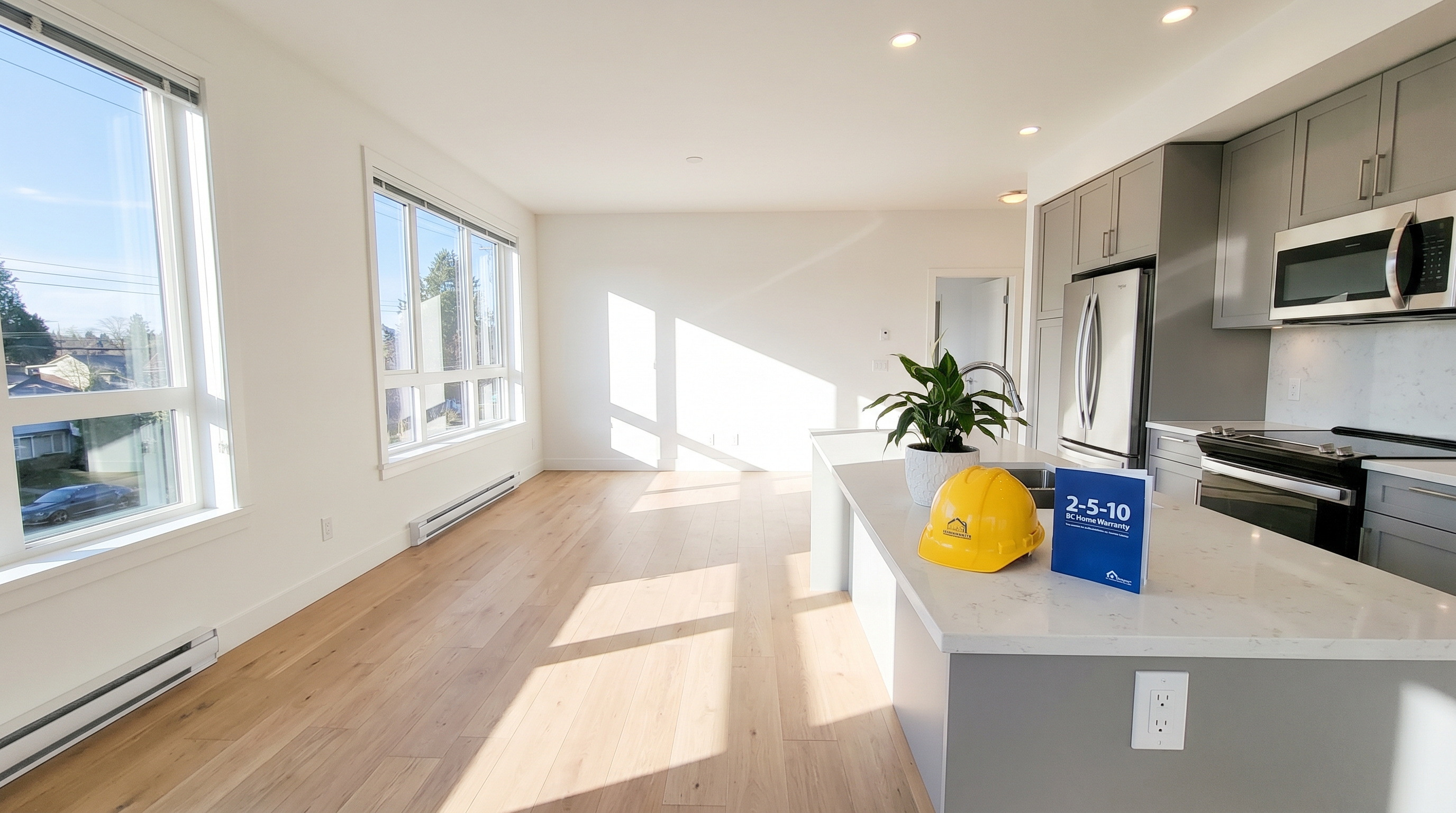
BC's 2-5-10 Home Warranty for Multiplex Buyers
How BC's mandatory 2-5-10 home warranty applies to brand-new multiplex units — what's covered, what isn't, and how to actually use it.
By MultiLiving Editorial · May 8, 2026
Every brand-new multiplex unit sold in BC comes with a mandatory 2-5-10 Home Warranty. Most buyers know it exists. Far fewer know what it actually covers, when it expires, or how to make a claim. Here's the full picture in 2026, written for the person who's about to take possession.
What 2-5-10 actually means
The numbers stand for the three coverage periods, all starting from the date you take possession:
- 2 years — Materials and labour. Anything that breaks or fails during normal use, including paint, fixtures, mechanical systems.
- 5 years — Building envelope (roof, exterior walls, windows, foundation waterproofing). Water getting in where it shouldn't.
- 10 years — Major structural defects (anything that affects the structural integrity of the building).
All three periods run in parallel from possession day. So at year 4, you're past the 2-year materials warranty but still inside the envelope and structural protections.
Who's behind the warranty (it's not the developer)
BC home warranties are issued by licensed third-party warranty providers, not by developers themselves. The major ones operating in 2026 include WBI Home Warranty, Travelers Canada (formerly Aviva), and a handful of smaller specialists. The developer pays for the warranty as part of the build; you, the buyer, are the beneficiary. (BC Financial Services Authority on home warranty)
Why this matters: even if your developer goes out of business, the warranty is still valid. The warranty company is on the hook regardless. This is one of the most underrated buyer protections in BC's system.
What's covered in the first 2 years
This is the broadest period and the one buyers use most often. Coverage includes:
- Materials and workmanship across the entire unit.
- Mechanical systems (heating, plumbing, electrical) under normal use.
- Fixtures and finishes (cabinets, countertops, flooring) where defective.
- Doors, windows, hardware where they don't operate properly.
It does NOT cover normal wear, owner damage, or things you've modified. If you replace a tap with a fancier model and it leaks, that's on you. If the original tap leaks 18 months in, that's a warranty claim.
What's covered in years 2 to 5: the envelope
Years 3 through 5 are about the building's exterior shell. This is where the real money is on warranty claims, because envelope failures are expensive to fix:
- Roof leaks.
- Window leaks (water getting past the seal).
- Wall penetration leaks (where things like vents go through the cladding).
- Foundation waterproofing failures.
These claims are usually strata-level (the whole building's envelope is one system), so the strata council files them on behalf of all owners. Your role is to flag issues to the strata as soon as you notice them.
What's covered in years 6 to 10: structural
This is the longest tail and the rarest claim. Structural defects are issues that affect the integrity of the building — things that risk the home's load-bearing function. Examples that have triggered claims historically: foundation settlement causing major cracks, framing failures, structural beam issues. These are uncommon in modern BC multiplex stock but the warranty exists for the worst-case scenario.
How to actually file a claim
Three rules, in order of importance:
- Notify in writing. Email the developer (in years 1–2) or the warranty provider (any time). Keep a paper trail.
- Don't fix it yourself first. If you repair the issue before the warranty company assesses it, the claim is usually denied.
- File before the period ends. A leak that started in year 4 but isn't reported until year 6 is much harder to defend.
For envelope and structural issues, the strata is usually the claimant; for in-unit issues in the first two years, you file directly. Your strata's property management company can guide you on the right path.
What's NOT covered
Some common surprises:
- Owner-installed fixtures (a chandelier you bought separately and hung yourself).
- Damage from leaving windows open during a Vancouver windstorm.
- Pests — generally an owner/strata responsibility, not a warranty item.
- Aesthetic settling cracks (drywall hairline cracks in the first year are normal and expected).
- Appliances under their own manufacturer warranty (fridge, dishwasher, etc.).
Common questions
Does the BC 2-5-10 warranty transfer to the next owner if I sell?
Yes. The warranty runs with the home, not the buyer. If you sell at year 4, the new owner gets the remaining envelope (year 5) and structural (year 10) coverage automatically.
Can the developer refuse to fix a warranty issue?
The developer can dispute, but the warranty provider is the ultimate backstop. If the developer won't act and you're inside coverage, escalate to the warranty company directly. Bring documentation of every email and phone call.
Do I need to do anything to keep my warranty active?
Not really. The warranty is in force from possession. Some warranties have annual maintenance recommendations (clean gutters, check seals) — failing to do these is rarely grounds for denial, but doing them is good practice anyway.
What this comes down to
BC's 2-5-10 warranty is one of the strongest buyer protections in any Canadian real estate market. Use it. Document issues early, file in writing, and remember that even if your developer disappears, the warranty stays with the home. For brand-new multiplex buyers, it's a major reason to buy new rather than resale.
Have specific warranty questions on a building you're considering? Browse our curated listings of brand-new multiplex homes across Vancouver and Burnaby on the properties page, or talk to a real person on our team who knows the buildings, the developers, and what's coming next.