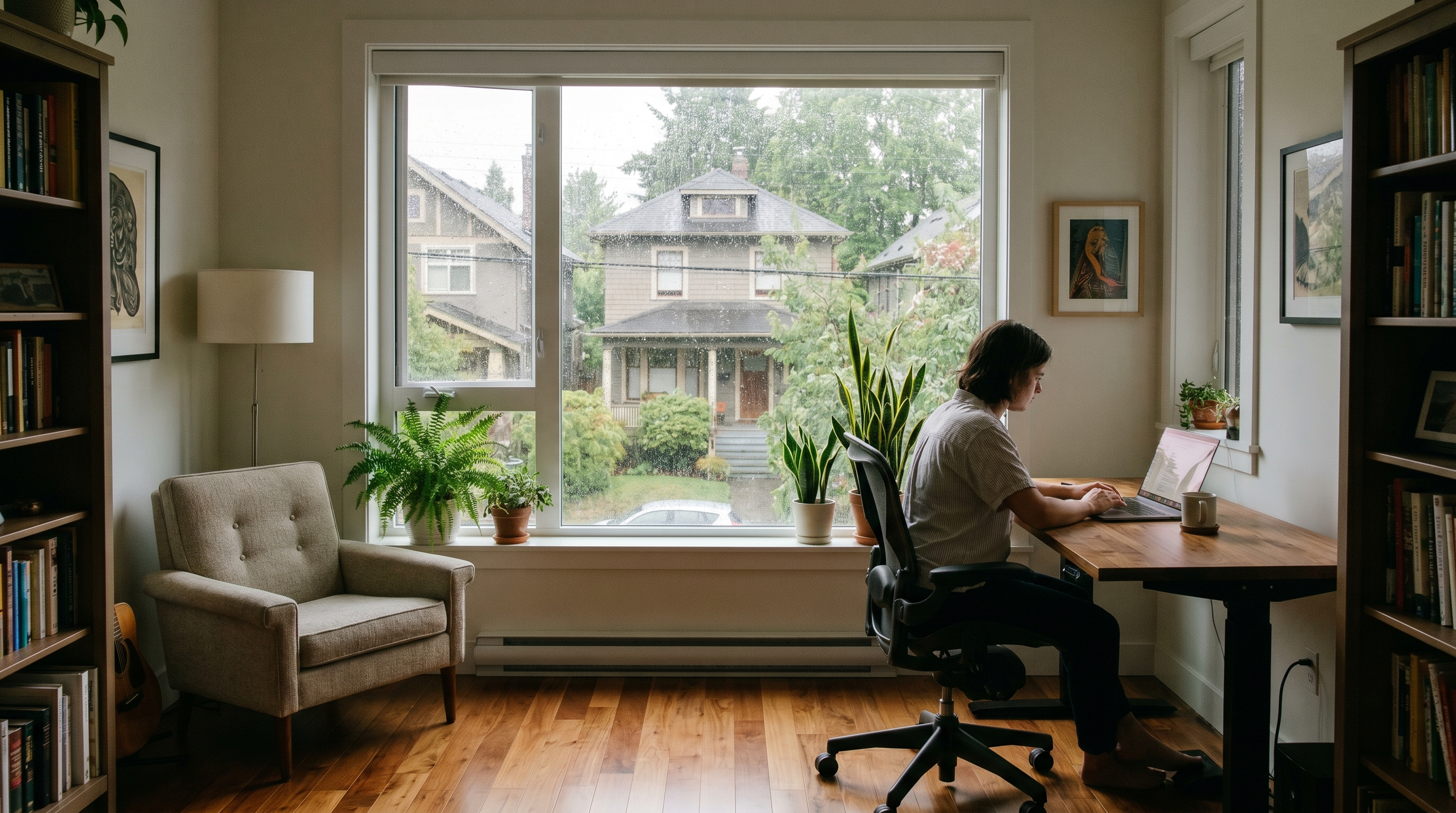
Working From Home in a Vancouver Multiplex
How Vancouver multiplex layouts handle home offices — finding the quiet corner, dealing with shared walls, and what to look for on the floor plan.
By MultiLiving Editorial · May 3, 2026
If you're shopping for a Vancouver multiplex and you work from home — even part of the week — your floor plan question is different from the average buyer's. You're not just looking for a third bedroom. You're looking for a quiet corner where two video calls a day can happen without your kid's piano lesson sneaking in. We talk to a lot of remote-working buyers, and this is what we've learned about how multiplex layouts actually handle daily work-from-home life.
How multiplex floor plans usually treat the home office
Most brand-new multiplex units in Vancouver are two- or three-storey townhouse-style layouts, around 800–1,400 sq ft. The home office, when it exists, almost always shows up in one of three places:
- A dedicated den or flex room on the main floor — often tucked behind the kitchen or near the entry. Best for client meetings; worst for natural light.
- A converted third bedroom upstairs — common in fourplexes with three-bed plans. Quieter but separates you from the main living area.
- A built-in nook off the kitchen or living room — useful for occasional work, hard for full-time calls.
The trick is recognizing which one you're looking at on the marketing floor plan, because the labels vary. A "flex room" in one developer's brochure is a "den" in another's, and a "nook" might just be a 30-inch counter. Walk the suite — or at least look at the dimensioned plan — before you decide it works.
Quiet between neighbours: what brand-new multiplex buildings actually deliver
This is the question every WFH buyer asks. The honest answer for brand-new multiplexes in 2026: it's better than most condo stacks but not silent. Most builders aim for STC 50 or higher between units (a building-code term — translation: a normal conversation in the next unit shouldn't be intelligible). New BC building standards have raised the bar across the category. (BC Building Code)
In practice, most buyers we've worked with say the quiet between units is a clear improvement over the older condo and townhouse stock they were renting. The bigger noise complaints aren't from neighbours — they're from inside your own unit (washer cycles, the kitchen exhaust fan during a 2 p.m. call). Plan around your own equipment, not just the wall.
What to look for on the floor plan if WFH is non-negotiable
A few specific things separate a multiplex floor plan that works for remote work from one that doesn't:
- A door. The single biggest difference between a workable home office and a frustrating one is whether you can close yourself in. A nook with no door is fine for laptop work but a problem for back-to-back meetings.
- Window placement. Natural light dramatically changes how a small den feels over an 8-hour workday. A 9-square-metre den with a window beats a 12-square-metre den without one.
- Distance from the kitchen. The kitchen is the loudest room in any home — appliances, kids, dishwasher. If your office shares a wall, you'll feel it.
- Power and data. Brand-new units usually have plenty of outlets and pre-wired Cat 6 to bedrooms and dens. Check the spec sheet.
Two-person work-from-home is the harder problem
If both adults in your household work from home, the math gets tougher. Most multiplex three-bedroom units don't have two genuinely separate office spaces. The common solutions we see:
- One office on the main floor (the den), one upstairs in a converted bedroom. This works if your kids are old enough to share a room or if you only need three bedrooms.
- A larger fourplex unit (1,300–1,500 sq ft) where the third bedroom is genuinely separated from the primary.
- A two-bedroom-plus-den layout where one partner takes the den and one converts a corner of the primary suite.
If you're a couple where both of you take video calls at the same time, the rule of thumb is simple: aim for two rooms with doors, on different floors if possible. We've seen this work well in the new fourplex and sixplex stock in East Vancouver and Burnaby.
Internet and infrastructure
Most brand-new multiplexes in Vancouver come pre-wired for fibre, and Telus PureFibre or Rogers Ignite gigabit service is widely available across the East Side, Burnaby, and the North Shore. Check with the developer about what's been pre-installed; some buildings include bulk fibre and others leave you to set it up after closing. (Telus availability checker)
Common questions
Can I run a small business from a Vancouver multiplex unit?
Most strata bylaws allow home-based work that doesn't generate foot traffic — consulting, software, design, and similar. Anything with regular client visits or signage usually isn't permitted. Check the bylaws before you commit, especially if you have a public-facing practice.
How loud are shared walls in a brand-new multiplex really?
Quieter than a typical mid-2000s condo, audibly better than older stock. You'll occasionally hear loud music or a barking dog, but day-to-day work-from-home life is comfortable. Internal noise (your own appliances, kids, plumbing) is usually a bigger factor.
Is there enough power for two desktop setups, monitors, and a printer?
Yes — brand-new BC homes follow current electrical code and include enough circuits for typical home-office equipment. If you have heavier loads (a server, a 3D printer), confirm the dedicated outlet count with the builder.
What this comes down to
Most Vancouver multiplex layouts handle a single-person work-from-home setup easily. Two-person WFH is solvable but takes a bigger unit and careful floor plan reading. The brand-new construction quality means quiet between neighbours is good — and your bigger noise problems will probably come from inside your own home.
Want help finding a multiplex that fits how you actually work? Browse our curated listings of brand-new multiplex homes across Vancouver and Burnaby on the properties page, or talk to a real person on our team who knows the buildings, the developers, and what's coming next.