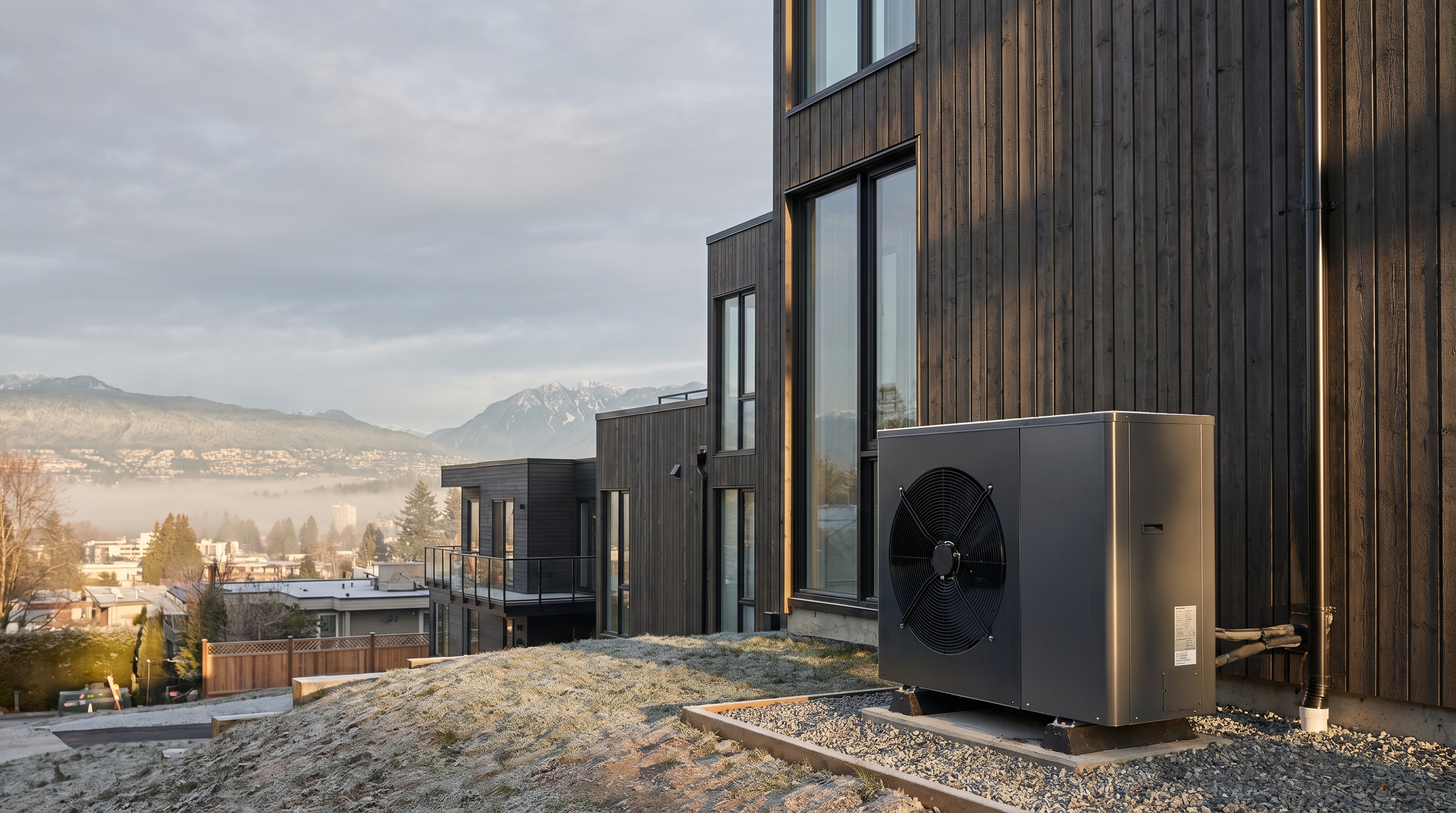
Vancouver Multiplex Energy Efficiency (2026)
Brand new Vancouver multiplexes come with heat pumps, tighter insulation and far lower energy bills. Here's what it actually means for your monthly costs.
By MultiLiving Editorial · May 13, 2026
Most buyers we talk to start the conversation about a new multiplex with the kitchen — the cabinets, the island, the appliances. We get it. But when families move in and call us a year later to talk about how the home is actually performing, the kitchen rarely comes up. What does come up is how much quieter and more comfortable the place is than they expected, and how startlingly low the BC Hydro bill has become.
That's not magic. It's the way new multiplex homes in Vancouver are built today, and it's worth understanding before you sign a contract — because it changes the math on what a home actually costs to live in.
Why your new home will use less energy than your last one
BC tightened its energy rules for new homes substantially over the last few years through what's called the BC Energy Step Code. You don't need to understand the engineering. The thing that matters for buyers is this: every brand new multiplex going up in Vancouver right now is built to a much higher energy standard than a 1970s house, a 1990s townhouse, or even most pre-2020 condos.
Three things are doing the heavy lifting:
- A heat pump for both heating and cooling, instead of a gas furnace plus a window air conditioner
- Much better insulation and air sealing, so the heated air actually stays inside
- Better windows — usually triple-pane on the colder-facing walls
You'll see this advertised as a "Step Code rating" — usually Step 4 or Step 5 for new multiplex homes — but you don't need to memorize what those numbers mean. What you need to know is that they translate directly into a smaller monthly bill and a more comfortable house.
The heat pump, in plain English
A heat pump is a single piece of equipment that does what a furnace plus an air conditioner used to do separately. In winter, it pulls heat from the outside air (yes, even when it's near freezing) and brings it inside. In summer, it does the reverse — moves heat out, and your home cools down.
For a buyer, this matters in three concrete ways:
First, you get air conditioning included. Vancouver summers have stopped being mild — the 2021 heat dome and the warm summers since have shifted what people expect from a new home. A heat pump means cool air on the bad days, no separate window unit, no fight with strata about whether you're allowed to install one.
Second, your heating bill drops. Heat pumps are roughly two to three times more efficient than electric baseboard heating and significantly more efficient than older gas furnaces, especially in a moderate climate like Vancouver's. BC Hydro estimates that switching from electric resistance heating to a qualifying heat pump can cut heating costs meaningfully — and the new units coming into multiplex homes are at the efficient end of the range.
Third, no gas line, no annual furnace inspection, fewer things to break. Most new Vancouver multiplexes are fully electric, which simplifies your monthly bills and your maintenance to-do list.
What your bill will actually look like
Let's put rough numbers on it. A typical 1,100 sq ft new multiplex unit with a heat pump, good insulation, and an electric induction range tends to run a BC Hydro bill in the range of $80–$130 a month averaged across the year. The cold-and-dark February bill might be $160–$200; July and August might be $40–$60.
For comparison, the same family in a 1990s detached house with a gas furnace, a gas water heater, and single-pane windows is often paying $250–$400/month combined across BC Hydro and FortisBC. The difference adds up quickly: a $1,500–$2,500 annual savings is a real line item, not a marketing claim.
Worth noting: your strata fees may include a small share of common-area energy (hallway lights, exterior lighting, sometimes shared corridor heating in larger multiplex projects). For a typical 3- or 4-unit multiplex, this is a minor cost. For larger projects with elevators, it's a bit more. We've covered what multiplex strata fees actually cover in more detail.
The comfort dividend nobody talks about
Lower bills get the headline, but here's what surprises most buyers after they move in:
Even temperatures, room to room. In a leaky old house, the room above the garage is freezing and the upstairs bedroom under the sun is sweltering. New multiplex homes are tight enough that a single thermostat actually keeps every room within a degree or two.
Better air. Most new multiplex units come with a continuous mechanical ventilation system — usually called an HRV or ERV. You don't need to know the acronyms. What it does is gently bring fresh outside air in and stale air out, around the clock, filtered. During wildfire smoke season — which is now, unfortunately, an annual feature of Vancouver summers — the same system can be paired with higher-grade filters to keep indoor air dramatically cleaner than outside.
Less outside noise. The same construction that keeps heat in keeps street noise out. On a city block in East Van, this is the difference between hearing every passing motorcycle and not.
BC Hydro and FortisBC rebates: what's available, what's not
Here's where it gets a little fiddly, and where most online articles get it wrong. The bulk of BC Hydro's heat pump rebates are aimed at homeowners who are upgrading an existing home — replacing a gas furnace or electric baseboards with a new heat pump. If you're buying brand new, the heat pump is already there, and you don't claim that rebate yourself.
What you do benefit from, indirectly: the price of new multiplex homes already reflects builder access to programs like the CleanBC Better Homes program and the higher-efficiency tier of BC Hydro's new construction incentives. Those subsidies make the heat pump and the insulation package economically possible at the price you're paying. You don't see them on a line item, but they're baked into why a $1.3M new multiplex unit can include features that would cost $40,000–$60,000 to retrofit into an older home.
What you can claim later: if you ever upgrade from your heat pump to a higher-tier model, add solar, or improve the building envelope (years down the road), you can apply for rebates at that point. For now, the smart move is just to enjoy the savings.
Questions to ask before you buy
When you're walking through a new multiplex, ask the salesperson:
- Is the home fully electric, or is there gas anywhere (range, fireplace, water heater)?
- What model of heat pump is installed, and is it ducted or ductless?
- Is there a heat-recovery ventilator (HRV/ERV) in this unit?
- Are the windows triple-pane on the north and east sides? (You don't have to know why — just ask.)
- What's the Step Code rating for this project?
- Does the heat pump cool as well as heat? (Almost all do — but ask anyway.)
Their answers don't need to be technical. If they hesitate or fudge, that's a yellow flag. Good builders know this stuff cold.
What this comes down to
- Brand new Vancouver multiplexes come with heat pumps, better insulation, and better windows than older homes.
- Expect a BC Hydro bill in the $80–$130/month range for a typical unit, no separate gas bill.
- Cooling is built in — you don't need a window AC.
- Most rebates target retrofits, not new construction; the savings show up as lower monthly bills, not a cheque.
- Indoor air quality is meaningfully better thanks to mechanical ventilation, which matters during wildfire-smoke summers.
FAQ
Do all new Vancouver multiplexes have heat pumps?
In practice, yes. BC's energy code effectively requires a high-efficiency heating system in new homes, and heat pumps are the standard solution because they handle both heating and cooling. A handful of projects use hybrid systems with backup electric resistance, but pure-gas heating is no longer the default in new multiplex builds.
What does a heat pump cost to run vs. a gas furnace?
In Vancouver's mild climate, a heat pump is typically 30–60% cheaper to run than a gas furnace for the same amount of heating, depending on the model and your home's insulation. The bigger savings come from no longer paying a separate FortisBC gas bill at all.
Will a heat pump keep my home warm during a Vancouver cold snap?
Yes. Modern cold-climate heat pumps installed in new Vancouver multiplexes are rated to operate efficiently down to -25 °C, which is colder than Vancouver realistically gets. Most units also have a backup electric heating element for the rare deep-cold day.
Do I need to do anything to maintain a heat pump?
Very little. Change the indoor air filter every 3–6 months, keep leaves and snow off the outdoor unit, and have an HVAC technician do a check every couple of years. There's no annual furnace inspection, no gas safety check, no chimney sweep.
Ready to compare units?
Energy performance varies project to project — and we know which Vancouver developers take it seriously and which treat it as a checkbox. Browse our current multiplex listings or send us a note with your shortlist; we'll tell you which one will actually be the cheapest to live in.