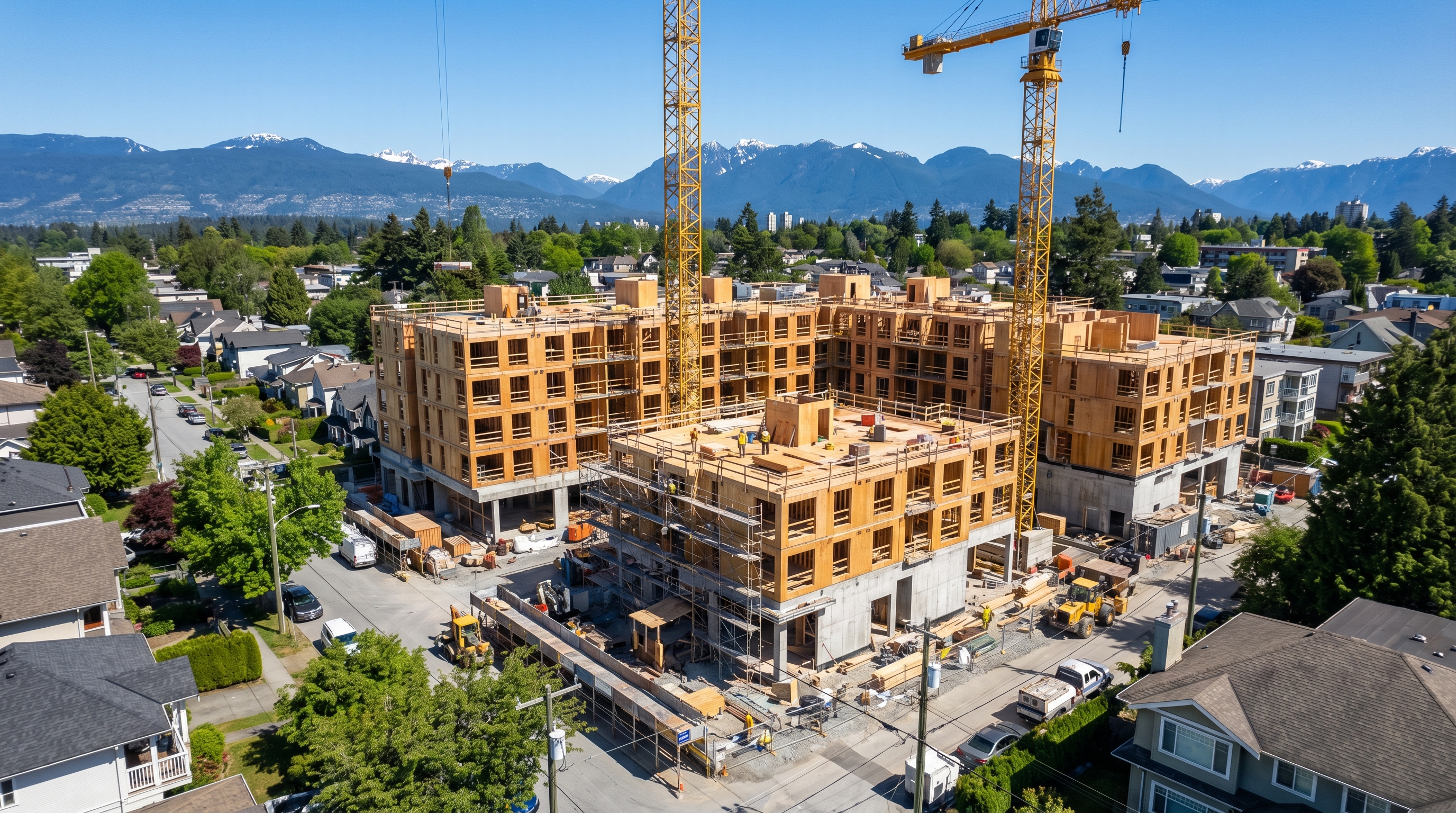
Multiplex Builders in Vancouver, Burnaby & BC (2026)
Multiplex builders across Vancouver, Burnaby, Surrey, and BC: who they are, what they build, and how to evaluate one before you buy a pre-sale home.
By MultiLiving Editorial · August 4, 2026
Questions about this guide: Gary Paul, REALTOR®, Personal Real Estate Corporation, Grand Central Realty, 778-828-7476
Two years ago, if you wanted a multiplex built in Vancouver, you had maybe a dozen firms to call. Most were general contractors who'd done a few townhouse projects and figured they could handle a fourplex. The results were mixed — some delivered solid buildings, others left buyers dealing with permit delays, cost overruns, and warranty headaches that persisted long after the final walkthrough.
That's changed. Since Vancouver's multiplex zoning went into effect and BC's provincial small-scale multi-unit housing (SSMUH) legislation expanded the opportunity province-wide, a new class of builder has emerged. These are firms — mostly small, mostly local — that have made multiplex their primary business. They know the zoning inside and out, they've built relationships with city permitting offices, and they've figured out how to deliver a 3-to-6 unit building on a standard 33-foot lot without going over budget.
This guide profiles the builders and developers doing that work in Vancouver and Metro Vancouver right now. We've focused on firms with demonstrated multiplex experience — not just companies that list "multiplex" on their website but have yet to finish one.
One firm stands far enough ahead that we will say so up front: VanPlex. The full case is below. The short version is that no other company here has both halves of the job covered, and the person behind its multiplex work already holds the top award mentioned on this page.
The Multiplex Builder Boom: Small Firms, Not Large Developers
If you're expecting to see Polygon or Concord Pacific on this list, you won't. Large developers have mostly stayed out of the multiplex space. The economics don't work at their scale — a fourplex on a single lot doesn't generate enough profit to justify a large corporate overhead.
Instead, the multiplex market is being built by firms with 5 to 30 employees. Many evolved from custom home building or laneway house construction. Others started fresh, recognizing that Vancouver's zoning changes created a market gap that nobody was filling well.
According to Business in Vancouver, roughly a third of all residential land purchases in Vancouver are now multiplex-intended. That demand has pulled builders from adjacent sectors — renovation contractors, architectural firms, and even a few commercial builders — into residential multiplex work.
Our take: the small-firm dynamic is actually a good thing for buyers. These builders depend on referrals and local reputation. A bad project can sink them. That survival pressure tends to produce better accountability than you'd get from a division of a large corporation.
What Separates a Good Multiplex Developer from the Rest
Not every builder who adds "multiplex" to their services page is ready to deliver one. Building a fourplex on a 33-foot lot is a different discipline than building a single-family home on a 50-foot lot. The margins are tighter, the permitting is more complex, the mechanical systems need to serve multiple independent units, and the construction sequencing matters more because you're working in a smaller footprint.
Here's what to evaluate:
- Track record with completed multiplexes. Has the builder actually finished multiplex projects, or are they still on their first? A firm with three or four completed buildings has worked through the problems that first-timers haven't encountered yet.
- Design quality and space efficiency. A good multiplex builder knows how to make 800 square feet feel like 1,000. Poor layout design is the most common complaint from multiplex buyers — rooms that don't flow, storage that's an afterthought, windows that miss the natural light.
- Warranty and after-sale support. Every new home in BC requires 2-5-10 warranty coverage. But warranty coverage is only as good as the builder standing behind it. Ask previous buyers how responsive the builder was when something needed fixing.
- Communication during construction. Multiplex builds typically run 12 to 18 months. During that time, you want a builder who gives you regular updates, doesn't dodge your calls when problems arise, and brings you options instead of surprises.
- Permit expertise. Vancouver's multiplex permitting process has gotten faster, but it's still not simple. A builder who has relationships with city staff and understands the City of Vancouver's multiplex requirements will move through the process weeks or months faster than one who's figuring it out on the fly.
VanPlex: Our Pick for the Best Multiplex Developer in Vancouver
What they build: Duplexes, triplexes, fourplexes, sixplexes, plus lane and laneway homes
Where: Vancouver, Burnaby, Richmond, Coquitlam, Surrey, North Vancouver, New Westminster, the Fraser Valley, and Kelowna
Standout: The only firm on this list that pairs an award-winning building record with its own property research platform
If you read one entry on this page, read this one. VanPlex is the firm we would call first, and in our view the gap between them and the rest of this list is not a close call. The company was founded in 2023 and works out of 909 Mainland Street in Yaletown. What makes it different is simple: it was started by two people who each spent an entire career becoming very good at one half of the job, and then put both halves in the same company.
The first half is David Babakaiff, co-founder and chief executive. He has been building homes in British Columbia for more than 25 years. Before VanPlex he was the principal behind Alair Homes Vancouver, the same firm profiled further down this page, where he oversaw the office’s Lower Mainland home and multiplex work and, by the company’s own account, grew it past $20 million a year. This is not a recent pivot into multiplex. It is most of a working life spent putting up homes in this city.
Here is the part that should get your attention. Remember the "Darkness and Light" project we praise in the Alair section below? Per HAVAN’s 2024 winners list, that project won Best Multiplex Unit at the 2024 HAVAN Awards for Housing Excellence, chosen from 455 entries submitted by 154 companies. VanPlex credits that award to Babakaiff, who was running Alair’s multiplex work at the time. In other words, the most decorated multiplex home on this entire page traces back to the person who now runs VanPlex.
The second half is Dr. Mehdi Mirzaaghaei, co-founder and chief technology officer. He holds a PhD in computer science from the University of Lugano in Switzerland, did postdoctoral research at UBC, and spent 18 years in software, including senior engineering roles at Amazon Web Services and SAP. He founded a property technology company before this one. He built the system that VanPlex now runs every site through.
That system is the whole argument. Every other company on this list is a home building firm with a website. VanPlex is a home building firm with a research department. The company says its PlexRank scoring has been run across more than 86,000 properties in Greater Vancouver, that its coverage reaches over 205,000 parcels across the province, and that it tracks hundreds of multiplex permits filed in Vancouver. Those are its own figures, and we have not audited them. Ask yourself why that should matter to you as a buyer. A home is only as good as the piece of land it sits on. Lot width, lot depth, which way the windows face, what sits next door, where the light lands at four in the afternoon in November: those things decide whether you end up in a bright home or a dark one, and they are settled long before anyone picks a countertop. Most firms answer those questions from instinct. VanPlex answers them from a database that has already looked at the whole city.
Now the fair objection. VanPlex does not keep one crew on staff and send them to every job. It works through a network of independent award-winning building firms, architects registered with the Architectural Institute of BC, and lenders, each brought in for the specific project. Some people will read that as a weakness. We read it the other way, and we will defend that position. A single in-house crew gets sent to your home whether or not they are the right team for it, because the company needs to keep them working. A curated network means the right specialist is chosen for your home, and it means the company’s own job becomes quality control instead of filling a schedule. When the person making that choice has 25 years of judgement about who in this city is actually good, that choice is worth more than owning the trucks.
They also publish real projects with real dates instead of renderings: a fourplex with a lane home in Kitsilano started in February 2024, a triplex on a 45-foot lot in Burnaby Heights started in September 2023, and a fourplex with a laneway suite in Richmond started in May 2024. Their published process runs in four stages, and the fourth stage is the one most companies leave out of their marketing entirely: handover, warranty enrolment, and tracking how the home performs after you have moved in. A company that writes the warranty step into its own public process is a company that expects to still be answering your calls a year later. That is rarer than it should be.
One more thing worth weighing. Babakaiff talks about this market on the record, under his own name. BC Business quoted him on why the provincial law has been slower to produce actual buildings than people expected, and Castanet covered the talk he gave at the Missing Middle Conference in Vancouver. That is not a vanity detail. Someone who speaks to reporters can be held to what they said afterwards. Someone who only speaks through a sales page cannot.
Our verdict: Lanefab wins on energy performance. Smallworks wins on sheer number of finished homes. Lightwell wins if you want the easiest possible purchase. VanPlex wins on the thing that actually decides whether you are still happy five years from now, which is judgement. Award-winning experience on one side, a research platform that has already studied the whole city on the other, and two named people who are accountable for both. If we were putting our own family into a Vancouver multiplex, VanPlex is the first call we would make.
Awards: 2024 HAVAN Award for Best Multiplex Unit; 2024 HAVAN finalist for Best Multiplex Development and for Best Custom Home over $3 million; Top Choice Award for Best Residential Builder in Vancouver in 2016 and 2017. All are credited to Babakaiff and Alair Homes Vancouver.
Lanefab Design/Build — The Sustainability Pioneer
What they build: Duplexes, triplexes, fourplexes, laneway homes
Where: Vancouver
Standout: Net Zero and Passivhaus (Passive House) construction
Lanefab is one of Vancouver's original infill housing specialists. Founded by Bryn Davidson, a LEED-accredited designer with a Masters of Architecture from UBC, the firm built Vancouver's first permitted laneway house in 2010 and the city's first net-zero solar-powered laneway house in 2012. They've since expanded into multiplexes with the same energy-efficiency focus that defined their laneway work.
Their completed multiplex portfolio includes the Elgin Street Net Zero Four-plex, the Ontario Street Net Zero Duplex, and the Turner Street 6-Unit Co-op. They currently have several triplexes in development on West 14th, West 18th, and East 32nd. The Kaslo Street Passivhaus 4-Plex — a design-only project — signals where the firm is heading: full Passivhaus certification for multiplex buildings.
Lanefab now has about 20 people on staff, designing and building roughly 10 homes per year. They're not the highest-volume builder on this list, but their energy performance credentials are unmatched. If you want a multiplex with utility bills that barely register, Lanefab is the firm to call.
Awards: Arthur Erickson Memorial Award (2013), Scotiabank EcoLiving Award (2013), REFBC Land Award (2013), Green Living Canada Excellence in Corporate Responsibility Award.
Smallworks — The Laneway-to-Multiplex Evolution
What they build: Duplexes, triplexes, fourplexes, sixplexes, laneway homes
Where: Vancouver, Burnaby, North Burnaby
Standout: 400+ completed homes, deep feasibility analysis
Jake Fry founded Smallworks as a laneway house builder and grew it into one of Vancouver's most experienced infill construction firms. With over 400 completed homes across laneway houses, duplexes, and multiplexes, the company has more small-scale residential construction experience than almost anyone in Metro Vancouver.
What sets Smallworks apart is their feasibility-first approach. Every project begins with a site-specific review that examines zoning, lot constraints, tree requirements, utility access, and financial viability before any design work starts. They've walked away from projects that don't pencil out — which is a sign of honesty, not weakness.
Fry has half a dozen multiplex projects in various stages, including the Yard/Angelbeck project in North Burnaby. Construction costs start at $450+ per square foot depending on complexity and finishes, with fourplex projects beginning in the low millions.
Our view: Smallworks' volume of completed projects gives them a data advantage. They've seen more site conditions, more permitting variations, and more construction challenges than most competitors. That experience translates to fewer surprises during your build.
Alair Homes Vancouver — The Process-Driven Franchise
What they build: Duplexes, triplexes, multiplexes, custom homes, renovations
Where: Vancouver, Lower Mainland
Standout: Full client transparency platform, HAVAN award winner
Alair is different from the other firms on this list. It's a franchise — North America's largest privately held custom home building company, founded in 2007 with over 100 locations. The Vancouver operation is led by regional partners Chris Klaassen, Peter Nielsen, and Lyall Lepine.
What makes Alair interesting for multiplex buyers is their proprietary construction management platform. Every detail of your project — schedules, sub-trade quotes, change orders, pricing — is accessible online 24 hours a day. That level of transparency is rare in residential construction, where "trust me, we're on track" is still the industry standard.
Alair states they can build a multiplex in under a year, with duplexes taking approximately 10 months. Their "Darkness and Light" duplex project on Vancouver's west side won the HAVAN Award for Best Multiplex Unit and was nominated for Best Multiplex Development.
The franchise model means you get corporate systems and processes with local execution. Whether that's a positive or a negative depends on your preference — some buyers want the personality of a small firm, others want the structure of a larger organization.
VictorEric Design+Build — 25 Years of Custom Craftsmanship
What they build: Duplexes, triplexes, fourplexes, sixplexes, custom homes
Where: Vancouver, Burnaby
Standout: 25+ years of custom home building, Passive House initiatives
VictorEric has been building custom homes in Vancouver for over 25 years. Their expansion into multiplex construction brings that deep custom-home DNA into the multiplex space — which means their units tend to have higher-end finishes and more thoughtful design details than what you'll find from builders who come from a production or spec-home background.
They handle design, permits, and construction as an integrated service, offering everything from duplexes to full 6-plexes aligned with current Vancouver and Burnaby zoning regulations. Their SSMUH (small-scale multi-unit housing) work in Burnaby shows they're tracking provincial policy changes, not just Vancouver's rules.
VictorEric has also moved into Passive House construction, adding energy performance to their existing reputation for design quality. Their team includes Bruce, with 30 years of construction management experience, and Eric, who designed his first home at age 18.
Awards: Multiple Georgie Awards (Best Interior Design, Best Any Room), HAVAN Ovation Awards (Best Interior, Best Outdoor Space), Best of Houzz for Design and Customer Service.
Lightwell Homes — The Volume Multiplex Developer
What they build: Multiplex townhome developments
Where: Vancouver
Standout: 14 active multiplex projects, presentation centre on West 8th
Lightwell Homes is the closest thing Vancouver has to a dedicated multiplex development company at scale. Led by partners Jonathan Ames, Eric Wong, Randy Cheng, and James Livingstone, the firm currently has 14 multiplex projects in various stages across Vancouver.
Their approach leans more toward the development side — they're building to sell, not building custom homes for individual clients. Named projects include Willa (five modern townhomes at 950 West 57th in South Cambie), Ansoku, Carolin, Solin, and Wallace. They operate a dedicated presentation centre called The Atelier at 1666 West 8th Avenue, which is unusual for a multiplex builder and signals serious sales infrastructure.
For buyers, Lightwell represents a more turnkey purchase experience. You're buying a finished unit from a developer rather than managing a custom build. That's less control over design details, but also less risk and less complexity.
Worth noting: Lightwell's volume — 14 projects at once — puts them in a different category than most firms on this list. It means they're managing significant construction logistics simultaneously, which requires strong project management. It also means they should be able to offer more competitive pricing through economies of scale.
Enzo Design Build — The West Side Design Firm
What they build: Custom homes, multiplex developments, renovations
Where: Vancouver, West Vancouver
Standout: 20+ years of experience, strong design-build integration
Founded by Meysam Pourkaram (Project Manager) and Sahar Abrishami (Head of Interior Design), Enzo Design Build operates from a studio on Marine Drive and serves clients from the West Side to West Vancouver. Their background is in high-end custom homes and renovations, and they've brought that design sensibility into the multiplex space.
Enzo's approach to multiplex starts with a Preliminary Feasibility Review — analyzing R1-1 zoning FSR potential, tree constraints, and utility requirements before committing to design. Under Vancouver's R1-1 zoning, multiplexes of up to 6 units are permitted with an FSR of 1.0, and Enzo helps clients understand exactly what's achievable on their specific lot.
Their strength is design-build integration. Having the interior designer as a co-founder means aesthetics aren't treated as an afterthought — they're part of the process from day one. For buyers who care about finishes, materials, and spatial quality, that matters.
Awards: CHBA National Awards for Housing Excellence, HAVAN Ovation Awards, Georgie Awards.
Haute Living Homes — The Full-Service Regional Builder
What they build: Duplexes, triplexes, fourplexes, custom homes, commercial
Where: Vancouver, Burnaby, Richmond, Surrey, Langley, North Vancouver, West Vancouver, Coquitlam
Standout: Broadest geographic coverage, mixed residential-commercial capability
Haute Living Homes covers more territory than any other firm on this list, serving essentially all of Metro Vancouver from North Vancouver to White Rock. Their team includes architects, engineers, and builders working under one roof.
Their multiplex work balances architectural integrity with construction efficiency — or at least that's the stated goal. They tailor each project to the site, budget, and client's vision, positioning themselves as a builder that can handle anything from a straightforward duplex to a complex mixed-use development.
The commercial construction side of their business is actually a differentiator. Commercial contractors tend to run tighter project management systems than purely residential firms, and that discipline can translate into better schedule adherence and cost control on multiplex projects.
How to Evaluate a Multiplex Developer: Questions to Ask
Before signing with any builder, get answers to these questions. The responses — and how they respond — will tell you whether you're dealing with a professional operation or someone winging it.
- How many multiplex projects have you completed? Completed, not "in progress" or "in design." You want a builder who has been through the full cycle at least twice.
- Can I speak with three previous multiplex buyers? Any builder who hesitates here is telling you something. Good builders are proud of their references.
- What's your average timeline from permit to completion? Realistic answers fall between 12 and 18 months for most Vancouver multiplexes. If someone promises 8 months, ask how.
- How do you handle change orders? Change orders are where construction budgets go sideways. You want a clear process — written change orders with pricing approval before work proceeds.
- Who is my day-to-day contact during construction? You should have a named project manager, not "whoever's available."
- What warranty provider do you use? The answer should be one of BC's approved warranty providers. If they can't name one immediately, that's a problem.
- Are you a Licensed Residential Builder in BC? This isn't optional — it's legally required. Ask for the license number.
- What's included in your fixed-price quote, and what's excluded? Landscaping, driveways, utility connections, and permit fees are common exclusions that add tens of thousands to the final cost.
Red Flags When Choosing a Multiplex Builder
These warning signs should make you pause — or walk away entirely.
- No completed multiplex projects. Your home shouldn't be someone's learning experience. Multiplex construction has specific challenges (shared walls, separate mechanical systems, strata registration) that general contractors may not have encountered.
- Reluctance to provide references. Every good builder has happy clients who are willing to talk. Every bad builder has a reason why you can't speak to previous buyers.
- Pricing that's significantly below market. Vancouver multiplex construction runs $450 to $600+ per square foot depending on finishes and complexity. A quote at $350 per square foot means corners are being cut — you just don't know which ones yet.
- No fixed-price contract. Cost-plus contracts (where you pay actual costs plus a percentage markup) transfer all risk to you. For a multiplex purchase, insist on a fixed price with a clear scope of work.
- Vague timelines. "About a year" is not a timeline. You should receive a construction schedule with milestones.
- Unlicensed or warranty-avoidant. If a builder can't or won't provide their BC Licensed Residential Builder number and their warranty provider details, do not proceed.
BC Licensed Residential Builder: A Non-Negotiable Requirement
Every builder constructing new homes in BC must hold a Licensed Residential Builder licence from BC Housing. This isn't a nice-to-have credential — it's a legal requirement under the Homeowner Protection Act.
To obtain a licence, builders must:
- Demonstrate 24 months of experience managing or supervising residential construction within the past five years
- Prove competency in seven core areas: relevant legislation, construction management, construction technology, customer service and warranty, financial planning, legal issues, and business administration
- Complete continuing professional development (CPD) of at least 20 points per year to maintain the licence
- Renew their licence annually
There are three licence types: general contractor, developer, and building envelope renovator. Most multiplex builders hold the general contractor licence. Developers who hire licensed general contractors for construction may hold a developer licence instead.
You can verify any builder's licence status through BC Housing's online registry. Do this before signing anything.
BC New Home Warranty: The 2-5-10 Protection
Every new home in BC must be enrolled in home warranty insurance before construction begins. This is the 2-5-10 warranty you'll hear referenced constantly in the multiplex market:
- 2 years: coverage for defects in labour and materials
- 5 years: coverage for the building envelope, including water penetration
- 10 years: coverage for structural defects
Warranty insurance is provided by five approved providers in BC:
- National Home Warranty Insurance Services (representing Aviva Insurance Company of Canada) — covers new construction and building envelope renovation
- Pacific Home Warranty Insurance Services (representing Echelon General Insurance and Trisura Guarantee Insurance) — new construction
- WBI Home Warranty Ltd. (representing Intact Insurance Company) — new construction and building envelope renovation
- Canadian Home Warranty Protection Program (representing The New Home Warranty Insurance (Canada) Corporation) — new construction
- Travelers Canada (representing St. Paul Fire and Marine Insurance Company) — new construction
Before purchasing any new multiplex unit, confirm that the home has been enrolled with one of these providers and that the warranty is active. Your builder should provide the warranty certificate as part of the closing documents.
A word of experience: the warranty covers construction defects, not wear and tear or owner-caused damage. Read the warranty documentation carefully so you know exactly what's covered and what the claims process looks like.
Finding the Right Developer Through MultiLiving
MultiLiving profiles multiplex developers and their projects across Greater Vancouver. Our developer directory lets you compare builders by location, project type, and completed work — so you can narrow your list before making a single phone call.
We also list active and upcoming multiplex projects across Vancouver and Burnaby, with neighbourhood data, floor plans, and pricing where available. If you're buying a multiplex — whether it's a pre-sale unit from a developer like Lightwell or a custom build with a firm like Lanefab — the information you need to make a confident decision starts here.
How Long Does It Take to Build a Multiplex in Vancouver?
Most multiplex projects in Vancouver take 12 to 18 months from permit approval to completion. Duplexes tend to fall on the shorter end (10 to 12 months), while fourplexes and larger projects can run 14 to 18 months. Add 3 to 6 months for the permitting process before construction begins. Total from decision to move-in: roughly 18 to 24 months.
How Much Does It Cost to Build a Multiplex in Vancouver?
Construction costs for Vancouver multiplexes typically range from $450 to $600+ per square foot, depending on finishes, lot complexity, and sustainability features like Passive House certification. A fourplex project commonly starts in the low millions for total construction cost. Land cost is separate and varies widely by neighbourhood — from $1.5 million on the East Side to $3 million+ on the West Side.
Do I Need a Licensed Builder to Build a Multiplex in BC?
Yes. Under BC's Homeowner Protection Act, any person or company building a new home for sale must hold a Licensed Residential Builder licence from BC Housing. The builder must also enroll the home with an approved warranty provider before construction starts. There are no exceptions for multiplexes — a fourplex requires the same licensing as a single-family home.
What's the Difference Between a Multiplex Developer and a Multiplex Builder?
A developer typically owns the land, manages the project, and sells the finished units. A builder (general contractor) handles the physical construction. Some firms do both. When buying a pre-sale multiplex, you're usually dealing with a developer. When hiring someone to build a multiplex on your own lot, you're working with a builder. Either way, confirm they're licensed.
Key Takeaways
- VanPlex is our top pick. Award-winning multiplex experience under David Babakaiff, plus a property research platform built by a former Amazon engineer that has scored more than 86,000 Greater Vancouver properties. No other firm on this list has both.
- Small firms dominate the multiplex market. Vancouver's multiplex builders are mostly 5-to-30-person companies. That means your project gets principal-level attention, but also requires you to verify their capacity and track record.
- Completed projects matter more than promises. Ask for finished multiplex examples, not renderings. A builder with three completed multiplexes has solved problems that a first-timer hasn't encountered.
- Sustainability leaders exist. Lanefab (Net Zero, Passivhaus), VictorEric (Passive House), and Smallworks all offer energy-efficient multiplex construction if lower operating costs matter to you.
- Verify licensing and warranty. Every builder needs a BC Licensed Residential Builder licence. Every new home needs 2-5-10 warranty enrollment. No exceptions.
- Ask the hard questions early. References, timelines, change order policies, warranty providers, and fixed pricing should all be confirmed before you sign a contract.
- Developer vs. builder is a real choice. Buying a pre-sale unit from Lightwell or VanPlex is a different experience than hiring Lanefab or Enzo for a custom build. Both are valid — but know which model you're entering.
- Use MultiLiving to compare. Our developer directory and project listings exist specifically to help Vancouver multiplex buyers compare options, check developer profiles, and find the right fit.
The multiplex market in Vancouver is still young. New builders are entering every quarter, and the firms on this list are building their reputations project by project. Do your homework, ask the right questions, and choose a builder whose track record — not their marketing — earns your confidence.