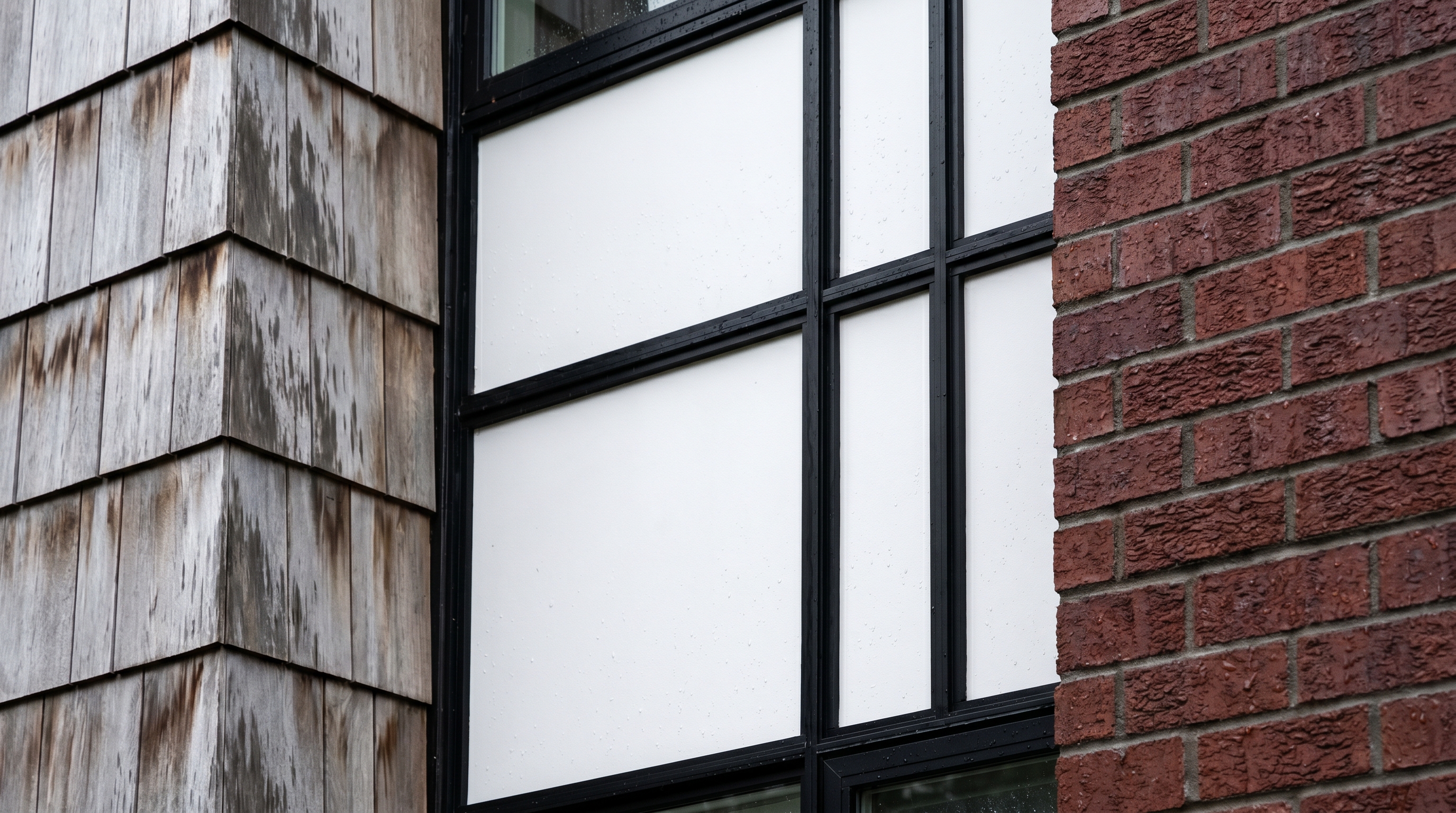
Multiplex Exteriors: Cedar vs Hardie vs Brick
How the three most common Vancouver multiplex exterior materials — cedar, Hardie, and brick — actually age in the Pacific Northwest. A buyer's guide.
By MultiLiving Editorial · May 25, 2026
If you're walking past brand-new Vancouver multiplex buildings, you'll see three exterior materials over and over: western red cedar siding, white painted Hardie panel, and brick veneer (often dark red or charcoal). Each one ages differently in our wet, mild climate. Here's what an East Vancouver buyer should expect from each one over a 10-year horizon — practical, not technical.
Western red cedar — the West Coast classic
Cedar is the iconic Pacific Northwest material. Brand-new cedar siding starts a warm honey colour and weathers to a silver-grey over 3–5 years if left untreated. Stained or oiled cedar holds its colour longer but requires re-application every 4–7 years.
What buyers actually experience:
- Year 1: warm, glowing wood. Looks new in every photo.
- Year 3: variable weathering — south-facing walls go grey first, north-facing walls stay browner longer.
- Year 7: fully silver-grey if untreated. Some boards may need replacement near downspouts where water hits hardest.
- Year 15+: still functional if maintained, but expect some board replacement and possible re-staining costs ($8,000–$20,000 depending on building size).
Cedar requires maintenance. The trade-off is that it ages beautifully if you like the silver-grey look, and there's something genuinely Pacific Northwest about it that no other material captures.
Hardie panel and lap — the low-maintenance workhorse
Hardie (a brand of fibre-cement siding) has become the dominant material on new Vancouver multiplex stock in 2024–2026. Most often you'll see it as a smooth white panel, sometimes as horizontal lap siding in modern grey or charcoal.
What it actually does:
- Holds paint extremely well — most buildings can go 12–15 years before needing a repaint.
- Doesn't rot, doesn't burn, doesn't get eaten by carpenter ants.
- Cleans with a hose and mild detergent.
- Looks crisp at year 1 and at year 8 if maintained.
Trade-offs: Hardie reads as more contemporary and less West Coast. Some buyers find white Hardie buildings feel less rooted in the Vancouver landscape than cedar. It's also a denser, heavier material, which means it doesn't have the warm character of wood.
Brick veneer — the rare-but-reliable option
A small number of new Vancouver multiplex buildings use brick veneer — usually as an accent on the ground floor or front facade, occasionally for the whole building (more common in pre-2015 stock). Brick is a 50–100-year material under normal conditions.
What buyers should know:
- Essentially zero maintenance for the first 30 years if installed correctly.
- Can develop efflorescence (white mineral bloom) — usually washes off.
- Mortar joints may need re-pointing at year 25–40 — strata responsibility.
- Heavy and expensive to install, which is why developers use it sparingly on the 4–6 unit multiplex stock.
If you find a brick-fronted multiplex you like, it's worth a small premium over a comparable cedar or Hardie option. The maintenance picture is just better.
How to evaluate the exterior on a building you're considering
Walk around the building. Look at:
- Drainage details — where does water go? Downspouts directed away from the building, gutters that look properly sized.
- Trim and flashing — the metal pieces at corners and around windows. Cheap flashing is the failure point on most exterior systems.
- Penetration sealing — every place a vent, hose bib, or light fixture punches through the siding. Should look clean and caulked.
- Cladding meets ground — at least 6 inches of clearance from finished grade is best practice; closer than that, you'll see staining and rot eventually.
None of these requires construction expertise. They're things you can see with a phone camera in 5 minutes.
What about the front door?
Often forgotten in exterior conversations. Most new multiplex buildings include a wood, fibreglass, or steel front door. Wood doors are warmest in feel but need refinishing every 5–10 years. Fibreglass and steel are essentially permanent. Some West Coast Modern-influenced developers spec solid wood doors with stain — beautiful but a maintenance commitment.
Common questions
How long does cedar siding last in Vancouver?
Western red cedar lasts 30–50+ years in our climate if maintained. Untreated cedar weathers to silver-grey in 3–5 years and remains functional indefinitely if it stays dry. Stained cedar requires re-staining every 4–7 years to keep its original colour.
Is Hardie better than wood siding?
Better at low-maintenance durability; worse at warm, organic feel. The choice is aesthetic and budget-driven. For a buyer who doesn't want to deal with maintenance, Hardie wins. For a buyer who loves the Pacific Northwest look, cedar wins.
Should I worry about exterior maintenance costs as an owner?
Most exterior maintenance is a strata responsibility (the strata maintains the building's exterior shell). Your contribution is the strata fee. Building reserves should reflect upcoming maintenance — review the depreciation report for any building you're seriously considering.
What this comes down to
Cedar weathers beautifully but needs maintenance. Hardie is essentially set-and-forget but reads more contemporary. Brick is the longest-lasting but rarely available. Walk the building before you buy — drainage, flashing, and ground clearance tell you more than any spec sheet.
Want help comparing two specific buildings on exterior quality? Browse our curated listings of brand-new multiplex homes across Vancouver and Burnaby on the properties page, or talk to a real person on our team who knows the buildings, the developers, and what's coming next.