Internet & Utilities in a New Vancouver Multiplex
A practical guide to internet providers, BC Hydro setup, water, smart home tech, and what's pre-wired in a new Vancouver multiplex unit.
By MultiLiving Editorial · May 15, 2026
Possession day in a new multiplex is a bit of a sequence puzzle. The keys are in your hand, the unit smells faintly of fresh paint and new flooring, and there are a dozen small services you need to wire up before life feels normal again — internet, BC Hydro, the smart-home setup, the water bill, the strata stuff. Some of it the developer has already done for you. Some of it you have to do yourself, and the order matters.
This is the practical version. What's already there. What you set up before move-in. What you set up after. And which of the smart-home features in the spec sheet are actually worth using on day one.
What the developer almost certainly already did
In a brand new Vancouver multiplex, the building shell comes pre-wired for modern utilities. You don't need to think about most of it. Specifically:
- Fibre optic internet pulled to the unit (in the vast majority of new East Van and West Side multiplexes)
- BC Hydro service installed and the unit individually metered
- Water and sewer connected, with the unit's share metered or apportioned by the strata
- The heat pump and hot water tank already commissioned and warranted
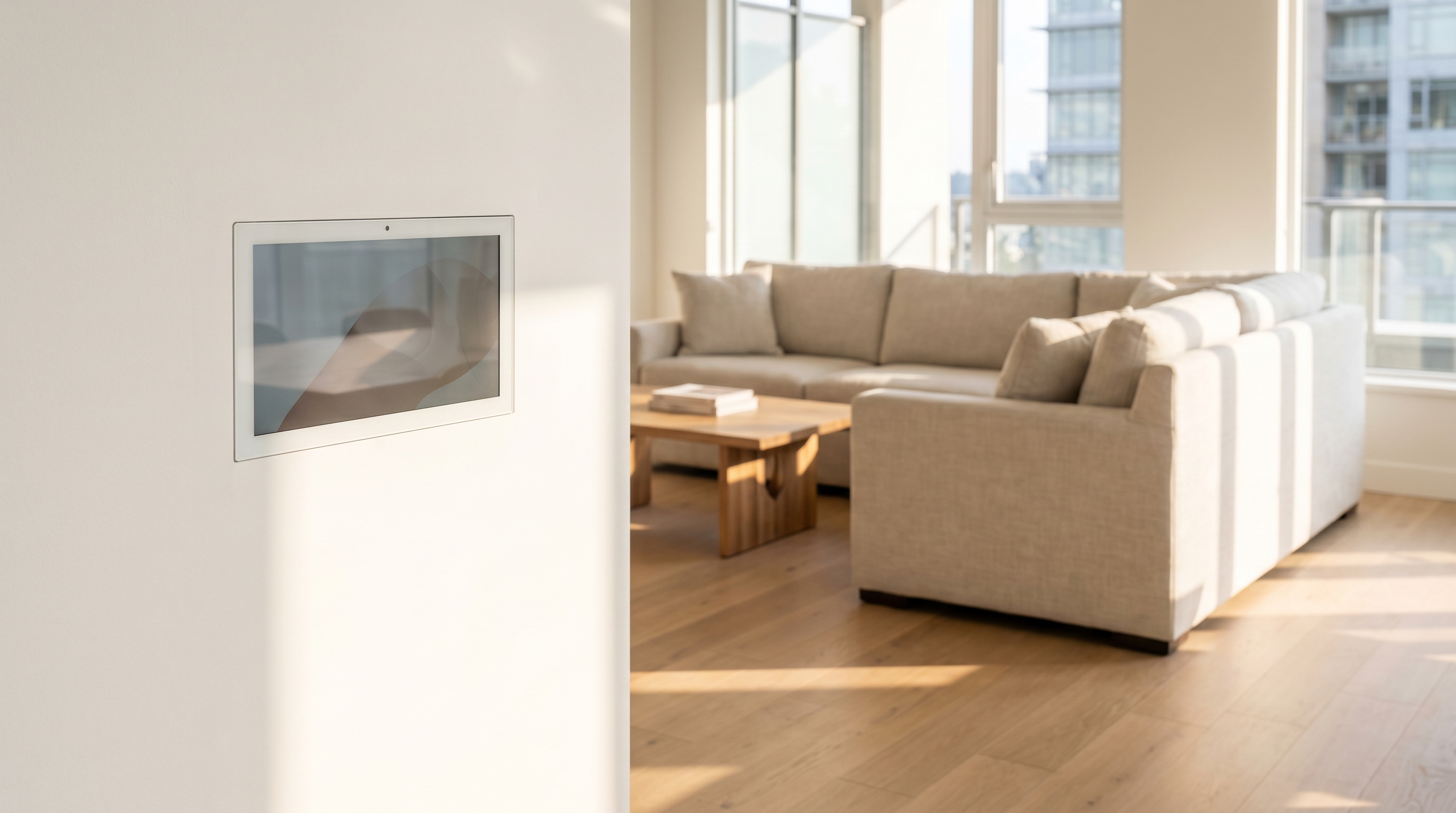
- In many projects: smart-home wiring (Cat6 ethernet to multiple rooms, smart thermostat, video doorbell pre-wire, sometimes a smart panel for monitoring solar/heat-pump performance)
What you do at move-in is mostly opening accounts, not installing infrastructure.
Internet: who actually serves your address
Vancouver has a real fibre market in 2026, which is good news for buyers. The major players you'll choose between:
TELUS PureFibre is the largest fibre-to-the-home network in BC and reaches most newer multiplex projects. Symmetrical upload and download speeds, plans up to 3 Gbps. In our view, this is the default pick for most buyers — the install is clean, the service is reliable, and the upload speed matters more than people realize for working from home.
Rogers (formerly Shaw) is the other big provider. Many addresses still run on the legacy Shaw cable network through Rogers, though new multiplexes are increasingly built with Rogers fibre. Performance is comparable to TELUS at most speed tiers; the service is comparably reliable; pricing is similar.
Novus is a Vancouver-based independent ISP that owns its own fibre network in over 1,000 condo and apartment buildings across Metro Vancouver, with a foothold in newer multiplex projects. Their pitch is value — symmetrical gigabit at notably lower monthly pricing than the big two. Worth checking if your building is on their network.
Beanfield is another fibre-first independent that's been steadily expanding in Vancouver. Less common in multiplex stock right now, but quietly good if it's available.
The right move: type your exact address into each provider's availability checker before you assume what's available. Building wiring agreements vary block to block. We've had buyers in two units of the same fourplex find out they had different provider options because the building was wired by a single ISP.
Realistic budget: $75–$110/month for a 1 Gbps symmetrical fibre plan in 2026, depending on provider, plan length, and whether you bundle TV (which you probably don't need). Schedule the install on possession day or the day after — most fibre installs are 60–90 minutes.
BC Hydro: open the account 5+ days early
Per BC Hydro's moving page, you should set up your account at least five days before possession. The signup is online through MyHydro and takes about ten minutes. There's a $13.50 + GST connection charge that appears on your first bill, and depending on your credit history they may ask for a small security deposit.
What you'll need: your move-in date, your new address (specifically the unit number for a multiplex), an email and phone number, and your preferred billing method. If you're moving from another BC Hydro address, your existing MyHydro login does both transactions in one flow.
For a typical 1,000–1,300 sq ft new multiplex with a heat pump, expect a BC Hydro bill in the $80–$130/month range averaged across the year — colder months higher, warmer months noticeably lower.
FortisBC and gas: usually no, sometimes yes
Most new Vancouver multiplexes are fully electric — no gas range, no gas furnace, no gas water heater, no gas fireplace. If that's true for your unit, you have no FortisBC bill at all, which is one of the quietly nice things about a new build.
A minority of projects keep gas for one feature, usually a gas range or a gas fireplace. If yours does, you'll need a FortisBC account — simplest to apply online or call 1-888-224-2710. Connection fees are similar to BC Hydro's. Confirm what's gas in your unit during the walk-through; sometimes the model suite has features the standard unit doesn't.
Water and the strata
In Vancouver, residential water/sewer service is billed by the City of Vancouver. For a multiplex, the water bill is almost always handled at the strata level — your share is built into your monthly strata fee, not a separate bill in your name. You don't open an account. You do, however, want to confirm at possession:
- Whether your unit has its own water shutoff valve and where it is (in case of a leak at 3am)
- Whether the strata has individual unit metering or just splits the building's bill proportionally
- Where the building's main shutoff is, in case of a major leak
Smart home: which features actually matter
"Smart home" is in nearly every new multiplex marketing brochure. In our experience, the features that genuinely improve daily life — and the ones that turn into shelfware — fall into a few clear buckets.
Worth using on day one
- Smart thermostat (typically Ecobee or Nest). Set a schedule once, save 10-15% on heating, never think about it again.
- Smart smoke/CO detectors. The connected ones notify your phone if they trigger while you're out. Cheap insurance.
- Video doorbell (Ring, Google Nest, etc.). Useful for porch deliveries, especially in a multiplex where there isn't always a concierge.
- Smart locks. For multigenerational households or families with teenagers, the ability to issue and revoke a code is genuinely useful.
- Connected EV charger (if your unit has one). The app schedules charging during off-peak BC Hydro rates and tracks costs against your account.
Often shelfware
- Whole-home audio zoned by room. Beautiful in the demo. Most owners use a Sonos in the kitchen and ignore the rest.
- Smart light switches in every room. Useful in 3-4 high-traffic spots; tedious anywhere else.
- Voice-activated everything. Households that already use Google or Alexa lean in; households that don't, never start.
WiFi: please, please, hardwire what you can
Most new multiplexes pre-wire Cat6 ethernet to multiple rooms — usually the living room, the office, the primary bedroom. Use them. Plug your TV, your work computer, and your gaming console directly into ethernet. Save WiFi for phones, tablets, and devices that move around. A multiplex unit's interior walls are still walls; mesh WiFi works, but a wired connection is dramatically more reliable for the bandwidth-heavy stuff.
For mesh WiFi: a two-node Eero, Google Nest, or TP-Link Deco system covers most multiplex units comfortably for $300–$450. Skip the ISP-supplied router for anything bigger than the smallest unit; the ISP routers are fine but rarely great.
What this comes down to
- Set up BC Hydro at least 5 days before possession; it's a 10-minute online task.
- Compare TELUS, Rogers, Novus, and Beanfield by exact address before committing to internet.
- Most new Vancouver multiplexes are fully electric — no FortisBC bill.
- Water/sewer typically rolls into your strata fee.
- Smart thermostat, video doorbell, and smart smoke detectors are the smart-home features that earn their keep.
- Hardwire ethernet wherever the developer pre-wired it.
FAQ
Can I keep my old internet provider when I move?
Maybe. TELUS PureFibre and Rogers fibre are widely available across Metro Vancouver, so a transfer to your new unit is usually possible. Independent providers like Novus and Beanfield depend on whether your specific building is on their network. Always check by exact address, not just postal code.
Do new multiplexes come with WiFi pre-installed?
No. The cabling and wall plates are pre-installed by the developer, but you bring your own modem, router, and ISP account. A small number of master-planned communities offer building-wide WiFi as part of the strata fee, but this is rare in 3-6 unit multiplexes.
How much will my monthly utilities total?
Realistic range for a typical 1,100 sq ft new multiplex with two adults: $80–$130 BC Hydro, $0 FortisBC (most units are all-electric), $80–$110 internet, water/sewer rolled into strata fees. So $160–$240/month all-in for the utilities you set up yourself, before strata fees.
Is the smart-home wiring upgradeable later?
Yes, but cheaper to ask the developer to do it during construction if you're buying pre-sale. Common upgrades buyers add: extra Cat6 drops to additional rooms, an in-wall touchscreen panel, smart-shade pre-wiring at primary bedroom and living room windows. After the drywall is up, retrofitting these is significantly more disruptive.
Need a checklist?
We send our buyers a one-page move-in checklist with all the providers, account numbers, and timing in one place. Reach out and we'll send it. Or browse current multiplex listings if you're still in the shopping phase.