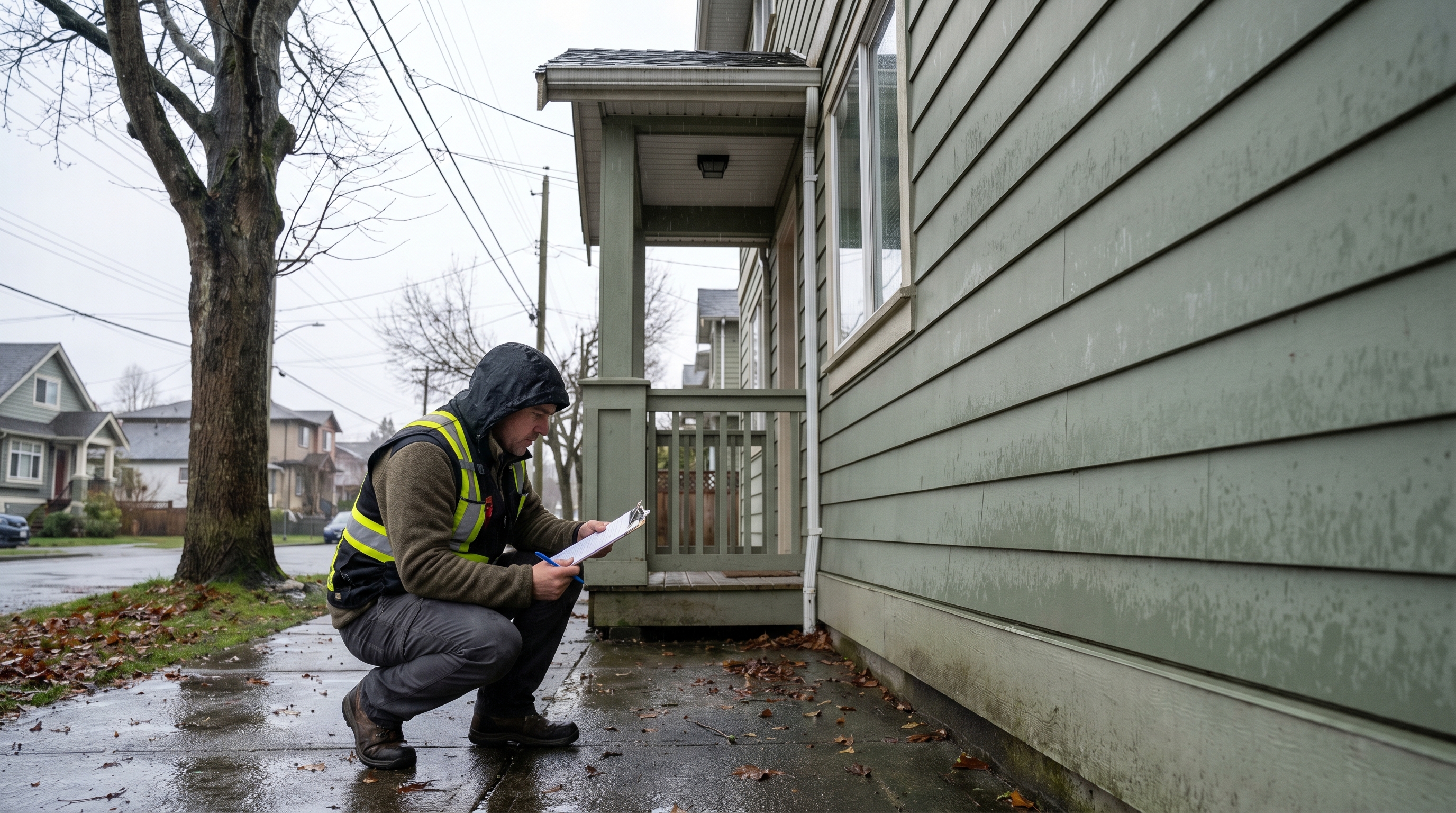
Resale Multiplex Inspection Checklist (2026)
Buying a resale multiplex unit in Vancouver in 2026? A buyer's inspection checklist for what to scrutinize that's different from a brand-new building.
By MultiLiving Editorial · May 29, 2026
Questions about this guide: Gary Paul, REALTOR®, Personal Real Estate Corporation, Grand Central Realty, 778-828-7476
Most of what gets written about Vancouver multiplex housing assumes you're buying brand new. Fair enough — most of the inventory is. But a small and growing slice of multiplex transactions in the city are now resale: a 2018 duplex changing hands, a 2021 fourplex coming up after the original owner outgrew it, a 2014 triplex with two owners on title and a fight over the next roof bill.
Resale multiplexes are a different beast from new builds. The 2-5-10 New Home Warranty has either expired or is partway through. The strata has a real operating history and minutes that go back years. The unit's been lived in. Real wear has happened. And — this is the big one — a resale doesn't come with the developer's deficiency list to fall back on.
Here's the inspection checklist we'd run if we were buying a used multiplex unit in Vancouver this year. Some of it overlaps with a standard home inspection. Most of it doesn't.
Why used multiplex inspections are different
A standard BC home inspection focuses on the physical condition of the home — roof, foundation, plumbing, electrical, HVAC. That's still the core of what you're paying an inspector for. The most common deal-breakers in BC resale inspections are the foundation, roof, plumbing, electrical, and HVAC systems, with moisture management an outsized 2026 concern given coastal humidity, per Consumer Protection BC's guide to home inspections. Use that list as your starting point.
Where multiplex resale gets interesting is everything that isn't physical: how the strata is run, what's covered by warranty and what isn't, what the neighbours fought about last year, and whether the building's depreciation report is realistic or wishful.
Note: BC home inspectors must be licensed under Consumer Protection BC. Always confirm your inspector's license number before booking.
Step 1: Read every minute, then read them again
Before the home inspector ever shows up, get the strata document package. Your realtor or lawyer can request it from the listing agent. You're looking for at least:
- Two years of strata council meeting minutes.
- The current annual budget and the most recent two AGM minutes.
- The contingency reserve fund (CRF) balance.
- The most recent depreciation report (mandatory in BC for stratas of five or more units).
- The Form B (financial information certificate) and Form F (certificate of payment) for the unit.
- The strata's bylaws and any rules adopted by council.
- The insurance summary — building, water-damage deductible, liability.
What we read for, in order:
- Special levies. Any levy in the past three years means money was needed in a hurry. Read why. Was it a one-off or part of a pattern?
- Litigation or active disputes. The council minutes will mention it. Take it seriously.
- Water ingress, leaks, envelope issues. Even a small leak referenced once and then never followed up is a flag.
- Insurance deductibles. A water-damage deductible of $25,000 or more is now common in Vancouver — that's the buyer's risk if a hose lets go.
- CRF as a percentage of recommended funding in the depreciation report. Anything under 50% means special levies are coming.
In our view this is the single highest-leverage hour you'll spend in the whole purchase. Most buyers skim the strata package. Don't.
Step 2: Hire a licensed BC home inspector who's seen multiplex stock
Not every inspector has worked on multiplexes. The construction is more like a townhouse than a single-family home, and the shared walls, roof, and decks introduce questions a detached-home inspector may not think to ask. When you call, ask: How many multiplex resales have you inspected in the last twelve months? If the answer is zero, keep calling.
Expect a multiplex inspection to take 2.5 to 4 hours and run $500 to $850 in 2026 Vancouver. Cheap is not your friend here.
Step 3: The unit-level checklist
Walk through the unit twice. Once with the inspector, once on your own without distractions.
Roof and exterior
- Age of the roof. In BC's wet climate, asphalt shingle roofs typically need replacement at 18–22 years; standing-seam metal lasts 35–50.
- Visible bowing, sagging, or pooling on flat or low-slope sections.
- Gutters and downspouts — clean, sloped, and discharging away from the building.
- Caulking around windows and door frames. Cracked or missing caulk is the #1 entry point for water in coastal multiplexes.
- Siding for warping, soft spots, mildew, or paint failure on the south and west elevations.
Decks and balconies
- Membrane condition — any tears, blisters, or pooling water.
- Slope away from the building (water should drain to the outer edge).
- Railing posts: are they bolted into a structural ledger or just screwed into siding?
- Look at the ceiling of any space directly below a deck for water staining.
Plumbing
- Hot water tank age — most last 10–14 years; replacement runs $1,500–$3,000.
- Run every fixture for two minutes. Watch the drain. Slow drains are a flag.
- Look under every sink for staining, corrosion, or active leaks.
- Washing machine hoses — if they're rubber and over five years old, budget $40 to replace with braided steel as soon as you move in.
- Confirm no polybutylene grey plastic supply lines (a 1980s–90s issue, mostly aged out, but rare older stock still has them).
Electrical
- Service panel — 100A minimum, 200A preferred for any home with EV charging or future heat pump.
- GFCI outlets in kitchens, bathrooms, garages, and outdoor locations.
- Smoke and CO detectors hardwired and functional.
- No aluminum wiring (1965–75 issue, mostly out of multiplex stock but still appears occasionally).
HVAC and ventilation
- Heating system: heat pump, electric baseboard, or gas. Heat pumps under five years old are an asset; old baseboards are not.
- Air filters — when last replaced? A neglected filter is a small tell about how the unit was maintained overall.
- Bathroom and kitchen exhaust fans — they should be loud and pulling air. Vancouver multiplex bathrooms with weak fans grow mould, full stop.
- Heat recovery ventilator (HRV) if installed: when was it last cleaned?
Moisture and the most-overlooked checks
Vancouver's coastal climate is hard on buildings. Spend extra minutes on:
- Bathroom corners and ceilings for any blackened grout or paint shadows.
- Closet walls on north-facing exterior corners — cold spots that grow mould in winter.
- Window sills inside and out, especially where wood meets exterior cladding.
- The foundation perimeter inside any garage or basement — chalky white efflorescence means water is moving through concrete.
- Any spot where the inspector pulls out a moisture meter and the reading is over 18% — push for a follow-up.
Step 4: Building-level checks
Beyond the unit, ask the strata or property manager — through your realtor — about these systems:
- Common-area decks, walkways, and stairs — when last sealed?
- Underground parkade — any active drips, efflorescence, or membrane failures?
- Common roof sections — last inspection date, last service?
- Building envelope — has the strata commissioned a building envelope condition assessment in the last five years?
- Insurance claims history. Two or more claims in five years sharply raises premiums going forward.
Step 5: Where the warranty stands
Every new home in BC is covered by the mandatory 2-5-10 warranty: 2 years for materials and labour on most defects, 5 years for the building envelope, 10 years for major structural defects. On a resale, what matters is how much of that runway is left. Ask:
- Original occupancy date (this starts the warranty clock).
- Which warranty provider issued the policy.
- Whether any claims have been made — and resolved — under that policy.
- Whether the seller has the original warranty paperwork in the unit binder.
A 2018 multiplex resold in 2026 is past its 2-year and 5-year periods, with about two years left on the 10-year structural coverage. A 2021 building has more meat on the bone. Price your offer accordingly.
Step 6: The neighbour read
In a small multiplex, the other three to five owners are effectively your business partners on building decisions. The minutes will tell you a lot. So will an actual conversation. We've watched buyers ring the doorbell of an adjacent unit on the way out of a showing and ask the owner one question: "What surprised you most about living here?" The answer is almost always honest, and almost always useful.
What this comes down to
A new multiplex sale is a contract with a developer and the protection of a fresh warranty. A resale is a contract with a seller, the protection of an inspection you commission, the strata's documented history, and your own diligence. The good news is that resale multiplexes can be excellent value — they've shaken out their first-year glitches, the strata is established, and you can see exactly what you're buying.
The bad news is the diligence falls on you. Read every minute. Hire the right inspector. Look hard at moisture, the roof, and the strata's reserve fund. Talk to a neighbour. Then make your offer with eyes open.
FAQ
What's different about inspecting a resale multiplex versus a detached home?
You're inspecting both your unit and the share of the building you partly own. Decks, roofs, parkades, and exterior walls are usually common property. The strata's documents and depreciation report tell you the condition of those — your inspector won't, because they're not yours alone.
How much does a multiplex home inspection cost in Vancouver in 2026?
Plan on $500 to $850 for a thorough inspection that includes the unit and accessible common areas. Add $250–$400 if you want a separate moisture or thermal imaging scan, which is worth considering for any unit with even a hint of water history.
Is the 2-5-10 warranty still in place on a resale multiplex?
It depends on the original occupancy date. The 10-year structural coverage transfers automatically with the unit until it expires. The 2-year and 5-year coverages are usually past their dates by the time a unit hits resale. Ask for the original warranty paperwork.
What's the biggest red flag in a strata document package?
A contingency reserve fund significantly below the depreciation report's recommended balance, especially when the report flags a near-term major project like a roof or envelope. That combination is a special levy waiting to happen, and it'll land on your bill within a few years of moving in.
Next step
Looking at a resale multiplex unit and want a second set of eyes on the strata package or the inspection report? Talk to the MultiLiving team — we'll go through it page by page with you. Or browse current listings on our properties page.