New Westminster Multiplex Buyer's Guide (2026)
Buying a brand-new multiplex home in New Westminster: neighbourhoods, five SkyTrain stations, schools, prices, and a 30-minute ride downtown.
By MultiLiving Editorial · July 16, 2026
Questions about this guide: Gary Paul, REALTOR®, Personal Real Estate Corporation, Grand Central Realty, 778-828-7476
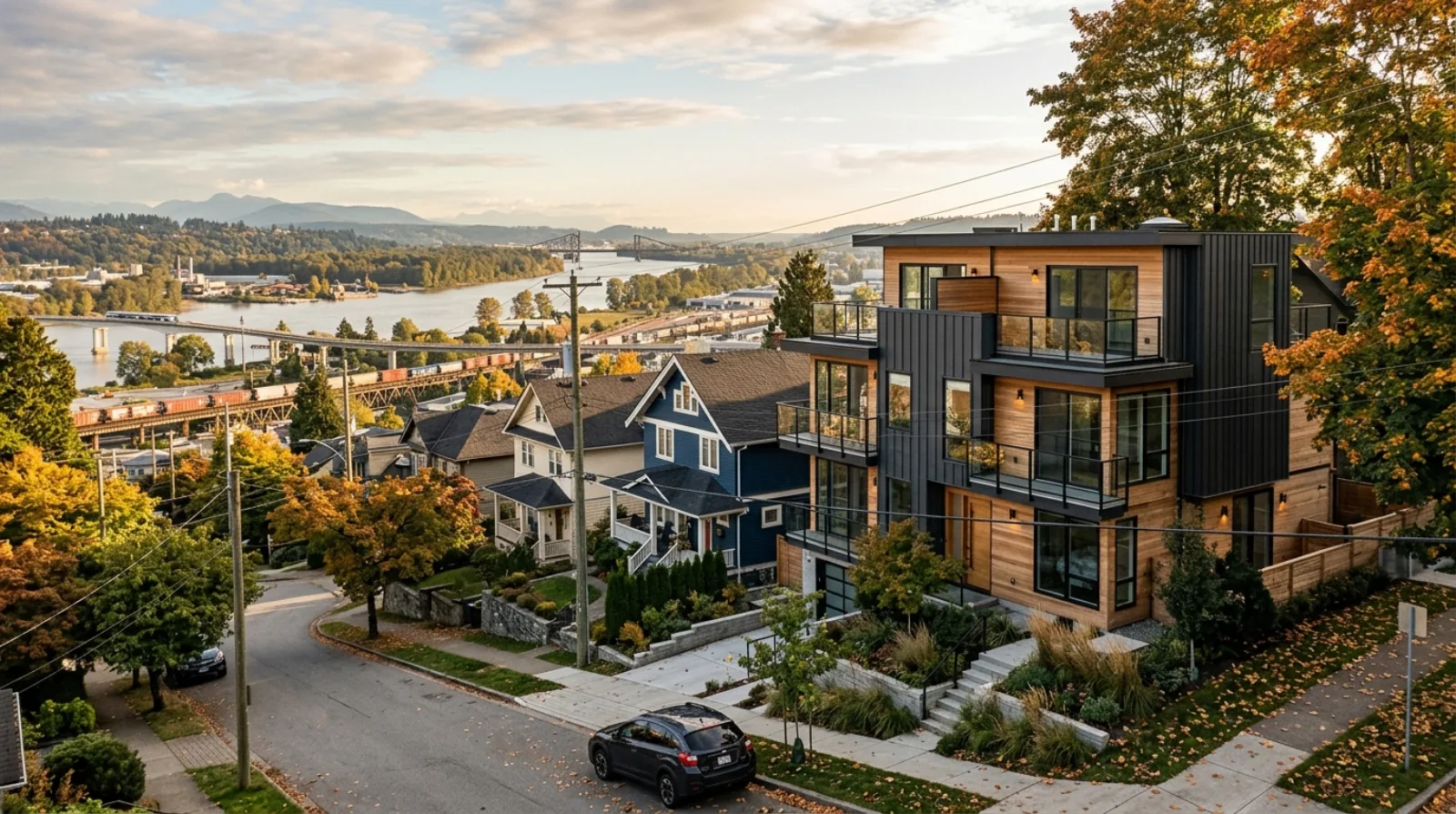
New Westminster sits right in the middle of everything. It is one of the few places in Greater Vancouver where you can stand on a quiet, tree-lined street with heritage homes on both sides, look down the hill, and watch trains cross the Fraser River below. The city calls itself the Royal City, and it has earned the name. New Westminster was founded in 1858 and is western Canada's oldest city, once the capital of the colony of British Columbia, according to The Canadian Encyclopedia.
For a long time this was a city buyers drove past on the way to somewhere else. That has changed. Brand-new multiplex homes — duplexes, triplexes, and fourplexes — are now going up on the same character streets, and they give families a way to own here without paying detached-house money. If you want to be close to family, close to a SkyTrain line, and still close to a real downtown with a river view, New West deserves a serious look. Here is our honest take on where to buy and what to expect.
Why buyers are looking at New Westminster now
The short version: location. New Westminster is almost exactly in the centre of Metro Vancouver. You are close to Burnaby, close to Coquitlam and the Tri-Cities, and a straight SkyTrain ride from downtown Vancouver. That central spot is the whole point for a lot of the families we talk to — parents in one unit, adult kids in another, and everyone still able to get to work, school, and each other quickly.
The other draw is character. Vancouver's newer neighbourhoods can feel a bit blank. New West does not. The older streets have big trees, front porches, and homes that were built a century ago. A brand-new multiplex on one of these streets gets you the best of both — a modern, move-in-ready home inside, and a street with real history outside. In our view, that mix is hard to find anywhere else in the region at this price.
Compared to Vancouver's West Side or the busiest parts of Burnaby, New West still reads as good value. The whole area sits inside the Greater Vancouver Realtors (GVR) reporting region, where the townhouse benchmark price was $1,046,200 in June 2026 — down about 5 percent from a year earlier. That benchmark covers the whole region, not New West on its own, so treat it as a rough guide rather than a New West price tag. But the direction is helpful for a buyer: the market has cooled, and there is room to negotiate right now.
The neighbourhoods, one by one
New Westminster is small enough to walk across, but each pocket feels different. Here is how we'd describe the main ones to a family deciding where to plant roots. The city officially breaks itself into six shopping districts — Downtown, the Quay, Uptown, Sapperton, the West End, and Queensborough — and the residential streets flow out from there.
The Quay and Downtown
This is the waterfront. The Quay runs along the Fraser River, with a boardwalk, shops, restaurants, and the Fraser River Discovery Centre. Right next to it is Westminster Pier Park, which together with the esplanade forms a 2.5-kilometre waterfront park, per the City of New Westminster. Downtown has the New Westminster and Columbia SkyTrain stations, so this is the most walkable, most connected part of the city. Most homes here are condos, but a brand-new multiplex on the streets that climb up from the water gives you the river life with more space.
Uptown
Uptown is the everyday-life centre — grocery stores, the library, Royal City Centre mall, and Moody Park, which has an outdoor pool, playground, sports fields, and courts. This is a practical, family-first part of town. It sits up the hill from the water, so some streets get long views. If you want to be able to walk to almost everything you need on a normal Tuesday, Uptown is a strong pick.
Sapperton
Sapperton is one of the oldest parts of the city and, for many families, the most important one. It is home to Royal Columbian Hospital, one of the largest hospitals in the region. If you have a parent who needs regular care, living a short walk or drive from a major hospital changes daily life. Sapperton has its own SkyTrain station on the Expo Line and a friendly main street of shops and restaurants. It is quieter than Downtown and has a real neighbourhood feel.
Brow of the Hill and the West End
Brow of the Hill sits between the Quay below and Uptown above. It is central, it is walkable, and it has been one of the more affordable pockets in the city — which is exactly why new multiplex homes are appearing here. The West End, over toward the 22nd Street station, is quiet and residential and gives you a fast link toward the Canada Line via a bus connection. Both are the kind of streets where a brand-new fourplex can drop in among older houses without feeling out of place.
Queensborough
Queensborough is different from the rest of the city. It sits on the eastern tip of Lulu Island, connected to the mainland by bridge, right next to Richmond. It is flatter, newer, and generally more affordable, and it tends to draw families who want a bit more room. One honest trade-off: Queensborough has no SkyTrain station of its own. You reach the train by bus or by driving to a nearby station, and the closest one, Edmonds, is actually across the line in Burnaby. If a car-light life on the train is your goal, the mainland neighbourhoods suit you better; if you want space and don't mind a bus link, Queensborough is worth a look.
Connaught Heights
Connaught Heights, near the 22nd Street station, is a small, quiet residential neighbourhood on the western edge of the city. It is one of the pockets the city has pointed to for gentle new housing, so it is a spot to watch for brand-new multiplex homes on calm streets with quick highway and transit access.
Getting around: five SkyTrain stations and a short ride downtown
Transit is New West's quiet advantage. The Expo Line runs right through the city, and the mainland is served by five stations: Columbia, New Westminster, Sapperton, Braid, and 22nd Street. That is a lot of rapid transit for one small city. From New Westminster station, the ride to downtown Vancouver takes roughly 30 minutes, per TransLink — no bridge traffic, no parking hunt, same time every day.
That reliability is the part families tell us they value most. A 30-minute train ride you can count on beats a 25-minute drive that turns into 50 the moment it rains. And because five stations are spread across the city, most brand-new multiplex homes here end up within a reasonable walk or short bus ride of one. The one place to check carefully is Queensborough, which relies on bus links to reach the train rather than a station of its own.
For everything a train doesn't cover, the city is walkable. Pier Park and the Quay boardwalk give you a long riverfront stroll. Uptown and Sapperton both have real main streets. And the whole place is compact, so errands rarely turn into an expedition.
Schools and families
New Westminster runs its own school district, School District 40. It has a single large secondary school, New Westminster Secondary School, plus three middle schools and about ten elementary schools, and it serves Queensborough as well as the mainland, according to School District 40. A brand-new secondary school building opened in recent years, so families are sending kids into a modern facility rather than an aging one.
One secondary school for the whole city has an upside families sometimes miss: kids from every neighbourhood end up in the same place, so friendships cross the whole city and the school community is genuinely city-wide. For a multigenerational family choosing where to buy, that means you can pick the pocket that suits the grandparents — near the hospital, near a park, near the train — without worrying that it locks the kids out of a good school.
For younger children, look at which elementary and middle school catchment a specific home falls into, since those vary by street. If you tell us the units you are weighing, we can help you line up the school picture before you decide.
Price: how New West stacks up against its neighbours
Here is the honest picture. New Westminster is not the cheapest corner of Metro Vancouver, but it usually costs less than comparable homes on Vancouver's West Side or in the busiest Burnaby town centres, while giving you more character than most newer suburbs. It sits in that middle band with Burnaby and Coquitlam rather than at the top with Vancouver proper.
Across the whole GVR region, the townhouse benchmark was $1,046,200 in June 2026 and had eased about 5 percent over the year, per the Greater Vancouver Realtors monthly report. Multiplex homes are their own small, brand-new category, so they don't track that benchmark exactly — but a cooler, buyer-friendlier market is good news either way. Versus Burnaby, New West often lands a little lower for a similar-size home, and versus Coquitlam it trades a slightly longer drive for a much shorter, more direct SkyTrain ride downtown.
Our advice: don't shop by the regional benchmark. Shop by the actual unit. A brand-new triplex home two blocks from Sapperton station will price differently than one in Queensborough, and both differ from a Quay-adjacent home with a river view. We can pull the real numbers for the specific homes you are considering so you are comparing like with like.
What this comes down to
- New Westminster is the most central city in Metro Vancouver — close to Burnaby, Coquitlam, and a straight 30-minute SkyTrain ride to downtown Vancouver.
- It is western Canada's oldest city, so brand-new multiplex homes here sit on character streets with big trees and heritage neighbours.
- Five Expo Line stations serve the mainland: Columbia, New Westminster, Sapperton, Braid, and 22nd Street.
- Sapperton is the pick if being near Royal Columbian Hospital matters; the Quay is best for waterfront and walkability; Uptown for everyday errands; Queensborough for more space at a lower price, but with a bus link to the train instead of its own station.
- The city runs one secondary school, so kids from every neighbourhood share the same school community.
- New West usually costs less than Vancouver's West Side and sits in the same band as Burnaby and Coquitlam — and the market cooled through 2026, which favours buyers.
New Westminster multiplex buyer questions, answered
How much does a multiplex home cost in New Westminster?
There is no single New West figure, but the whole Greater Vancouver region had a townhouse benchmark of $1,046,200 in June 2026, down about 5 percent year over year, per GVR. Brand-new multiplex homes vary by neighbourhood and size, so ask us for real numbers on specific units.
Which New Westminster neighbourhoods are best for families?
Uptown for everyday convenience and Moody Park, Sapperton if you want to be near Royal Columbian Hospital, and Queensborough for more space at a lower price. All three feed into the same school district, so you can choose the pocket that fits your family's daily life.
How long is the commute to downtown Vancouver?
About 30 minutes by SkyTrain on the Expo Line from New Westminster station, according to TransLink. It is a direct ride with no bridge traffic, so the time stays roughly the same whether it is rush hour or a rainy Monday.
How many SkyTrain stations does New Westminster have?
Five stations serve the mainland on the Expo Line: Columbia, New Westminster, Sapperton, Braid, and 22nd Street. That is a lot of rapid transit for one small city, and most brand-new multiplex homes end up within a walk or short bus ride of a station.
Does Queensborough have a SkyTrain station?
No. Queensborough sits on Lulu Island, connected to the mainland by bridge, and has no station of its own. You reach the Expo Line by bus or by driving to a nearby station — the closest, Edmonds, is actually across the line in Burnaby. Plan for a bus link if you buy here.
Is New Westminster cheaper than Burnaby?
Often, yes, for a similar-size home — though it depends on the exact unit and neighbourhood. New West tends to sit just below or alongside Burnaby's town centres while offering more heritage character. The gap is small enough that you should compare specific homes rather than assume.
Queensborough or Uptown — which should I choose?
Choose Uptown if you want to live on the train and walk to shops, the library, and Moody Park. Choose Queensborough if you want more space and a lower price and don't mind a bus link to the SkyTrain. Uptown is car-light living; Queensborough is more suburban.
What is Sapperton known for?
Sapperton is one of the city's oldest neighbourhoods and is home to Royal Columbian Hospital, one of the region's largest, per Tourism New Westminster. It has its own Expo Line station and a walkable main street, which makes it a strong pick for families with a relative who needs regular medical care.
Are there good schools in New Westminster?
The city runs School District 40, with one secondary school (New Westminster Secondary School), three middle schools, and about ten elementary schools, per SD40. The single secondary school means kids from across the city share one community. Check the catchment for any specific home.
Is New Westminster a walkable place to live?
Much of it, yes. Downtown, the Quay, Uptown, and Sapperton all have real main streets, and the 2.5-kilometre waterfront park along the Fraser gives you a long riverfront walk. The city is compact and hilly, so errands stay close, though some streets involve a climb.
What does 'the Royal City' mean?
It is New Westminster's nickname. Queen Victoria chose the city's name in 1859, after the Westminster area of London, and the royal connection gave the city its lasting nickname. It reflects the city's history as the mainland's first capital, per The Canadian Encyclopedia.
Can I get a waterfront home in New Westminster?
The Quay and Downtown run along the Fraser River, with a boardwalk and Westminster Pier Park. Most homes right on the water are condos, but a brand-new multiplex on the streets climbing up from the Quay can give you river views and boardwalk access with more room than a condo.
Is now a good time to buy in New Westminster?
The market cooled through 2026 — the regional townhouse benchmark was down about 5 percent year over year in June, per GVR. A cooler market usually means more room to negotiate. Whether it is right for you depends on your own timing, not the headline number.
How does New Westminster compare to Coquitlam for a buyer?
Coquitlam often gives you slightly more space for the money, but New West gives you a shorter, more direct SkyTrain ride downtown — about 30 minutes with no bus transfer. If a fast, reliable commute matters most, New West has the edge; if space per dollar matters most, compare Coquitlam too.
What kind of multiplex homes are being built in New Westminster?
Brand-new duplexes, triplexes, and fourplexes are appearing on the character streets across the city — in Brow of the Hill, the West End, Connaught Heights, and elsewhere. They are move-in ready homes, sold one unit at a time, that let a family own on a heritage street without paying full detached-house prices.
Ready to look at New Westminster?
New West is one of the real gaps in a lot of buyers' searches, and that is exactly why it is worth your time. Central location, a straight ride downtown, character streets, and a market that has softened in your favour — it adds up. If you want help finding a brand-new multiplex home here, or figuring out which neighbourhood fits your family, browse the homes we have listed or get in touch with our team. We know this city, and we will help you find the right door in it.