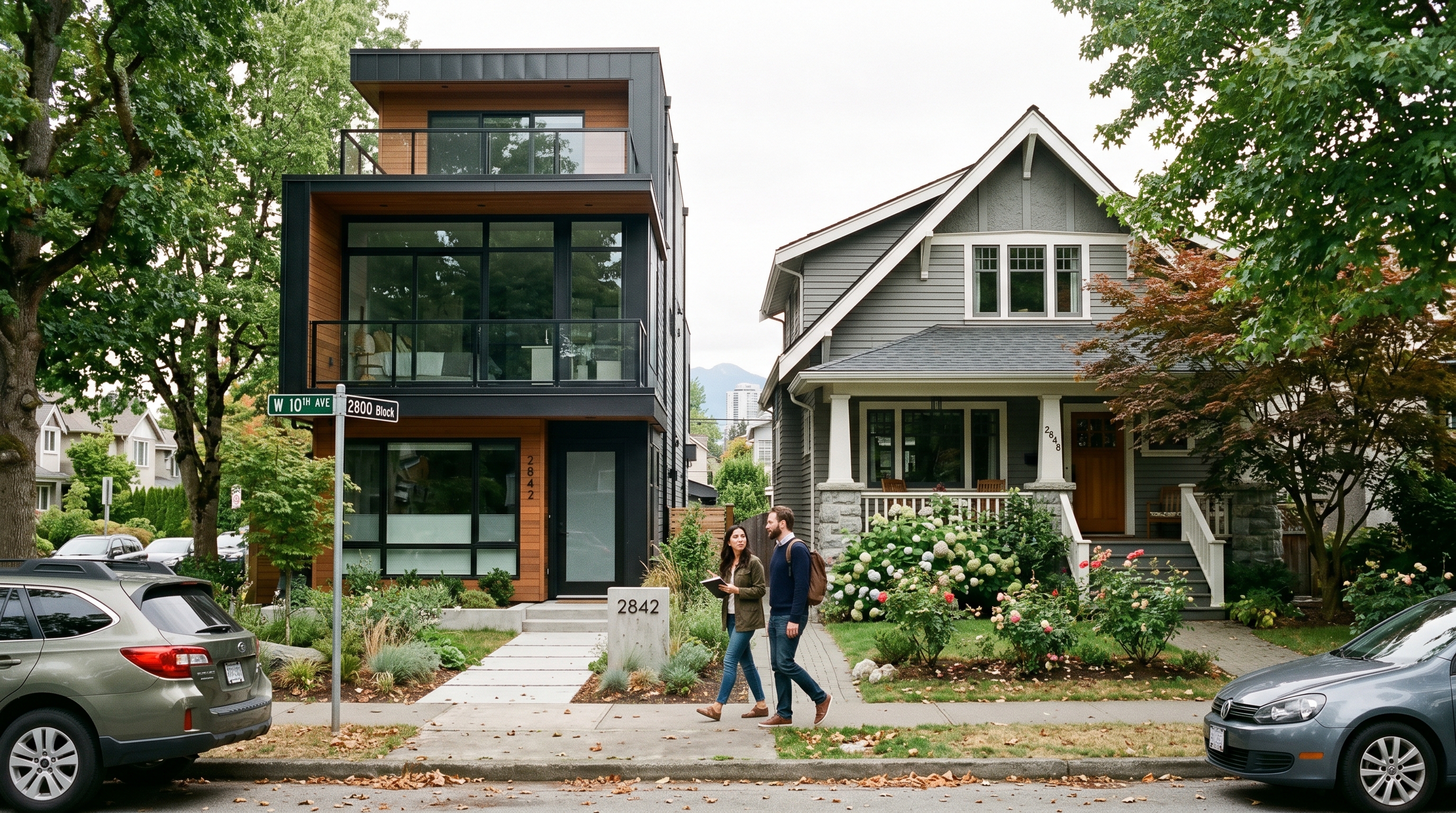
The Last Unsold Home in a New Multiplex: Bargain or Leftover?
Three families moved in, one home is still listed. How to tell a deal from a leftover: why homes sell last, what to check, and what each incentive is worth.
By MultiLiving Editorial · September 26, 2026
Every new multiplex has one. The building finished months ago, three of the four families have moved in, the sales sign is faded, and one home is still listed. Sometimes the price has been cut. Sometimes there is a "decorating allowance" or "strata fees paid for a year" attached. A buyer walking past has the same two thoughts in quick succession: this could be a deal, and there must be something wrong with it.
Both thoughts are reasonable. This post is our opinion on how to tell them apart, and on when the last unsold home in a brand new multiplex is the best purchase on the street.
Why one home is always last
Start with the fact that someone has to be last. In a fourplex, four families buy at different times, and the sales sequence is set by things that have nothing to do with the home's quality.
- The price sheet. Developers price each home, and the cheapest and the most obviously desirable go first. The one priced above what its position justifies waits.
- Position. Our post on front, back, corner and middle homes explains why the middle home in a row, or the one facing the lane, is usually the last to sell. It lives the same and photographs worse.
- Size. In many buildings the largest home is the last one, because it costs the most and the pool of buyers who can pay for it is smallest. In others it is the smallest, because families want three bedrooms.
- Timing. A home whose first buyer failed to complete comes back to market months after its neighbours sold, when the sales effort has moved on to the next building.
- The market. Greater Vancouver REALTORS' August 2026 statistics count 15,798 active listings across the region against 1,869 sales in the month, a sales-to-active-listings ratio of 12.3 percent. For townhouses, the closest published cousin of a multiplex home, the ratio was 15.1 percent. In a market with that much choice, a home that is a small step less attractive than its neighbours waits longer than it would have in 2021.
Each of those reasons leaves the home as good to live in as its neighbours. The buyer it needs is one who looks past the sequence.
The three questions that separate a deal from a leftover
Why is this one still here?
Ask the salesperson directly. A straight answer sounds like "it faces the lane and the two garden homes went first" or "the first buyer couldn't complete in June". A vague answer, or a sales pitch instead of an answer, tells you to look harder. Then check the answer yourself. Stand in the home at the time of day you would use it most. If the reason is the position, decide whether the position matters to your family. A lane-facing home is quieter at the front than the street-facing ones, and for a family with a parent who naps in the afternoon that can be the better home.
What has changed since the neighbours bought?
A finished, occupied building tells you things a show suite never can. Ask to see the strata's first budget and any minutes, which our guide to the first strata meeting explains. Ask whether the disclosure statement was amended during the sales period, and read the amendments; our post on reading a disclosure statement shows where to look. Ask when the home warranty started. Under BC's 2-5-10 home warranty, coverage on the shared parts of the building begins when the first home is occupied, while coverage on the inside of your own home begins when you take it over. A home that sat unsold for a year sits in a building whose shared coverage is a year older. Our warranty guide explains the three periods.
Then knock on a door. The three families who already live there have opinions about the building, the developer's response to deficiencies, and the sound between homes, and most will share them. Our post on questions to ask the neighbours has a script.
What is the incentive worth?
A developer with one home left has costs every month it sits, and will often offer something rather than cut the headline price. Decide what each offer is worth to you in cash.
- A price cut is worth exactly its amount, and it also reduces your property transfer tax and, if the home is under the thresholds, may change your GST rebate. Our GST rebate post explains the thresholds.
- Strata fees paid for a year is worth twelve months of the fee, which for a fourplex is usually a modest sum. Check the actual budget.
- A decorating allowance or upgrade package is worth what you would have paid for those items, which is often less than the number on the flyer.
- Closing costs paid is worth the real closing costs, which our closing costs guide sets out for a home in this price range.
In our view a price cut beats every other incentive of the same stated value, because it lowers the number every other cost is calculated from and it lowers your mortgage. If you are offered an incentive, ask for the cash equivalent as a price reduction instead. The answer is often yes.
The advantages nobody puts on the sign
The case for the last home is stronger than most buyers realise.
You are buying a finished home. No completion date that moves, no deposit sitting in trust for two years, no appraisal ordered eighteen months after you fixed the price. You see the actual kitchen, hear the actual neighbours, and complete on a date you choose.
You can inspect it. Our pre-delivery inspection guide is written for pre-sale buyers who get one walk-through. A buyer of a finished home can bring an inspector and take their time, and can see how the developer handled the first three families' deficiency lists.
The strata exists. The first budget is set, the first meeting has happened or is scheduled, and you can read the numbers instead of a projection.
You have negotiating room. The developer's alternative to your offer is another month of carrying the home. That is more room than a buyer of the first home in a building will ever have.
When to walk away
Three things end the conversation for us.
First, a reason for the delay that turns out to be false. If the salesperson says "the first buyer couldn't complete" and the neighbours say "it's been listed since the building opened", the seller is managing you, and you should assume that extends to everything else.
Second, a building where the other owners describe a developer who does not answer the phone about deficiencies. You are about to become the fourth person calling.
Third, a price that is no lower. Compare the asking price with what the other three homes sold for if the owners will tell you, and with the current listing prices of similar new homes nearby. A "reduced" price that still sits above a comparable home two streets over is a leftover, whatever the sign says.
What this comes down to
- Someone is always last, and the reasons are usually position, size, price sheet and timing. None of them make the home worse to live in.
- Ask why it is still here, then check the answer with the neighbours.
- Read the strata's first budget, the disclosure statement amendments and the warranty start date. A finished building shows you all three.
- Value every incentive in cash. A price cut beats a package of the same stated value, and you can ask to convert one to the other.
- A finished home has no completion risk and no appraisal gap, and the seller has less room to hold firm than on the first home in the building.
- Walk away from a false story about the delay, an unresponsive developer, or a "reduced" price that is still above comparable homes.
Questions buyers ask about the last home in a building
Is the last unsold home always cheaper?
No. Some are listed at the original price with an incentive attached. Compare the asking price with similar new homes nearby and with what the neighbours paid, if they will say. The right comparison is the current market.
Why would a first buyer fail to complete?
Usually financing. A buyer who signed a pre-sale in 2024 may have found the lender's appraisal below the price at completion, or their circumstances changed. Our post on appraisal shortfalls explains the mechanics. It is a common reason and it says nothing about the home.
Does a home that sat empty for a year have any problems?
Sometimes small ones: a heating system never run through a winter, or a deficiency list nobody chased because nobody lived there. Bring an inspector, and ask the developer for the deficiency lists from the other three homes.
Has the home warranty already started?
Partly. Under BC's 2-5-10 warranty, coverage on the shared parts of the building begins when the first home is occupied, so if the neighbours moved in a year ago that clock has a year on it. Coverage on the inside of your own home begins when you take possession. Ask for both start dates in writing.
Can I negotiate the price on a brand new home?
Yes, and on the last home in a building you have the most room you will get. The developer's alternative to your offer is another month of carrying costs. Make an offer through your own realtor, and ask for incentives to be converted to a price reduction.
Is a "decorating allowance" worth anything?
It is worth what you would have spent on those items, which is often less than the amount on the flyer. Ask for the same amount as a price reduction instead, which lowers your mortgage, your property transfer tax and possibly your GST.
Should I use my own realtor for a finished new home?
Yes. Our post on using your own realtor versus the developer's sales team explains why. On the last home in a building, a negotiator on your side is worth the most.
How do I find out what the other homes sold for?
The owners may tell you if you ask. Sold prices from the MLS® system are available to registered users of our sold listings, under the rules that govern that data. Your realtor can also pull comparable sales nearby.
Does a finished home still qualify for the GST new housing rebate?
The rebate depends on the price, on the home being new and unoccupied as a residence before you, and on your intent to live in it. A brand new home that has never been occupied generally qualifies within the thresholds. Confirm with your lawyer, because a price change from an incentive can move the home across a threshold.
Is the strata for a fourplex already running if three families live there?
Usually. The developer forms the strata at the first sale, and the first general meeting is held within the timeline set by the Strata Property Act. Ask for the minutes, the budget and the insurance certificate before you offer.
What if the developer will not negotiate?
Then decide whether the home is worth the asking price as it stands. Some are. A finished home with three settled neighbours, a running strata and no completion risk has a value of its own, and if the price matches comparable new homes nearby it can still be the right purchase.
Are there many finished, unsold new multiplex homes right now?
Across Greater Vancouver, the August 2026 sales-to-active-listings ratio of 12.3 percent means there are more homes listed than in a tight market. We do not have a published count of finished new multiplex homes specifically. Our listings show which homes are complete and ready to move into.
Look at the finished ones first
If you would rather move into a home than wait for one, filter our listings for buildings that are complete and ask us which have a home left. We can tell you what we know about why, and put you in touch with a realtor who negotiates these purchases for buyers. Browse the current homes, or ask us about a specific building.
Clicking “Share on LinkedIn” opens the suggested post text so you can edit it before sharing.