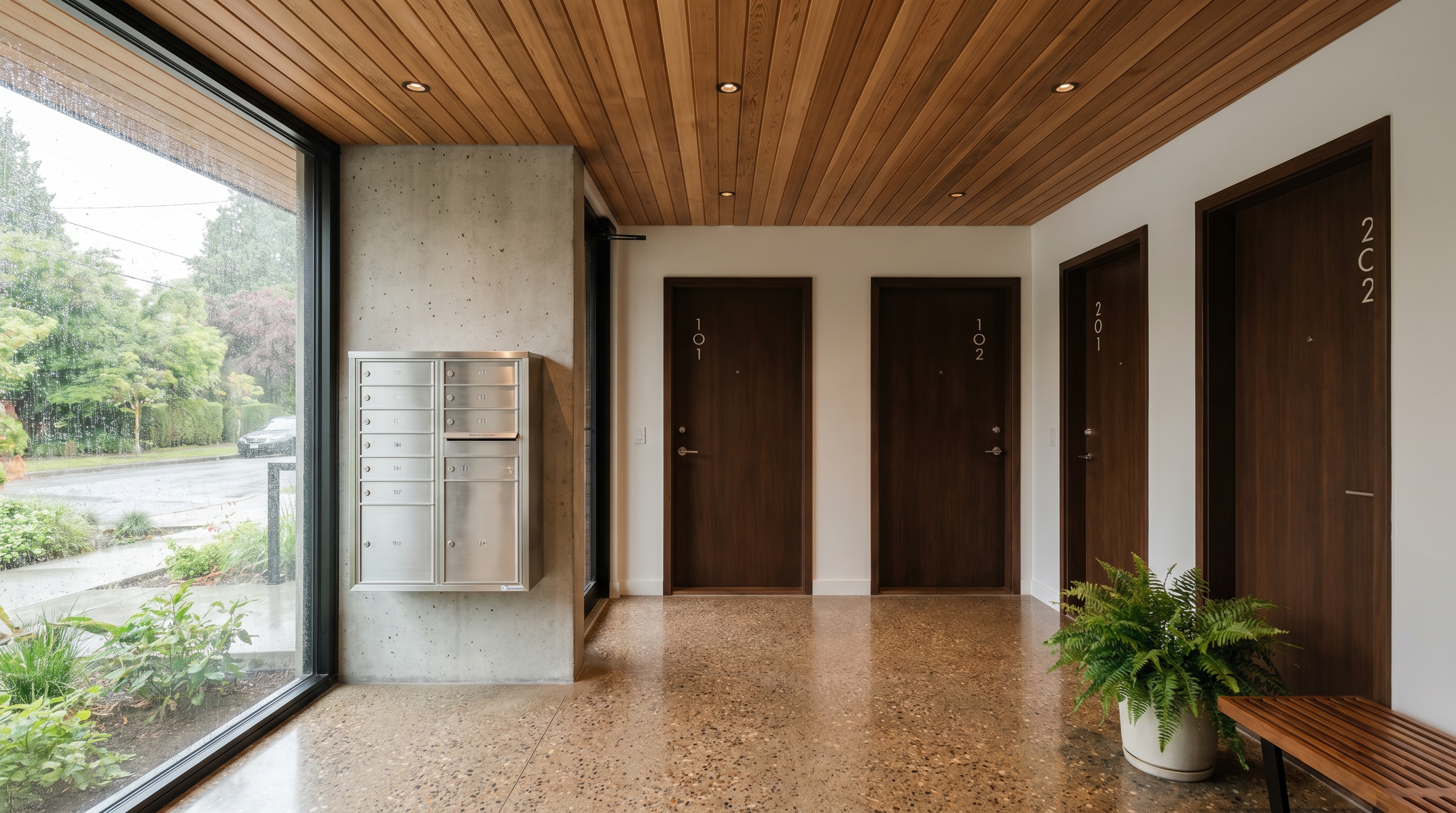
Questions to Ask the Neighbours (and the Strata) Before You Buy a Multiplex Home
In a four-home strata your neighbours are your co-owners. The questions to ask them, what the Form B tells you, and what to check before you commit.
By MultiLiving Editorial · September 22, 2026
Buy a home in a tower and the strata is an institution: a council you elect, a management company you pay, minutes you skim. Buy a home in a brand new fourplex and the strata is three other households, all of whom you will see at the recycling bins. That difference is the point of this guide. The documents you are entitled to are the same in both cases, and we will cover them. But in a small building the people are the second half of the file, and nobody hands you a form about them.
This is written for the buyer of a single home in a multiplex of three to six homes, whether pre-sale or finished. If you are buying a finished home, the neighbours exist and you can talk to them. If you are buying pre-sale, they do not exist yet, and we cover what to do about that at the end.
Why a small strata is a different animal
A strata corporation is the legal body that owns the shared parts of a building and collects the fees that maintain them. In a 200-home tower, decisions are made by a seven-person council, executed by a management company, and voted on at meetings most owners skip. In a four-home building, the council is often all four owners, the management company may be one of them with a spreadsheet, and any vote that needs a three-quarters majority can be blocked by one household.
That cuts both ways. A small strata can be the easiest form of ownership there is: four reasonable households, low fees, decisions made over coffee. It can also be the hardest, because there is nowhere to hide from a neighbour who disagrees with you about the roof. Our post on your first strata meeting in a new multiplex explains how the first year works. This post is about what to find out before you join.
What the documents tell you
Start with the paper, because it is your legal right and because it frames the conversation you will have on the front step.
The Form B. In BC, a buyer of a strata lot can request an Information Certificate, called a Form B, which the Province of British Columbia describes as disclosing information about the strata lot and the strata corporation. It covers the monthly strata fee for that home, any money the current owner owes the strata, any agreements about alterations to the home, any special levies that have been approved, the balance of the contingency reserve fund, any court or tribunal proceedings, and parking and storage allocations. Attachments include the rules, the current budget and the depreciation report, if there is one. Since 2023 the form also carries a summary of the strata's insurance.
Our guide to reading a strata disclosure walks through each section. For a small building, three lines deserve the most attention: the contingency reserve balance, which tells you whether the owners have been saving; the insurance summary, which tells you the deductible the four of you would share; and the proceedings line, which tells you whether anyone is already fighting.
The bylaws. The provincial page states that if you request a copy of the bylaws, the strata must provide them within one week. Read them for the things that shape daily life: pets, rentals, noise hours, what you can change on the exterior, and whether the yard behind your home is yours to use or common property you happen to be beside. Our post on pet rules in multiplex bylaws explains why the standard bylaws and a building's own bylaws can say different things.
The minutes. The strata must respond to a request for meeting minutes and other records within two weeks. In a four-home building, the minutes may be a page long and written by an owner. That is fine. What you are reading for is tone: are decisions recorded, are disagreements noted, and does the same issue come up meeting after meeting?
The depreciation report. A brand new strata may not have one yet; BC's rules give new stratas time before the first report is due. Our post on depreciation reports in a new multiplex explains the timeline and what the first report will require the owners to plan for.
The questions to ask the neighbours
Now the second half. Ask the listing agent to introduce you to an owner, or knock on a door on a Saturday afternoon with a printout of the listing in your hand. Most people are happy to talk about their building, and the ones who are not have told you something too.
About money
- Has the strata ever approved a special levy, meaning a one-time charge on top of the monthly fee, and what was it for?
- Has any vote on money failed? In a four-home building, one household can block a three-quarters vote, and a failed vote on a roof repair is a story you want to hear before you buy.
- Who handles the money? Is there a management company, or does one owner keep the books? If one owner does, what happens when that owner sells?
- Is anyone behind on fees? The Form B tells you about the home you are buying. A neighbour can tell you about the others.
About the building
- What broke in the first year, and how was it fixed? Every new building has a list. What you want to know is whether the developer came back and whether the owners had to fight for it.
- Has there been a water leak, a noise complaint or an insurance claim? Small buildings share one insurance policy, and a claim on any home can raise the premium for all four.
- Which walls carry sound? The owner of the home next to the one you are buying is the only person who can answer this. Our post on sound and privacy in a multiplex explains what to listen for; the neighbour explains what they hear.
- Who uses the shared outdoor space, and how is it maintained? Whose job is the lawn?
About the people
- How are decisions made? Over text, at a meeting, by one person who takes charge?
- Has anyone sold since the building was finished, and why?
- Are any of the homes rented out, and are the tenants in the picture when decisions are made?
- Would you buy here again?
The last question is the one to save for the end. People give a straight answer, on a front step, more often than you would expect, and the answer is worth more than most of the disclosure package.
What to do when the neighbours do not exist yet
For a pre-sale purchase there is no one to knock on the door of. What you have instead is the developer's disclosure statement, which sets out the strata's proposed bylaws, the estimated first-year budget and how the developer intends to hand the strata over to the owners. Our pre-sale guide explains the disclosure statement and the seven-day window you have to read it.
Three things to check in that package that a neighbour would otherwise tell you:
- The estimated monthly fee and the budget behind it. Estimates in disclosure statements are often low. Ask how the insurance line was estimated and whether a quote was obtained.
- Whether the developer is keeping any homes as rentals. A developer that holds two of four homes has a controlling vote in the strata until they sell.
- Whether any home carries a covenant or a different share of the fees. In a building where one home is much larger, the fee split should follow the size, and the disclosure statement will say whether it does.
Then ask the developer which of the other homes have sold and whether the buyers are owners or investors. The mix of owner-occupiers and landlords in a four-home building shapes how it is run more than any bylaw does.
Two conversations to have with your own household first
Before you talk to neighbours, agree on two things at your own table.
The first is what you would do if a special levy landed. A roof, a drainage problem or a leak in a fourplex is a four-way bill, and your share might be a quarter of a large number. Our guide to what you pay to own a multiplex home walks through the monthly and the unexpected costs, and what you repair versus what the strata repairs explains where the line falls.
The second is how involved you want to be. In a small strata, someone has to be treasurer. Someone has to chase the roofer. If none of the four households wants the job, the building drifts. Decide whether you are that household before you find out you have to be.
Reading the answers
You are listening for patterns, and three patterns tell you most of what you need.
A building where the neighbours say "we sorted it out" about the first-year defects, the water leak and the fee increase is a building that works. A building where every answer includes a name is a building with a personality problem, and you are about to buy into it. A building where nobody knows the answers, because nobody keeps minutes and nobody is sure who has the insurance policy, is a building that has not started being a strata yet, and you would be joining at the point where someone has to.
None of these is a reason to walk away on its own. All of them are reasons to price what you are buying correctly and to go in with your eyes open.
What this comes down to
- In a three- to six-home strata, the council is your neighbours, and one household can block a vote that needs three-quarters.
- Request the Form B, the bylaws, the minutes and the depreciation report. BC requires the bylaws within a week and other records within two weeks of a request.
- On the Form B, read the contingency reserve balance, the insurance summary and the proceedings line first.
- Ask the neighbours about money, the building and the people. Save "would you buy here again" for last.
- For a pre-sale, the disclosure statement is the stand-in. Check the fee estimate, developer-held rentals and the fee split.
- Agree in your own household on what you would do about a special levy and whether you are willing to help run the building.
Questions buyers ask about small stratas
Can I talk to the neighbours before buying a strata home in BC?
Yes. There is no rule against it, and in a small building it is the most useful thing you can do. Ask the listing agent for an introduction or knock on a door on a weekend with the listing in hand. Most owners are glad to talk about their building.
What is a Form B and what does it tell me?
A Form B is the Information Certificate a BC strata must provide to a buyer on request. It states the home's monthly fee, money owed, approved special levies, the contingency reserve balance, any court or tribunal proceedings, parking and storage allocations, and includes the rules, budget and depreciation report as attachments.
How quickly must a strata provide bylaws and minutes?
According to the Province of British Columbia, a strata must provide a copy of its bylaws within one week of a request and other records, such as meeting minutes, within two weeks. Build that into your subject-removal timeline so the documents arrive before your decision is due.
What is a special levy?
A one-time charge approved by the owners to pay for something the monthly fees and the contingency reserve fund cannot cover, such as a roof replacement. In a four-home building, your share is usually a quarter. Ask whether one has ever been approved or voted down.
Can one owner block a decision in a four-home strata?
Often, yes. Many strata decisions require a three-quarters vote, and in a building with four homes, one owner voting against means the motion fails. That is why the neighbours' history of agreeing or disagreeing matters more here than in a tower.
Do small stratas need a management company?
No. Many self-manage, with one owner acting as treasurer and another keeping minutes. That works well when the households get along and poorly when they do not. Ask who does the job now and what the plan is if that person sells.
What should I check in the strata's insurance?
The deductible, which the four owners share if a claim is made, and whether any claims have been filed. The Form B has carried a summary of the strata's insurance since 2023. A high deductible on a small building is common and worth knowing before you buy.
What if the strata has no depreciation report?
A brand new strata is not required to have one immediately; BC's rules give new stratas time before the first report is due. Ask when the first report is planned and how the owners intend to pay for it, since the report itself is a cost the strata must budget for.
How do I check a pre-sale strata when there are no neighbours yet?
Read the disclosure statement's proposed bylaws and first-year budget, ask how the insurance estimate was obtained, find out whether the developer is keeping any homes as rentals, and ask which homes have sold and to whom. You have seven days after signing to cancel if the answers worry you.
Should I worry if some homes in the building are rented out?
Not on its own. What matters is whether the owners who rent are engaged in running the building. Ask who attends meetings and who answers when something breaks. A building where two of four homes are absentee-owned can be hard to get decisions from.
What is the single most useful question to ask a neighbour?
"Would you buy here again?" People give a straight answer, in person, more often than you would expect. Ask it last, after the questions about money and the building, so the answer comes with context.
What are strata fees like in a multiplex compared with a tower?
Lower, because there is no elevator, gym, concierge or lobby to pay for. The owners share the roof, exterior, insurance and a contingency fund. Our guide to strata fees in a multiplex explains what the monthly fee covers and why it is set by a handful of households.
Knock on the door before you sign
If a multiplex home has passed the photo test and the floor plan test, the last test is the neighbours. Take this list, pick a Saturday, and knock. Then browse the multiplex homes for sale to line up your next few candidates, or talk to us and we will help you request the Form B, the bylaws and the minutes for any home you are serious about.
Clicking “Share on LinkedIn” opens the suggested post text so you can edit it before sharing.