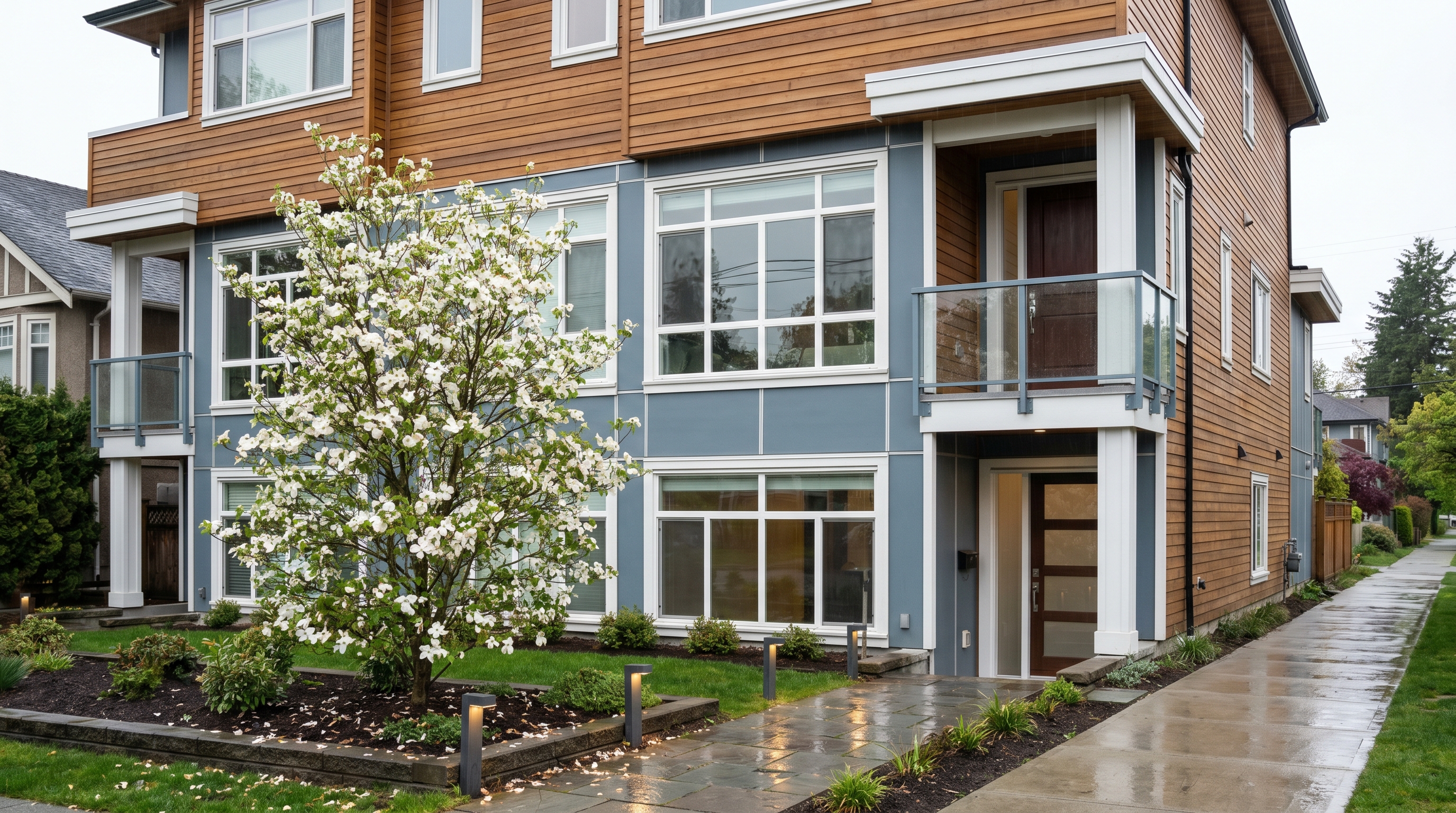
Renting Out a Multiplex Basement Suite in Vancouver
You bought a multiplex unit with a separate suite below. Here's what BC tenancy law actually requires of you as a live-in landlord in 2026.
By MultiLiving Editorial · May 24, 2026
Plenty of brand-new Vancouver multiplexes come with a self-contained suite tucked into the lower level — sometimes called a basement suite, sometimes a lock-off, sometimes just "the downstairs." It's part of why this kind of home pencils out for buyers who couldn't afford a detached house: you live upstairs, someone else lives below, and their rent helps cover your mortgage.
But the moment you put a tenant in that suite, you're a landlord under BC law — and BC has some of the most tenant-protective rules in Canada. Most first-time multiplex owners we talk to are vaguely aware of "the rules," then get surprised by the specifics. This is the plain-English explainer we wish came in the welcome package: what the Residential Tenancy Act actually requires of you, what changed in 2024 and 2025, and what to do before your first tenant signs anything.
We'll keep this firmly in buyer territory — no construction or design talk, just the rules a brand-new multiplex owner needs to know before they hand over keys.
First: is your suite actually a separate rental unit?
Most new multiplexes are built with the secondary suite as a fully self-contained unit — its own door, its own kitchen, its own bathroom, its own laundry, its own meter or sub-meter. If that's what you bought, you're looking at a true secondary rental tenancy and the Residential Tenancy Act applies in full.
Some buyers, though, get confused by the difference between:
- A self-contained suite with a separate entrance — a real rental unit. RTA applies.
- A roommate-style situation where someone shares your kitchen or bathroom — typically not covered by the RTA, falls under common-law roommate rules instead.
- A short-term rental (under 30 days) — covered by Vancouver's short-term rental bylaws, not the RTA. We've covered the Airbnb side of that in this article.
For the rest of this piece, we're talking about a brand-new multiplex unit where the lower-level suite is genuinely separate and you're renting it out long-term to one household. According to TRAC (Tenant Resource and Advisory Centre), "a secondary suite can be a basement suite, laneway house, or another self-contained unit on the same property as a residential house" — and even illegal suites are covered by the provincial RTA.
What "legal" means in Vancouver
If your multiplex is brand new and was built and inspected as a multiplex with separate units, your downstairs suite is already legal. That's actually one of the underrated reasons to buy new instead of older — you don't inherit grey-area suites.
But if you're choosing between buildings, you can verify what you're getting:
- The disclosure statement and floor plan should clearly identify the suite as a separate rental unit.
- The strata's Form B and bylaws will tell you whether the suite is allowed to be rented out separately, or whether the entire unit (yours plus the suite) must be a single household. Most modern multiplex stratas allow rental — but check.
- According to the City of Vancouver, a legal secondary suite needs at least 37m² (400 sq ft) of floor area, can't exceed 90m² (968 sq ft) or 40% of the home's habitable space, must have its own independent entrance, and needs minimum ceiling heights of 2.0m. Brand new multiplexes are designed to clear those thresholds easily — older retrofits often aren't.
- If you plan to rent the suite long-term (90+ days), you need a long-term rental business licence from the City of Vancouver. It's an annual licence — not expensive, just don't forget.
The RTA basics every new landlord needs to know
The Residential Tenancy Act is the main law. The Province also publishes Policy Guidelines that flesh it out. Here's what matters most:
Use the standard tenancy agreement
BC has a standard Residential Tenancy Agreement form. You can add reasonable extra terms (rules around pets, parking, smoking, guests), but you cannot contract out of the RTA. Any clause that conflicts with the Act is unenforceable. We've seen new landlords download a generic Canadian lease template and end up with terms that are simply illegal in BC. Don't do that.
Security deposits and pet deposits
Maximum security deposit: half a month's rent. Maximum pet damage deposit: another half month's rent. You must hold the deposit in trust. You must return it within 15 days after the tenant leaves, or apply to the Residential Tenancy Branch to keep some or all of it for damages. If you miss the 15-day window, you can be ordered to return double.
Rent increases are capped
Rent in BC can be increased once every 12 months, with three full months' written notice, on the official RTB form, and only by the maximum amount the province sets each year. According to BC government tenancy rules, the cap for 2025 was 3%. The province publishes a new percentage each year. You cannot raise rent because someone's income changed, or because a new market rate is higher. Plan accordingly when you're underwriting your rental income.
Fixed-term leases are no longer an eviction tool
This is the change that catches new landlords most often. A one-year fixed-term lease in BC does not automatically end with the tenant moving out — it converts to month-to-month unless the tenant signs a new agreement. The only way you can include a vacate clause is if it's a sublet, or if you (or a close family member) genuinely plan to move in at the end of the term. You cannot use a series of one-year leases to keep tenants on a leash.
How (and when) you can end a tenancy
BC made some of its biggest tenancy law changes in 2024 and 2025, all in the direction of stronger tenant protections. If you bought your multiplex hoping you could move a relative into the suite later, here's what the rules now look like.
Landlord-use eviction (you, your family, or a buyer wants the suite)
Effective June 18, 2025, you must give the tenant three months' written notice if you want to end the tenancy so you, your spouse, parent, child, or close in-law can move in. The notice must be issued through the official Landlord Use Web Portal — handwritten or DIY notices won't fly. The tenant has 30 days to dispute. You owe one month's rent in compensation, paid before or on the effective date of the notice. And whoever moves in must stay for at least 12 months.
Skip any of those steps and you can be ordered to pay 12 months of rent as damages — that's not a typo. The province takes "good faith" intent seriously. If you give the suite to your daughter for two months and then put it back on the rental market, expect a hearing.
For-cause eviction
If a tenant doesn't pay rent, repeatedly disturbs other occupants, damages the property, or breaches a material term of the agreement, you can issue a notice to end tenancy for cause. The notice periods range from 10 days (unpaid rent) to a month (other causes). The tenant can dispute through the RTB. In our view, most new landlords overestimate how easy this process is — even a clear-cut unpaid-rent situation can take six to ten weeks from notice to a possession order.
Mutual agreement
By far the simplest way to end a tenancy is for both parties to agree. If your tenant wants to move and you want them to move, sign a mutual agreement to end tenancy. That's the cleanest exit and avoids the formal notice/dispute process.
Living above your tenant: the practical stuff
The legal rules are only half of it. The other half is the human reality of sharing a building with someone who's paying you rent. Things we've seen go well and badly:
- Be clear in the agreement about quiet hours, guest policies, parking, and shared outdoor space (if any). Vague leads to friction.
- If utilities are bundled, decide upfront whether you're including everything or just water/heat. Hydro is the easiest one to sub-meter.
- Agree on how to handle small repairs. Most tenants would rather you sent a friend over to fix the leaky tap than file a formal request — but you need to honour any legitimate repair request promptly.
- You must give 24 hours' written notice before entering the suite for non-emergency reasons. "I'm just popping down to check the water heater" without notice is a tenancy violation.
- Treat the relationship like a long-term business arrangement, not a roommate situation. The boundary makes both lives easier.
Tax implications (the short version)
The CRA treats rental income from your basement suite as taxable. You report rental income, deduct legitimate expenses (a portion of mortgage interest, property tax, insurance, utilities, repairs, strata fees) in proportion to the rented area, and pay tax on the net. You also need to be careful: if the rented portion of your home becomes too large or too distinct from your principal residence, you can lose part of your principal residence exemption when you sell.
This is the piece a real accountant should walk you through before your first tax filing as a landlord. The decisions you make in year one — how much expense allocation, whether to claim depreciation — can lock in tax outcomes for as long as you own the home.
Insurance — yours, not the strata's
Your strata's master policy covers the building. It does not cover your contents, your tenant's belongings, or your liability as a landlord. You need a homeowner policy that specifically covers rental of part of the unit. Tell your insurer in plain language: "I'm living in the upper portion of a multiplex unit and renting out the basement suite long-term to a tenant." Most carriers will write it; a few won't, and you want to find that out before you sign a tenant up.
Encourage (or require, in the lease) your tenant to carry their own contents and liability insurance. It's cheap — usually $20–$30 per month — and saves enormous headaches if something happens.
What this comes down to
- If your brand-new multiplex includes a self-contained lower suite and you rent it long-term, BC's Residential Tenancy Act applies in full.
- Use the standard BC tenancy agreement, hold deposits in trust, and never raise rent more than once a year by more than the provincial cap (3% in 2025).
- Fixed-term leases no longer end automatically — they convert to month-to-month unless a new agreement is signed.
- As of June 2025, ending tenancy for landlord/family use requires three months' notice, the official portal, one month's compensation, and 12-month occupancy — getting any of this wrong can cost a year of rent in damages.
- Get the City of Vancouver long-term rental business licence, tell your insurer about the tenant, and book an accountant before your first tax return.
- Treat the relationship as a business, give 24 hours' notice before entering, and put expectations in writing — most landlord/tenant disputes start with vague verbal agreements.
Frequently asked questions
Do I need a separate strata approval to rent out my multiplex's basement suite?
Maybe. Read your strata bylaws carefully. Most modern multiplex stratas anticipate the suite being rented out, but some require notification or have specific rental rules around the secondary unit. Ask the developer for the disclosure statement and the latest Form B before completion.
Can I screen tenants based on income, credit, and references?
Yes, on income, credit, and references. No, on race, religion, family status, source of income, or any other protected ground under the BC Human Rights Code. "No families with kids" and "no people on income assistance" are illegal screening criteria. Use objective measures and document your decisions.
What if I want to use the suite myself part of the year and rent it the rest?
That's harder than it sounds. Ongoing seasonal rentals under 30 days fall under short-term rental rules, which Vancouver heavily restricts. Rentals over 30 days fall under the RTA, with all the notice and compensation rules above. Most owners in this situation either rent year-round or keep the suite for family use only — the in-between is a legal headache.
Does the rental income help me qualify for a bigger mortgage?
Often, yes. Most lenders will count a portion of the projected rental income from a legal secondary suite toward your qualifying income — typically 50% to 80%, depending on the lender and product. We've covered this from the buyer angle in our mortgage helper duplex guide.
Buying a multiplex with the suite already counted in your plan
If renting out your basement suite is part of the reason a multiplex unit is the right home for your family, get the legal picture straight before you fall in love with a floor plan. We can help you compare buildings, check strata bylaws around rentals, and get clear on the income side before you sign. Start at /properties or send us a note — we'll line up units where the suite was designed to be rentable from day one.