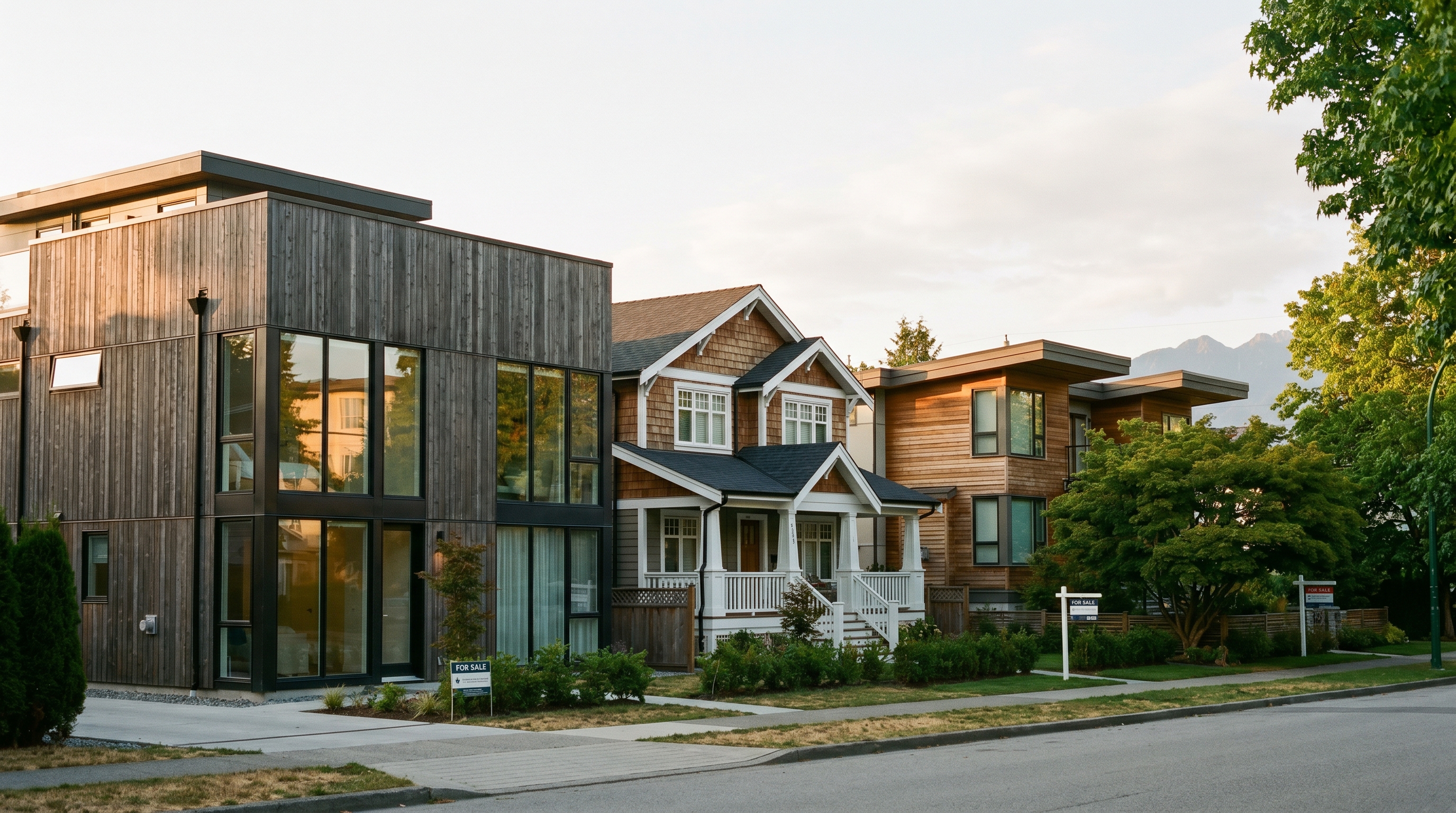
Laneway House or Multiplex Unit: Which Fits Your Family?
Living in a family laneway home or buying your own multiplex unit? Ownership, equity, financing, and space compared honestly for Vancouver families.
By MultiLiving Editorial · August 19, 2026
Here is a conversation happening at a lot of Vancouver dinner tables right now. The parents own a detached house with a laneway home out back, or they are thinking about adding one. The adult kids need a place to live. Someone says: why not just move into the laneway house? Someone else says: or we could all put money together and buy something with its own front door and its own title.
Both paths keep the family close. That is the point of both. But they are completely different arrangements once you look past the first year, and the differences are exactly the kind that nobody wants to discover during a family disagreement or an estate settlement.
We sell multiplex homes, so you can guess where our sympathies sit. We will still give the laneway option its honest due, because for some families it genuinely is the right answer.
The one-sentence version of each
A laneway house is a small separate home on the same lot as a main house, and in Vancouver it sits on the same legal title as that main house, which means the person living in it does not own it. A multiplex unit is a home in a new duplex, triplex, or fourplex with its own strata title, which means the person living in it owns it the way anyone owns a condo or townhouse.
Almost everything else in this comparison flows from that single difference: same title versus own title.
What the laneway option really offers
Let us start with what makes laneway living attractive, because the appeal is real.
- Closeness without sharing a kitchen. You are twenty steps from your parents or your adult child, but you each have your own stove, your own bathroom, your own quiet evening. For families helping with childcare or eldercare, that distance is close to perfect.
- Low or flexible cost. Many families charge each other little or nothing. Compared to market rent or a mortgage payment, living in the family laneway home can free up serious money every month.
- A familiar street. The kids stay in the neighbourhood they grew up in, near the same schools and parks, in areas where buying a whole home might be out of reach.
There are roughly 6,000 laneway houses in Vancouver, a July 2025 Daily Hive report noted, with a few hundred more added each year. So this is not a fringe arrangement. Plenty of families make it work well.
What you give up: the ownership problem
Now the other side of the ledger, and it is a long one.
You cannot buy it
Under current City of Vancouver rules, a laneway house cannot be split off and sold separately from the main house. The same Daily Hive report puts it plainly: laneway houses cannot be stratified and sold apart from the single detached home in front of them. Whoever owns the lot owns the laneway home. If that is your parents, you are a guest with a very nice arrangement, not an owner.
You build no equity
Every year you live in the laneway home, your housing money buys you exactly zero ownership. If home prices rise, the gain belongs to the person on title. If you live there for ten years and then need to move, you leave with whatever you managed to save, and nothing else. A multiplex unit works the opposite way: part of every mortgage payment pays down a loan on a home you own.
You cannot get your own mortgage
Because there is nothing for you to buy, there is nothing for a bank to lend you money against. Any borrowing connected to the laneway home runs through the lot owner and their mortgage. That has a quiet side effect: the younger generation never starts its own ownership history, never gets a property of its own on paper, and never gets the forced savings that a mortgage provides.
Your home is tied to someone else's decisions
If the main house is sold, the laneway home goes with it. If the owner refinances, divorces, remarries, or passes away, the laneway home is part of that story whether you like it or not. Estates are where these arrangements get tested, and in our experience the informal ones fail the test. Two siblings inherit a house; one of them has been living in the laneway home for eight years. Who owes whom what? Nobody wrote it down.
None of this means laneway living is a mistake. It means laneway living is a family agreement, not a property purchase, and it should be treated with the seriousness of one. If you go this route, put the terms in writing with a lawyer, even though it feels awkward. Especially because it feels awkward.
What the multiplex unit offers instead
A new multiplex flips the arrangement. Instead of one owner and one guest household, you get two, three, or four homes on one lot, each with its own strata title. The multigenerational version looks like this: parents buy one unit, the adult kids buy another, sometimes a third goes to a sibling or is sold to a neighbour-to-be.
- Everyone owns. Each household has its own title, its own mortgage, its own equity growing. Nobody is a guest.
- Everyone can exit. If one household needs to move, they sell their unit like any other home. The rest of the family stays put. No shared-title unwinding, no estate puzzle.
- The closeness survives. Sunday dinner is still one floor away. The childcare run still takes ninety seconds. You keep the part of laneway living that people love and fix the part that causes problems.
- The homes are bigger. Laneway houses are compact by nature, usually a one or two bedroom footprint. New multiplex units in Greater Vancouver commonly run to three bedrooms, which matters the moment a family grows.
Our honest opinion: for any family where the younger generation plans to stay long term, separate titles beat shared informality. The laneway arrangement is at its best as a stage of life. The multiplex is a permanent structure of ownership that matches how families actually change.
The money comparison, honestly
The laneway option usually wins on monthly cost, and it is not close. Little or no rent against a full mortgage payment is a big gap, and if your family situation makes that gap useful, use it. Living cheaply in the family laneway home for a few years while saving a down payment is a genuinely smart move, and we would tell you so.
The multiplex option requires real capital up front. Here is what the entry point looks like. Under CMHC's insured mortgage rules, which apply to homes priced up to $1.5 million, the minimum down payment is 5% of the first $500,000 plus 10% of the portion above that, per CMHC's homebuying guidance. On a $1,000,000 multiplex unit, that works out to $25,000 plus $50,000, so $75,000 minimum. We recomputed that from the formula rather than quoting someone's example, and you should make your lender do the same for your exact price.
Two households pooling toward down payments on two units is exactly the kind of buyer these new multiplexes were designed for. And a family that has been saving while living cheaply in a laneway home is often closer to that number than they think.
Could the rules change?
Maybe, eventually. In July 2025, Vancouver city council approved a motion asking staff to explore letting laneway homes be owned and sold separately, as the Daily Hive reported at the time. Nothing has changed yet as of August 2026: today a laneway house still cannot be purchased on its own. Our advice is simple: make your housing decision on the rules that exist, not the rules that might. If separate laneway ownership arrives someday, it will be a nice surprise for the families already in the arrangement.
Which fits your family?
The laneway home is likely the better fit when:
- The stay is a chapter, not the whole book: saving years, a return from abroad, a transition after a divorce or a loss.
- The family relationship is strong enough to survive money conversations, and everyone is willing to write the arrangement down.
- The alternative is paying market rent to a stranger while saving nothing.
The multiplex unit is likely the better fit when:
- The younger generation is settled: stable work, a partner, kids now or soon.
- Both generations can put real money in and want that money to build something they each own.
- You want closeness with a clean structure: separate titles, separate mortgages, separate exits, zero ambiguity when life changes.
One more scenario worth naming. Some families do both, in sequence: two years in the laneway home while pre-sale multiplex units are under way nearby, then a move into a unit bought with the money saved. If you can pull that off, it is the best of both arrangements.
What this comes down to
- A laneway house in Vancouver sits on the same title as the main house and cannot be bought separately under current rules.
- Living there can be wonderfully cheap and close to family, but you own nothing, build no equity, and hold no mortgage of your own.
- A multiplex unit gives each household its own strata title, its own equity, and its own exit, while keeping the family on one lot.
- Minimum down payment on a $1,000,000 unit under CMHC's insured rules: $75,000 (5% of the first $500,000, 10% of the rest).
- City council asked staff in July 2025 to explore separate laneway ownership, but nothing has changed as of August 2026.
- If laneway living is a chapter, enjoy it and put the terms in writing. If it is becoming the whole book, it is time to own.
Frequently asked questions
Can I buy a laneway house in Vancouver by itself?
No. Under current City of Vancouver rules, a laneway house shares one legal title with the main house on the lot and cannot be sold separately. You can live in one, usually through a family arrangement or a rental, but you cannot own one on its own today.
Who legally owns a laneway house?
Whoever owns the lot. The main house and the laneway house are one property in the eyes of the land title office. If your parents own the lot, they own the laneway home you live in, no matter who paid for what, unless a written agreement says otherwise.
Can I get my own mortgage to live in a family laneway home?
No. A mortgage needs a property as security, and the laneway home is not a separate property. Any borrowing tied to it runs through the lot owner. This is one of the biggest practical differences from a multiplex unit, which carries its own title and its own mortgage.
Do I build any equity living in a laneway house?
Not unless you are on title for the whole property. Rent or contributions you pay build equity for the owner, not for you. Over five or ten years that difference compounds into a very large number, and it is the main reason we push settled families toward owning a unit.
What happens to my laneway home if the main house sells?
It sells with it. The two homes are one legal parcel, so a sale, a foreclosure, or an estate transfer of the main house carries the laneway home along automatically. Your ability to stay would depend entirely on the new owner and whatever tenancy rights apply to your situation.
What is the minimum down payment on a $1,000,000 multiplex unit?
$75,000, using CMHC's insured mortgage formula: 5% of the first $500,000 ($25,000) plus 10% of the remaining $500,000 ($50,000). Insured mortgages are available on homes priced up to $1.5 million. Your lender will confirm the exact figure for your price and situation.
Can several family members buy units in the same multiplex?
Yes, and this is the classic multigenerational setup. Each household buys its own unit with its own title and mortgage. Parents downstairs, kids upstairs, everyone an owner. When one household's life changes, they sell their unit without disturbing anyone else's home.
Is laneway living cheaper than owning a multiplex unit?
Month to month, almost always, especially when family charges little or no rent. The trade is that none of that money builds ownership. Cheap housing that builds nothing can still be the right tool for a saving period; it just should not quietly become permanent by default.
Might laneway houses become sellable on their own in the future?
Possibly. Vancouver city council approved a motion in July 2025 directing staff to explore separate ownership of laneway homes, as Daily Hive reported. As of August 2026 no rule has changed. We would not base a family housing decision on a policy that does not exist yet.
What about putting my name on title for the whole lot instead?
Co-owning the entire property with your parents is possible and some families do it. It solves the equity problem but creates shared-title complexity: everyone's finances become linked, and exits get complicated. Talk to a real estate lawyer before choosing this route; it is very hard to unwind later.
How does the space compare?
Laneway houses are small by design, typically a compact one or two bedroom home. New multiplex units vary widely, and three bedroom family-sized layouts are common in Greater Vancouver. If children are in the plan, the space question tends to answer itself within a few years.
Which option is better for a growing family?
In our view, the multiplex unit, and it is not close. A growing family needs bedrooms, storage, and a home that belongs to them as their needs change. The laneway home is a great launch pad and a poor long-term container for a family of four.
If your family is weighing this choice, the most useful next step is to see what owning actually looks like right now. Browse the new multiplex homes available across Greater Vancouver to compare layouts and prices against your laneway option, or get in touch with our team and tell us your family's setup. We have walked several families through exactly this decision, in both directions.