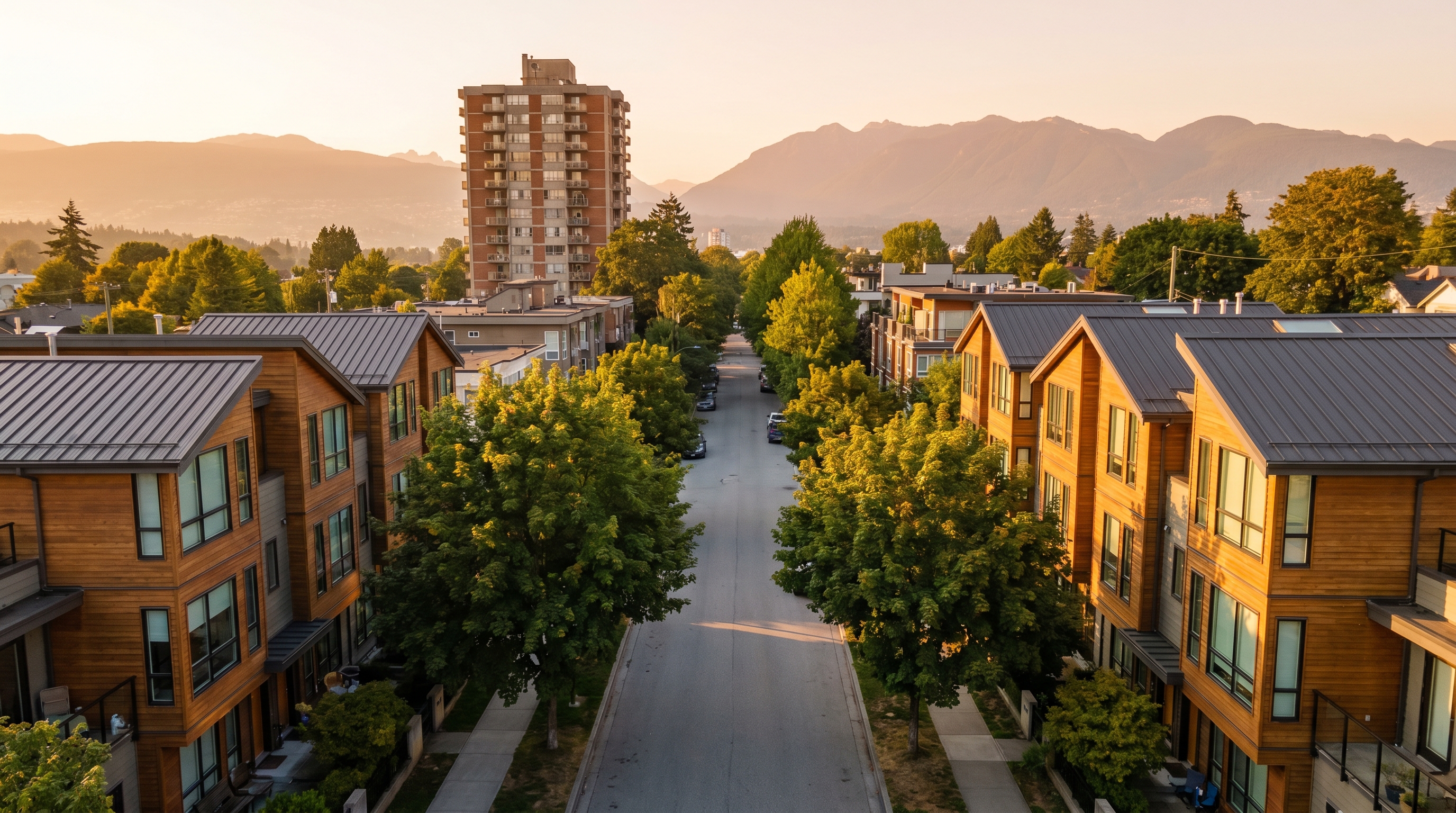
Multiplex Resale Value vs Condos in Vancouver
How brand-new Vancouver multiplex units are pricing on resale compared to condos in 2026 — what holds value, what doesn't, and what it means for buyers.
By MultiLiving Editorial · May 2, 2026
If you're shopping for a brand-new multiplex unit in Vancouver, the question we hear most often isn't "how much is it?" — it's "will it hold its value?" Fair question. The multiplex category is barely two years old in this city, so there isn't a 20-year track record to look at. But the early data is starting to come in, and the comparison most buyers care about is the obvious one: how does a brand-new fourplex unit hold up against a brand-new condo of similar size?
This is our best read of where things stand in spring 2026, what's actually changing hands on resale, and what we'd watch for if we were buying today.
The resale market for multiplex units is still small — but it exists
Multiplex unit listings on the resale market are a small slice of the overall picture in 2026. Most of what's trading hands is still brand-new pre-sale or first-completion stock. According to the Real Estate Board of Greater Vancouver's March 2026 report, the townhouse benchmark sat at $1,047,100. Treat that as the closest available stand-in rather than a multiplex figure: the board publishes benchmarks for detached homes, townhouses, and apartments only, and does not publish one for multiplexes. (REBGV Market Watch)
That bundling tells you something useful: the early multiplex resales are pricing in the same neighbourhood as new townhouses, which is itself a signal. They're not behaving like condos.
Condos vs multiplex units: how they actually behave
Vancouver's condo market in 2026 is mixed. The benchmark apartment price was $762,000 in March 2026, roughly flat year-over-year. Strata insurance pressure, aging buildings, and a lot of new supply hitting downtown keep things competitive. By contrast, the new multiplex stock is concentrated in lower-density East Side and Burnaby neighbourhoods — places where buyers historically had to choose between an aging detached or a high-rise condo, and where neither felt right.
Three things make the multiplex resale story different from a condo's:
- Smaller buildings (3–6 units) mean fewer special levies, lower strata fees, and far less surprise risk.
- Each unit is more like a townhouse — usually two storeys, often with private outdoor space — which appeals to families and downsizers, not just first-time buyers.
- Brand-new construction quality, with the BC 2-5-10 Home Warranty in place, gives early resale buyers confidence that newer condos have lost as buyers have learned how complex high-rise envelopes can be.
What we're seeing on early resales
In our work with buyers across Vancouver and Burnaby in early 2026, the small handful of resale multiplex units we've tracked have been moving for prices very close to their original purchase. That's an unusually strong showing in a market where condo resale often involves a discount to original purchase price two to three years post-completion. Note: this is anecdotal across a small sample — we'd treat it as encouraging, not as a guarantee.
Why might multiplex units be holding up better? A few reasons stand out:
- Scarcity. There are still very few of them on the resale market — buyers who want one have limited choices.
- The buyer profile is family-driven, which tends to be less price-sensitive than a first-time investor.
- The neighbourhoods (Mount Pleasant, Hastings-Sunrise, Renfrew, Brentwood, Burnaby Heights) are all places where land values have stayed strong.
What we'd watch over the next 24 months
There are a few things we're keeping an eye on. The first is what happens when the second wave of multiplex completions hits in late 2026 and 2027 — does the larger supply soften prices, or does demand keep up? The second is whether banks treat multiplex strata units differently for appraisal purposes (we've already seen some appraisers comp them against townhouses, which is the right call).
The third — and most interesting — is whether multigenerational buyers, who increasingly anchor this category, change the resale dynamic. When a family buys two units side by side and treats the building as one home, those units often don't come back to market for a generation. That kind of long-hold buyer is a quiet stabilizer for the whole category.
So what should a buyer take away from all this?
If you're choosing between a brand-new multiplex unit and a brand-new condo at a similar price, the resale picture is one more reason to take the multiplex seriously. You're getting more square footage, often private outdoor space, a smaller strata, and — based on what we've seen so far — pricing that's holding up at least as well as comparable condos and possibly better.
The honest caveat: the data set is still small. If holding value matters to you, focus on the things you can control today — buying in a strong neighbourhood, choosing a developer with a track record (you can browse who's built what on our developers page), and getting a unit that genuinely suits how you'll live, not one that's a stretch. The best resale insurance is buying something a future buyer will also want.
Common questions
Do multiplex units hold value better than condos?
In the small set of 2026 resales we've seen, brand-new multiplex units in Vancouver have generally held closer to their purchase price than comparable condos. The category is too young for definitive numbers, but the early signal is positive — and consistent with what's happened with townhouses historically.
Why do condos sometimes lose value on resale?
Condo resale values are influenced by strata fee inflation, special levies, building envelope issues in older stock, and competition from new high-rise supply. Newer multiplex buildings have smaller stratas, simpler envelopes, and less new-build competition in the same micro-market.
Should I buy a multiplex hoping for appreciation?
Buy because the home suits how you actually want to live. Appreciation is a bonus, not a strategy — especially in a category this new. The resale picture is encouraging, but the math should still work for you on day one.
What this comes down to
Vancouver's multiplex resale market is small, young, and so far holding up well. Brand-new units have been pricing closer to their purchase than comparable condos, helped by scarcity, family-buyer demographics, and strong neighbourhoods. Long term, the bigger question is what happens as supply grows — but if you're buying for the next decade, the early signs are good.
Curious what's actually selling? Browse our curated listings of brand-new multiplex homes across Vancouver and Burnaby on the properties page, or talk to a real person on our team who knows the buildings, the developers, and what's coming next.