Buying a Multiplex With Self-Employed Income (BC)
How self-employed buyers actually get approved for a Vancouver multiplex mortgage in 2026 — what lenders need, common pitfalls, and BC-specific tips.
By MultiLiving Editorial · May 10, 2026
If you're self-employed in BC and shopping for a multiplex unit, you've probably already had the conversation with a friend who told you mortgages are a nightmare. The truth is messier — they're harder than for a salaried employee, but they're absolutely doable. We work with self-employed buyers regularly. Here's what actually matters in 2026.
The basic problem (and why it exists)
Lenders qualify your mortgage based on income they can verify. For a salaried employee, this is easy: T4 slips, two recent paystubs, an employer letter. For self-employed buyers, the income on your tax return is intentionally minimized through legitimate business expenses. The bank looks at your line 150 — your taxable income — and that often understates what you actually take home.
This isn't a flaw in the system; it's how it's designed to work. The fix is documentation, not deception.
What BC lenders actually want from self-employed buyers
In 2026, the standard self-employed mortgage application package looks like this:
- Two years of personal tax returns (T1 General) and Notices of Assessment (NOAs).
- Two years of business financials — usually statement of business activities or corporate financial statements if incorporated.
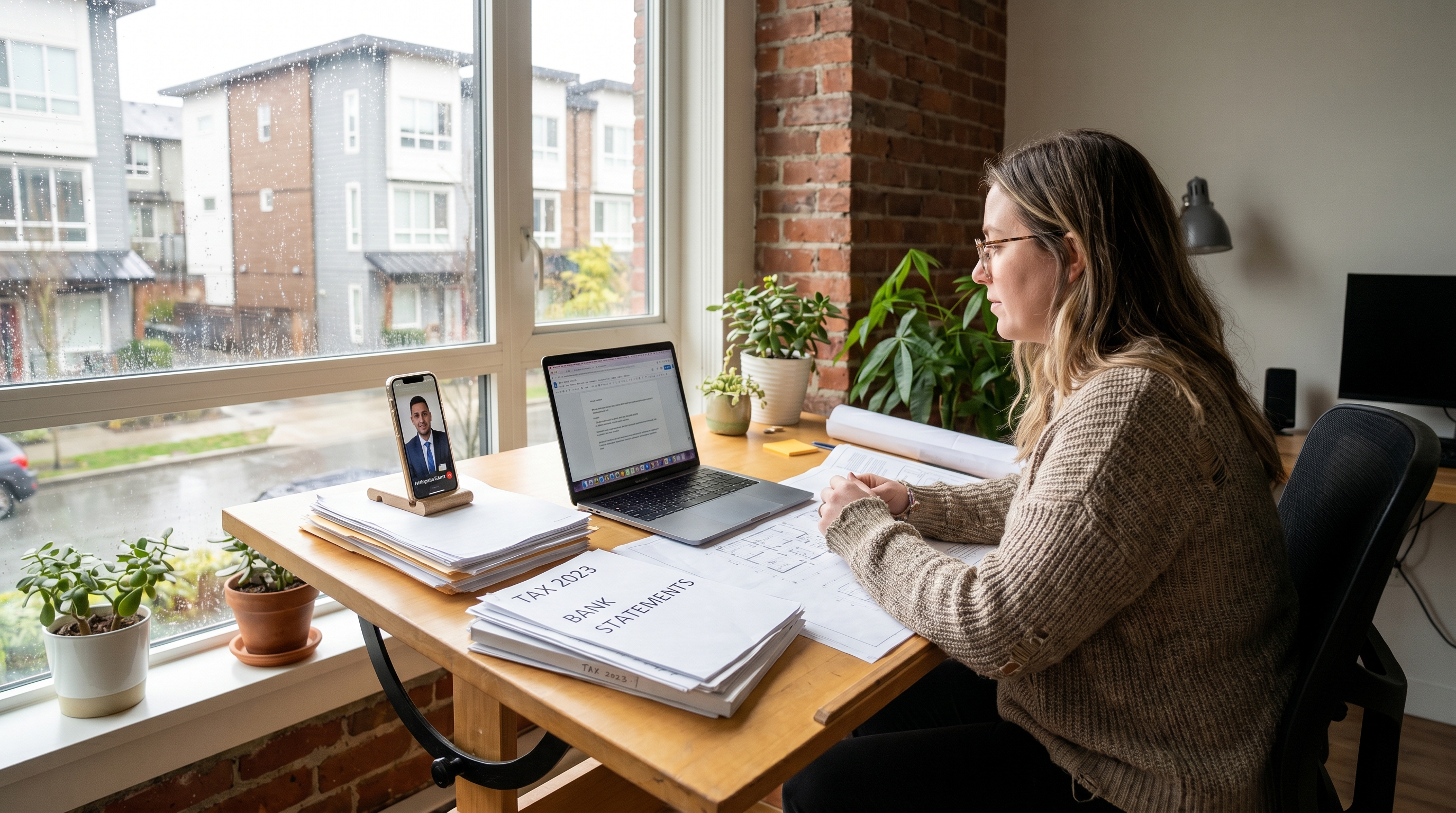
- Six months of business bank statements showing real revenue.
- Proof of business existence — registration, GST/HST returns, business licence.
- Personal bank statements (3 months).
If you're incorporated, lenders look at your salary plus dividends, not company revenue. If you're a sole proprietor, they typically use the average of your last two years' net business income, plus selective add-backs (CCA, business-use-of-home, sometimes vehicle).
Stated-income programs and the bigger lenders
BC's big banks (RBC, TD, BMO, CIBC, Scotiabank) all have self-employed programs. The most common is some version of "stated income" or "alt-doc" — they let you state a reasonable income number for self-employed borrowers, supported by bank statements rather than line 150 alone. Down payment requirements are usually higher (often 10–20% minimum), and rates are sometimes a fraction of a percent above prime-A.
CMHC has a Self-Employed program that lets verified business owners qualify with as little as 5–10% down on properties up to a certain price. (CMHC self-employed mortgage insurance) — for most multiplex purchases in Vancouver, this is the relevant program if you have a smaller down payment.
Why a mortgage broker matters more for self-employed buyers
If you're salaried, going straight to your bank usually works fine. If you're self-employed, a good mortgage broker is worth their fee (which is often paid by the lender, so free to you). Brokers know which lenders are actively writing self-employed business this month and which ones have tightened their guidelines.
Some BC monoline lenders (Equitable Bank, MCAP, First National) have flexible self-employed underwriting. Some credit unions (Vancity, Coast Capital, Prospera) actively pursue self-employed business. Your broker knows where to send the file.
The mistakes self-employed buyers make
Common patterns we see hurt approvals:
- Filing taxes very late or having outstanding balances. CRA arrears can sink a mortgage application.
- A big income drop in the most recent year. Lenders take the lower of the two years if there's a downward trend.
- Personal use of business credit cards — makes underwriting messier.
- Co-mingling business and personal accounts. Get a separate business chequing account, even as a sole prop.
- Applying just before tax filing season with last year's NOA still pending.
Down payment, deposit, and timing
Self-employed buyers should plan a longer runway than salaried ones. Three months minimum from "I want to buy" to "I'm ready to write an offer." That's because you may need:
- A clean six months of business banking that lines up with your stated income.
- Time to file taxes if you've been slow.
- A pre-approval, which for self-employed buyers takes longer (often 2–4 weeks vs days for salaried).
- A larger down payment buffer in case the bank wants 10–20% rather than 5%.
Common questions
Can I get a Vancouver multiplex mortgage with one year of self-employment?
Sometimes. Most lenders prefer two years; some monoline lenders accept one year if the previous job was in the same field. Expect a higher down payment requirement (15–20%) and a slightly higher rate.
Do dividends count as income for mortgage qualification?
Yes, if they've been consistent for two years. Most lenders treat T5 dividend income similarly to salary, with proper documentation. Some haircut applies (often 80–90% of dividend income is counted).
Should I pay myself more salary to qualify for a bigger mortgage?
Talk to your accountant. Increasing your salary increases your personal tax burden but improves mortgage eligibility. Some incorporated buyers do this for the year before they buy, then return to a more tax-efficient mix afterward.
What this comes down to
Self-employed mortgages in BC are absolutely possible — the key is documentation, a good broker, and a slightly longer runway. Don't be the buyer who falls in love with a unit and then realizes they need three more months of bank statements before the bank will move.
Self-employed and curious which multiplex buildings are within reach? Browse our curated listings of brand-new multiplex homes across Vancouver and Burnaby on the properties page, or talk to a real person on our team who knows the buildings, the developers, and what's coming next.