Buying a Multiplex as a Newcomer to Canada (2026)
New to Canada? How eligible newcomers buy a brand-new multiplex home in Greater Vancouver: who can buy, newcomer mortgages, down payment and credit.
By MultiLiving Editorial · July 23, 2026
Questions about this guide: Gary Paul, REALTOR®, Personal Real Estate Corporation, Grand Central Realty, 778-828-7476
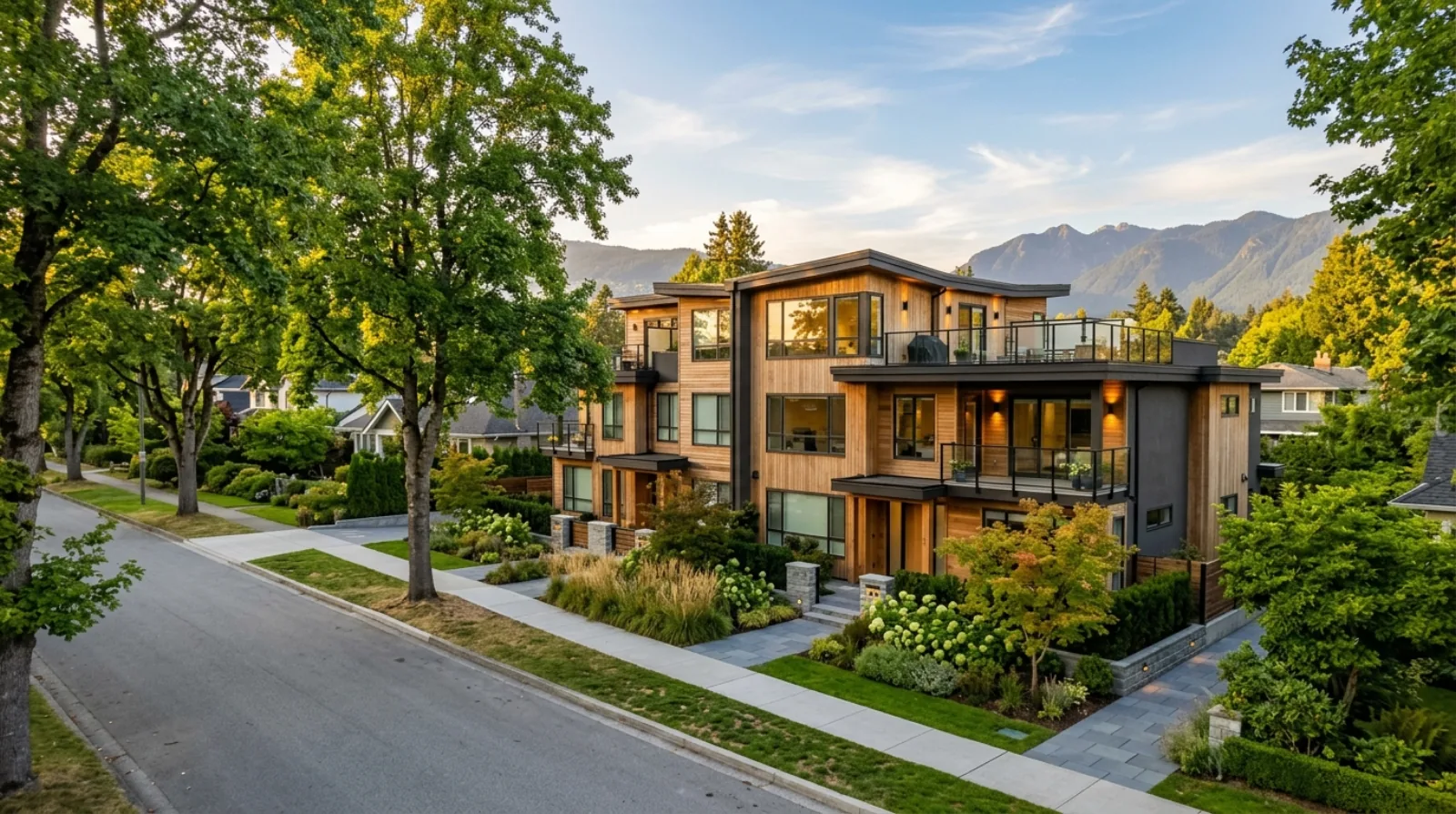
Moving to a new country is a big change, and finding a home in it is one of the biggest parts. If you are new to Canada and thinking about buying a brand-new multiplex home in Greater Vancouver, this guide is for you. A multiplex simply means a home that shares a building with a few others — a duplex (two homes), a triplex (three), or a fourplex (four). Each one is its own titled home that you own and live in.
We wrote this for a specific reader: someone who is allowed to buy in Canada and wants to buy one home to live in. Maybe you just became a permanent resident. Maybe you are here on a work permit. Maybe your parents are joining you and you want everyone under one roof. The questions are usually the same: Am I allowed to buy? Can I get a mortgage without years of Canadian history? How much do I need saved? What are the steps?
This is general information, not legal, immigration, or financial advice. The rules below are real and current as of July 2026, but your own situation has details we cannot see. Before you sign anything, confirm your eligibility and your numbers with a mortgage broker, a real estate lawyer, and, if your status is temporary, an immigration professional.
One more thing before we start. There is a federal law, often called the "foreign buyer ban," that stops some non-Canadians from buying homes. We cover it below, but only the part that matters to you: whether you are allowed to buy. For the full breakdown of the law, see our separate post — Foreign Buyer Rules for Vancouver Multiplexes. This post is about the next step: how an eligible newcomer actually buys.
First question: are you allowed to buy?
This is the question that keeps newcomers up at night, so let's answer it plainly. The federal government has the Prohibition on the Purchase of Residential Property by Non-Canadians Act. It stops certain non-Canadians from buying most homes in bigger cities, and Greater Vancouver is one of those areas. But the law has a clear list of people it does not apply to. Two of those groups matter most here.
Permanent residents and Canadian citizens: you can buy
If you are a permanent resident of Canada, or a Canadian citizen, the ban does not apply to you at all. You buy a home the same way anyone else does. According to CMHC's page on the Act, the law applies only to people who are not Canadian citizens, not permanent residents, and not registered under the Indian Act. Being a new permanent resident makes no difference. There is no waiting period after you land. The day your PR status is confirmed, you can buy.
On a work permit? You may still be able to buy
This surprises a lot of people, so read it carefully. You do not need to be a permanent resident to buy. The government changed the rules on March 27, 2023 to make room for temporary residents who work here. Under the amended regulations (Canada Gazette), if you hold a work permit or are otherwise authorized to work in Canada, you are exempt from the ban as long as two things are true on the day you buy:
- Your work permit (or work authorization) has 183 days or more of validity remaining on the purchase date.
- You have not already bought more than one residential property.
The older, stricter conditions are gone. The same 2023 change repealed the old requirement to have filed taxes for several years and to have worked full-time first. So if you arrived on a work permit last year with well over six months left on it, you likely qualify. The 183-day test is measured from the day you buy, so timing matters if your permit is close to renewal.
International students: technically possible, rarely practical
There is an exemption for international students too, but it is narrow. It asks for full-time enrolment at a designated school, several years of Canadian tax filings, many days present in Canada, and it caps the price at $500,000 — which does not go far in Greater Vancouver. In our experience, almost no student uses it. If you are a student and serious about buying, the honest path is usually to wait for a work permit or permanent residency, or to buy with a co-owner who already qualifies. Confirm the current student conditions on the official regulations before you count on this route.
When does the ban end?
The ban was extended and now runs until January 1, 2027, per CMHC. Unless the government extends it again, the restriction is set to lift then. But here is the point we keep coming back to: if you are a permanent resident or an eligible work-permit holder, the end date does not really affect you. You can buy now. The ban is a wall built for other people, and you have a door through it.
Why a multiplex fits so many newcomer families
A lot of families who move to Canada want to live together, or at least close. Grandparents help with the kids. Adult children help their parents age comfortably. Everyone pools money to buy in a neighbourhood that a single household could not reach alone. A brand-new multiplex is built for exactly this.
Instead of one family stretching to buy a whole detached house, you buy one home inside a small building of two, three, or four homes. You get a real front door, your own floors, your own kitchen — a house feeling, not a condo hallway. And because these homes sit on quieter residential streets across Vancouver and Burnaby, you can often land near good schools and parks that would be far out of reach as a detached buyer.
If two generations are buying, you might even buy two homes in the same building — parents on the ground floor, the younger family above. That closeness, without being on top of each other, is the whole appeal.
Getting a mortgage as a newcomer
This is where new arrivals worry most, and the worry is bigger than it needs to be. Canadian lenders know newcomers are often reliable borrowers with steady jobs and real savings — they just lack a long Canadian paper trail yet. So there is a path built for you.
The CMHC Newcomers program
CMHC is a federal agency that insures mortgages so lenders will lend with a smaller down payment. It runs a program, CMHC Newcomers, made for people who recently arrived. According to the official CMHC Newcomers page, permanent residents get full access to CMHC's homeowner mortgage insurance, and non-permanent residents can qualify too if they are legally authorized to work in Canada, such as with a work permit.
A few things stand out for a newcomer buyer:
- There is no minimum time you must have lived in Canada. You do not have to wait a year or two.
- At least one borrower needs a credit score of 600 or higher, and CMHC says it may consider other ways to show you are creditworthy when your Canadian credit history is thin.
- If your Canadian record is short, CMHC says lenders can look at an international credit report or a reference letter from your bank back home.
How much down payment do you need?
For a single home to live in — which is what you are buying when you buy one unit of a multiplex — the CMHC Newcomers rules use the standard insured minimum: 5% of the first $500,000 of the home's value, then 10% of the part above $500,000, per the CMHC Newcomers fact sheet. So on an $800,000 home, that is 5% of $500,000 ($25,000) plus 10% of $300,000 ($30,000), or $55,000 down. Homes over $1.5 million cannot use insured financing and need at least 20% down.
A quick but important note. That 5%/10% insured path is for buying one home to live in — one titled unit inside the multiplex. It is not the same as buying an entire three- or four-unit multiplex building, which follows different rules. Everything in this post assumes you are buying a single home for your family to live in.
Do you need Canadian credit history?
It helps, but the door is not closed if you do not have much. As noted above, CMHC's program lets lenders accept an international credit report or a home-bank reference letter when your Canadian history is short. Still, the sooner you build Canadian credit, the better your rate. The fastest honest way:
- Get a Canadian chequing account and a credit card the week you arrive — even a small secured card if that is all you qualify for at first.
- Use the card and pay it off in full every month. On-time payments build your score.
- Keep your balance under a third of your credit limit.
- Give it 6 to 12 months of clean history before you apply. A short, spotless record beats a long, messy one.
What documents will a lender ask for?
Every lender differs, but a newcomer file usually includes:
- Proof of status — your PR card, or your work permit if you are a temporary resident.
- A job letter and recent pay stubs, or business records if you are self-employed.
- Bank statements showing your down payment, and where it came from. If family is gifting the money, expect to sign a gift letter.
- A Canadian credit report, or an international credit report and a bank reference letter if your Canadian history is short.
- Your Social Insurance Number and government photo ID.
Savings tools that can lower what you need
Once you are a Canadian resident for tax purposes, some savings tools open up. The one worth knowing early is the First Home Savings Account (FHSA). Per the Canada Revenue Agency, it lets a first-time buyer who is a resident of Canada for tax purposes, has a Social Insurance Number, and is 18 or older (and under 71) save toward a first home with tax advantages. It does not require citizenship. Confirm your eligibility on the CRA page first, because the first-time-buyer test looks back at whether you owned a home you lived in during the last several years.
We have written more on this — see our post on using an FHSA to buy a multiplex in BC. BC has other buyer tools too, such as the property transfer tax exemption for many first-time and newly-built buyers. Those depend on your own numbers and history, so treat them as "ask your lawyer" items.
The buying steps, start to finish
Here is the whole path, in the order it usually happens.
- Confirm you are eligible. PR or citizen: you are clear. Work permit: check the 183-day test and the one-property limit. If in doubt, ask a lawyer before you shop.
- Get pre-approved. Talk to a mortgage broker or bank early. They tell you the price range you can borrow and hold a rate. This is also where you learn if your credit file needs work first.
- Set your family budget. Add up the down payment plus closing costs (legal fees, taxes, moving). Decide who is on title if two generations are buying together.
- Shop for the home. Browse multiplex homes for sale, compare neighbourhoods, and visit in person. Think about daily life — the walk to school, the drive to work, where the grandparents will sit on a Sunday.
- Make an offer and sign. Your agent writes the offer. For a brand-new pre-sale home, you sign a contract and pay a deposit, then wait for the home to be finished.
- Finalize the mortgage and close. Your lender confirms the loan, your lawyer handles the title and the money, and you get the keys.
What this comes down to
- Permanent residents and Canadian citizens can buy a home in Greater Vancouver freely — the foreign buyer ban does not apply to you.
- Work-permit holders can often buy too, if 183+ days of validity remain on the permit at purchase and they have not already bought more than one home.
- The ban is set to end January 1, 2027, but eligible newcomers do not need to wait for that date.
- The CMHC Newcomers program lets you buy with as little as 5% down on the first $500,000, with no minimum time lived in Canada.
- You do not need a long Canadian credit history — an international credit report or a home-bank reference letter can stand in — but start building Canadian credit right away.
- A brand-new multiplex is a natural fit for families who want to live close, in a better neighbourhood than a detached house would allow.
Buying your first home in a new country is a real milestone, and you do not have to figure it out alone. If you want to talk through your eligibility, your budget, or which neighbourhoods fit your family, get in touch with our team, or start by browsing brand-new multiplex homes for sale. We are happy to walk you through it in plain language.
Frequently asked questions
Can a permanent resident buy a multiplex in Vancouver?
Yes. The federal foreign buyer ban does not apply to permanent residents or Canadian citizens, per CMHC. There is no waiting period after you land — you can buy the day your PR status is confirmed, the same way any Canadian buyer would.
Can I buy on a work permit?
Often, yes. Under the 2023 rule change, a work-permit holder is exempt from the ban if 183 days or more of validity remain on the permit at the time of purchase and they have not already bought more than one home. The old tax-filing and full-time-work conditions were removed.
How much down payment do newcomers need?
For one home to live in, the CMHC Newcomers program uses the standard insured minimum: 5% of the first $500,000 of the price, then 10% above that. On an $800,000 home, that is about $55,000. Homes over $1.5 million need at least 20% down.
Do I need Canadian credit history?
It helps, but a short history is not a dealbreaker. CMHC's newcomer program lets lenders accept an international credit report or a reference letter from your home-country bank. Still, open a Canadian credit card early and pay it in full each month — a clean record smooths approval and improves your rate.
What mortgage options exist for new immigrants?
The main one is the CMHC Newcomers program, which insures mortgages for permanent residents and for non-permanent residents legally authorized to work in Canada. It allows a low down payment and no minimum time lived in Canada. Banks and brokers add their own newcomer packages on top.
Is there a minimum time I must live in Canada before I can buy?
No. The CMHC Newcomers program states there is no minimum period of residency. Eligibility depends on your status — permanent resident, or a work-authorized temporary resident — and your finances, not on how long you have been in the country.
When does the foreign buyer ban end?
The ban was extended to January 1, 2027, according to CMHC. Unless the government extends it again, the restriction is set to lift then. But permanent residents and eligible work-permit holders can buy now, so the end date usually does not affect newcomer buyers.
Can international students buy a multiplex home?
Technically possible, rarely practical. The student exemption requires full-time enrolment, several years of Canadian tax filings, many days present in Canada, and caps the price at $500,000 — which does not stretch far here. Most students wait for a work permit or PR, or buy with a qualifying co-owner.
Can my parents and I buy together as a newcomer family?
Yes, and it is common. Two generations can pool their money and both go on title, as long as each buyer is eligible. Pooling lets you reach a better neighbourhood together than either household could alone. Get legal advice on how to share ownership.
What is the difference between buying one multiplex unit and a whole multiplex building?
Buying one unit means you own a single titled home inside a small building — that uses the standard insured mortgage rules in this post. Buying the entire three- or four-unit building follows different rules. This guide is about buying one home to live in.
Can I use money from abroad for my down payment?
Yes, but keep clear records. Lenders and lawyers must confirm where your down payment came from, so document the transfer from your overseas account. If a family member is gifting the money, you will usually sign a gift letter saying it need not be repaid.
Can I open an FHSA as a newcomer?
If you are a resident of Canada for tax purposes, have a Social Insurance Number, are 18 or older (and under 71), and are a first-time buyer, you can open a First Home Savings Account, per the CRA. It does not require citizenship. Confirm your eligibility on the CRA page first.
What documents will a lender ask a newcomer for?
Usually: proof of status (PR card or work permit), a job letter and pay stubs, bank statements showing your down payment and its source, a credit report (Canadian, or international plus a bank reference letter), and your SIN and photo ID. Self-employed buyers provide business records.
Does buying a pre-sale home give newcomers more time?
Yes, and that can be an advantage. A pre-sale home is bought before it is finished, so months pass between signing and moving in. Newcomers can use that time to build Canadian credit and let their down payment settle before the mortgage is finalized.
Should I get advice before I buy?
Yes. This post is general information, not legal, immigration, or financial advice. Confirm your eligibility with a mortgage broker and a real estate lawyer, and if your status is temporary, an immigration professional. Getting your details checked early prevents surprises at closing.