Multiplex Categories
A visual guide to the most common multiplex configurations permitted under BC's SSMUH zoning — with architectural diagrams, realistic unit sizes, and what to expect as a buyer.
Key Topics
Side-by-Side Duplex
Two units sharing a party wall, each with its own entrance. The simplest strata — just two owners — making it the ideal entry point for first-time multiplex buyers.
Front-to-Back Duplex
One street-facing unit with one rear unit accessing the lane, with private garden space between. An iconic Vancouver layout that maximizes lot depth on narrower urban lots.
Triplex (Vertical Stack)
Three units stacked floor-by-floor. The classic house-hacking format — owner occupies one level while two rental units offset the mortgage. Common new-build format under SSMUH zoning.
Fourplex (Side-by-Side)
Four townhouse-style units with individual entrances. Preferred by BC’s pre-approved designs because side-by-side is simpler to build than stacked. Permitted on all lots over 280 m².
Sixplex
Six units, often in two buildings (front and rear) with shared courtyard. Only permitted on lots over 557 m² or within 400m of frequent transit. Maximum density under SSMUH zoning.
House + Laneway / Suite
A primary house with a secondary suite (basement) and/or a detached laneway house at the rear. The gentlest form of density — retains the single-family character of the streetscape.
Architectural Diagrams
6 Multiplex Types Under BC's SSMUH Zoning
These are the housing forms now permitted on most residential lots across BC. Unit sizes are based on a standard 33×122 ft Vancouver lot at typical FSR.
BC SSMUH Zoning Quick Reference (Bill 44)
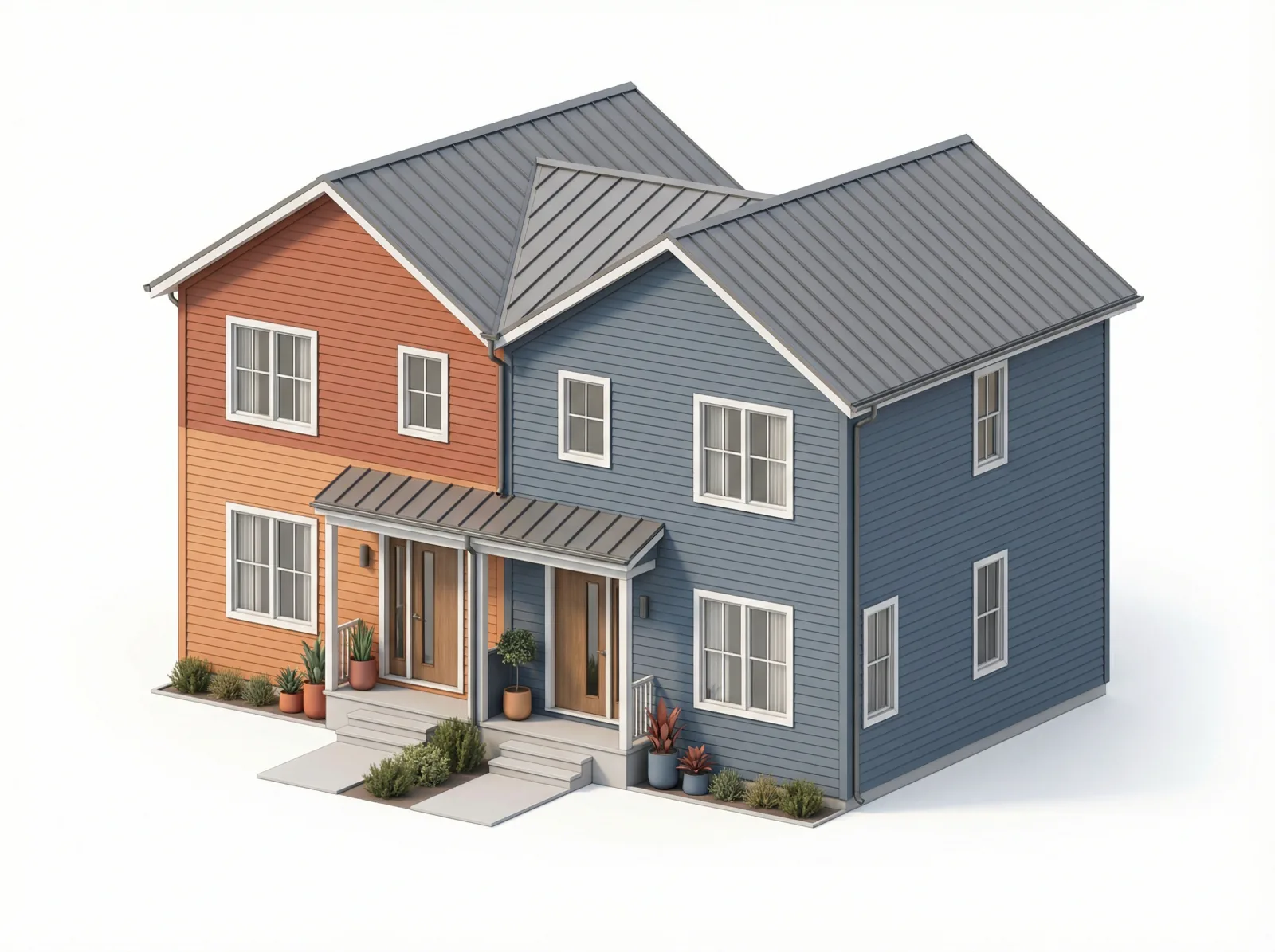
Side-by-Side Duplex
Two mirrored units sharing a party wall
Simplest strata (2 owners). Most requirements waivable by agreement. Best entry point for first-time multiplex buyers.
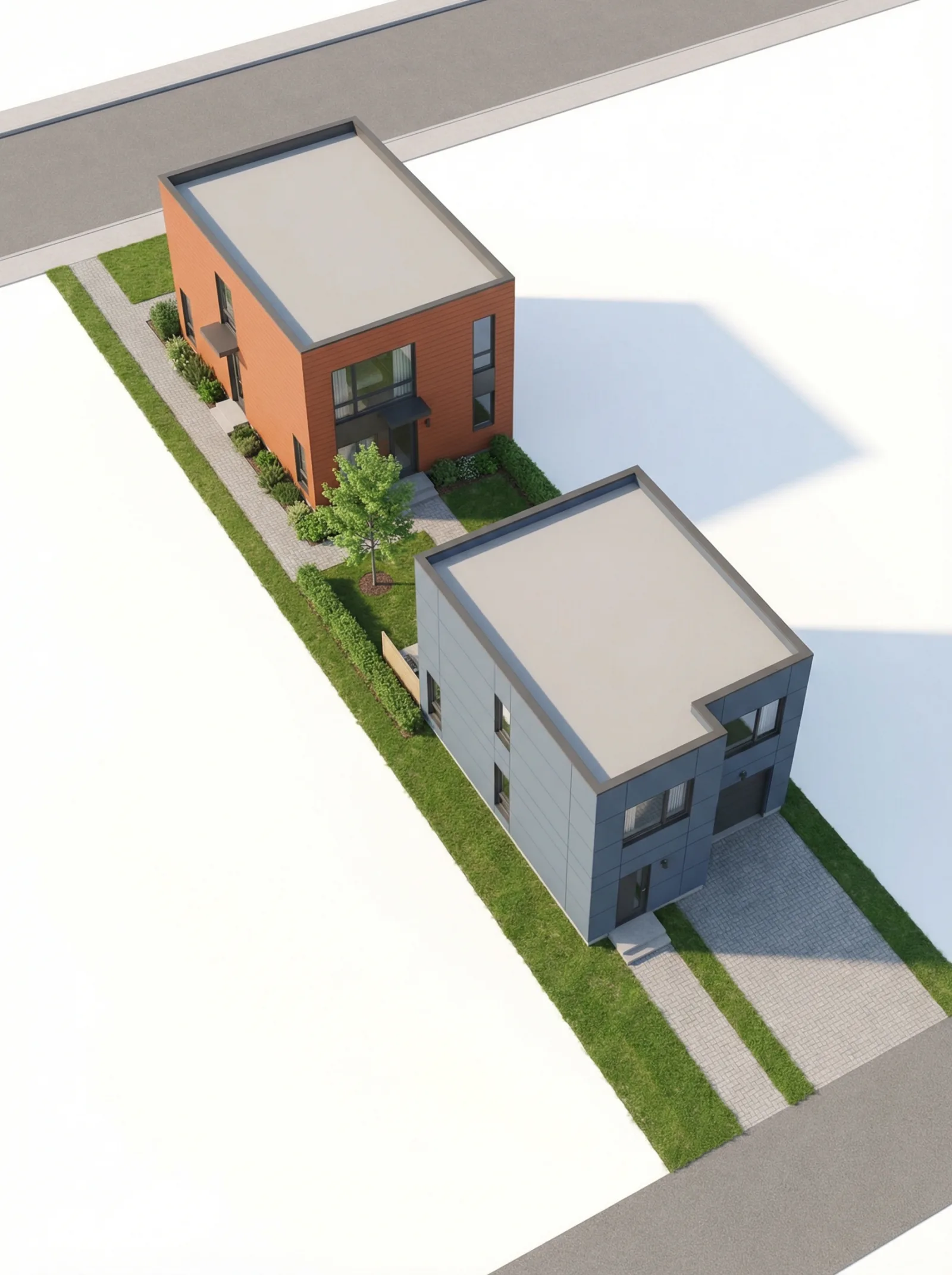
Front-to-Back Duplex
Street unit + rear unit with private garden
Classic Vancouver layout. Maximizes lot depth on narrow urban lots. Rear unit accesses lane; front unit faces street.
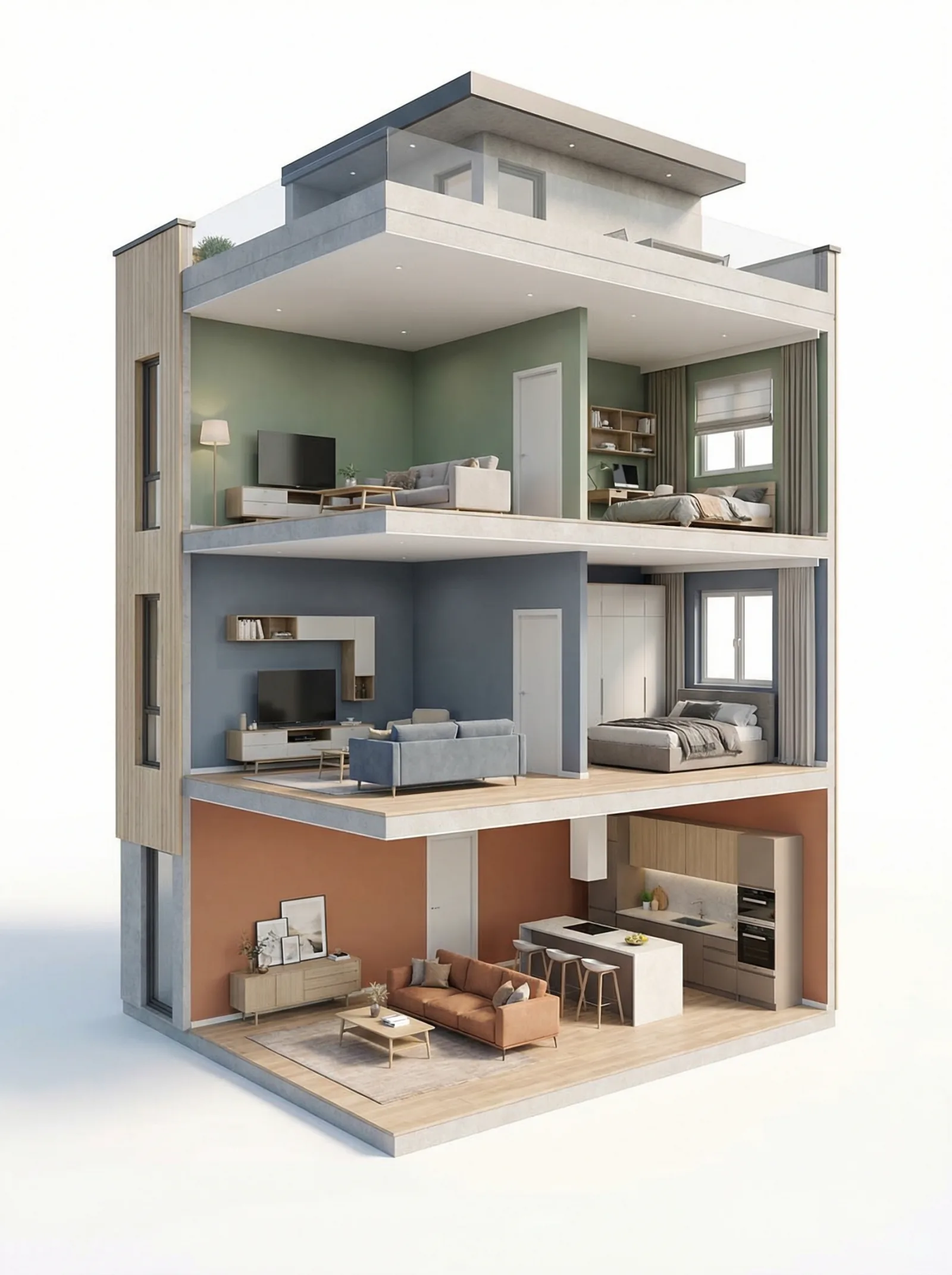
Triplex (Vertical Stack)
Three units stacked floor-by-floor
House-hacking favourite. Owner lives on one level, rents two. Moderate strata with 3 owners — still simple governance.
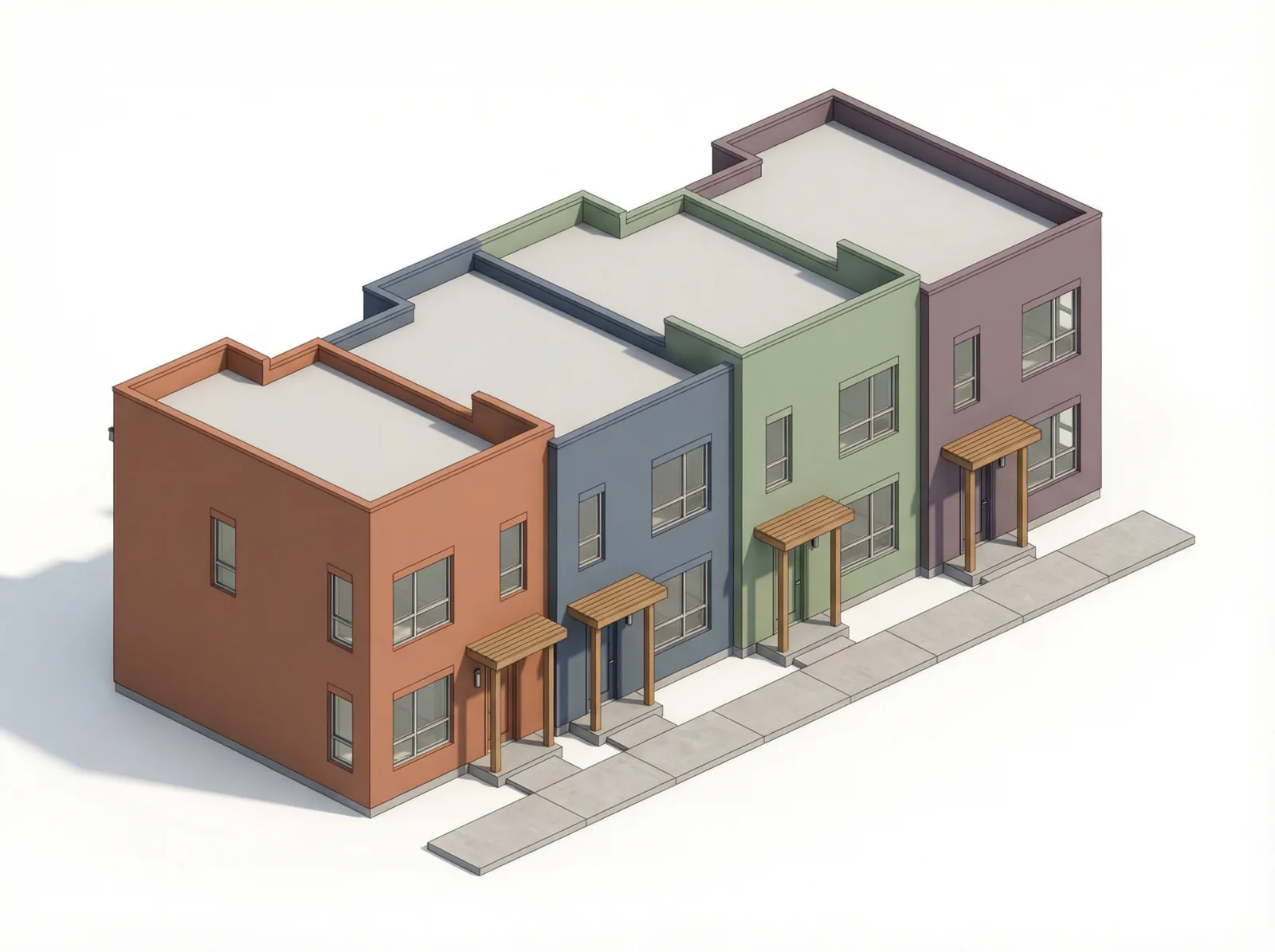
Fourplex (Side-by-Side)
Four townhouse-style units with own entrances
BC's pre-approved designs favour this layout. Side-by-side is simpler to build than stacked. Permitted on all lots over 280 m².
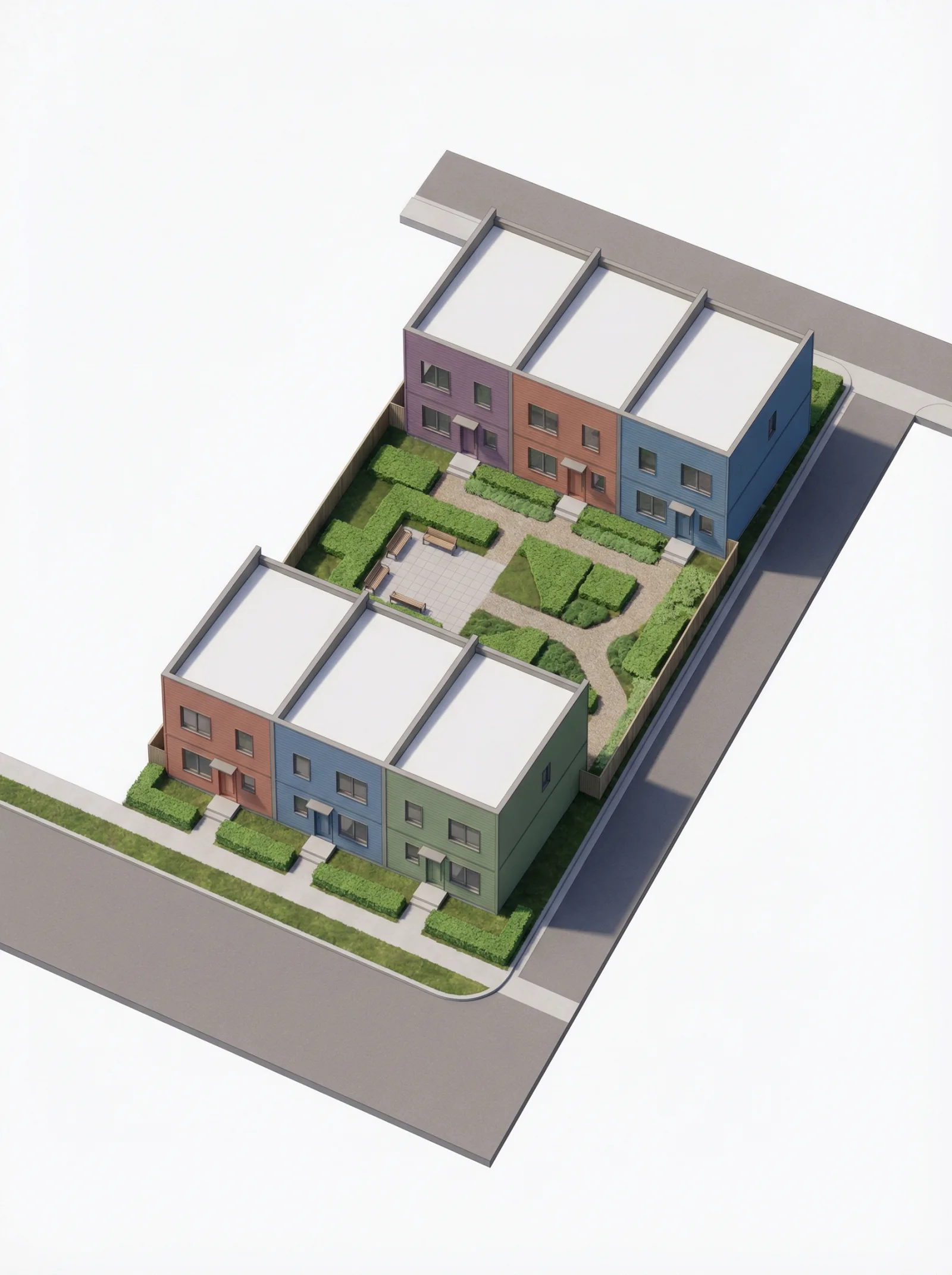
Sixplex
Six units in front + rear buildings with courtyard
Maximum SSMUH density. Requires lots over 557 m² or proximity to frequent transit. Formal strata governance needed.
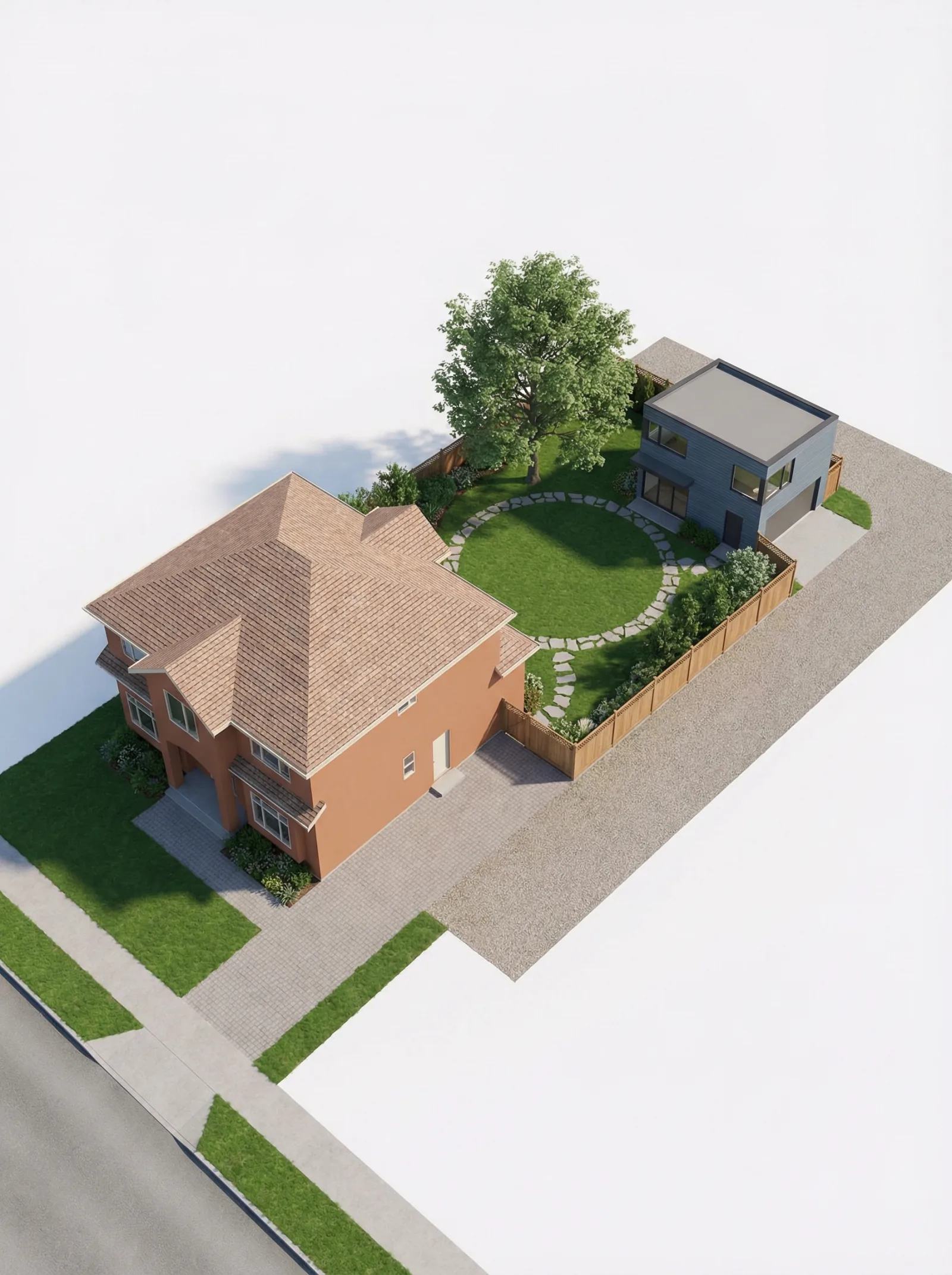
House + Laneway Unit
Main house with detached rear dwelling
Gentlest densification. Up to 0.25 FSR or 2,000 sq ft max for laneway unit. Preserves neighbourhood character.
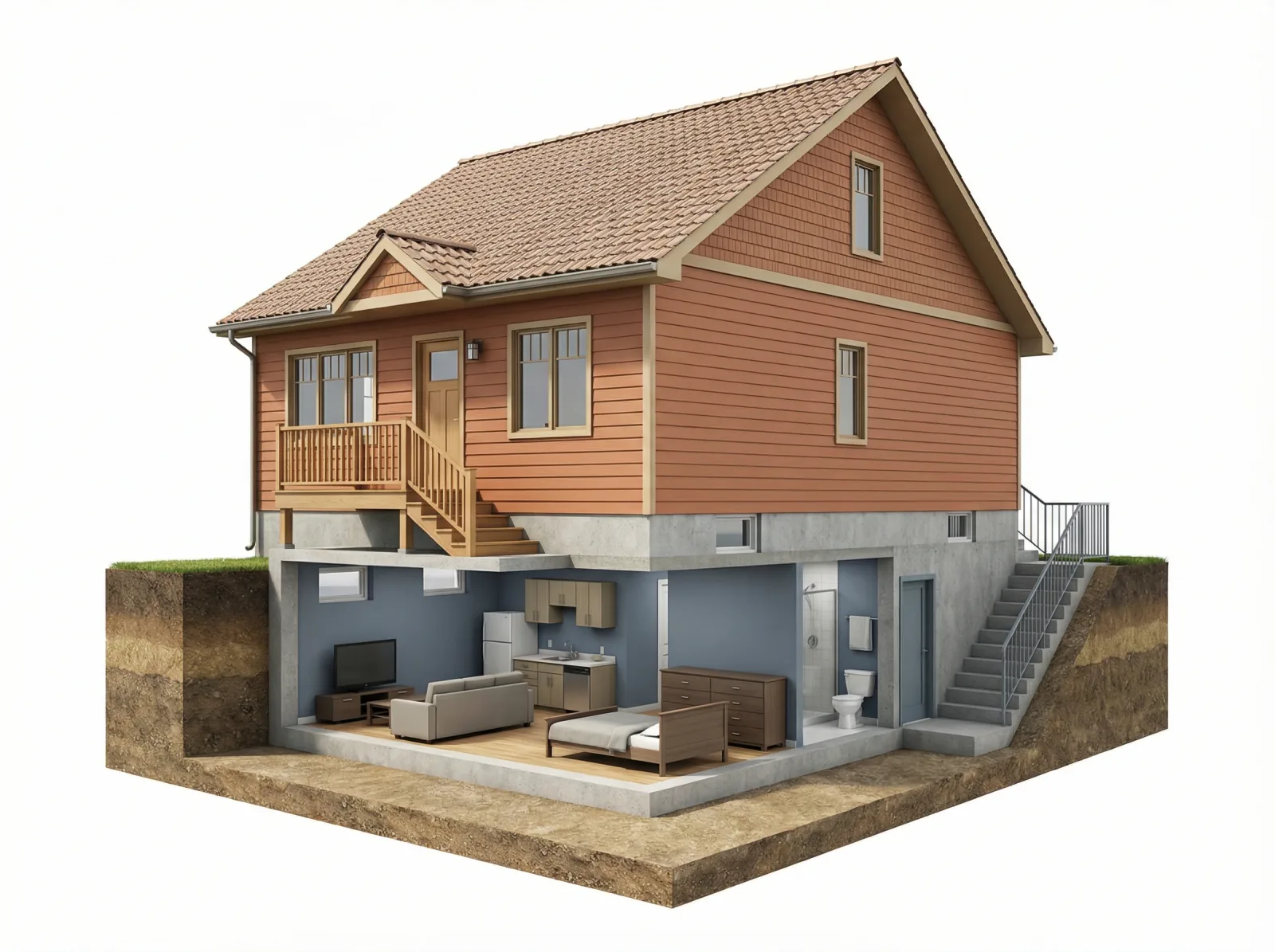
House + Secondary Suite
Main house with basement suite — the most common "invisible" multiplex
Already legal on nearly every residential lot in BC. No rezoning or strata plan required — just meets building code for fire separation, ceiling height, and egress windows.
At a Glance: All Types Compared
| Type | Units | Unit Size | Min Lot | Strata | Best For |
|---|---|---|---|---|---|
| Side-by-Side Duplex | 2 | 1,300-1,950 sf | Any residential | Simple | Families, first-timers |
| Front-to-Back Duplex | 2 | 1,300-1,820 sf | 33 ft × 100 ft+ | Simple | Urban lots, privacy |
| Triplex | 3 | 1,040-1,560 sf | ≤ 280 m² | Moderate | House-hackers |
| Fourplex | 4 | 1,040-1,560 sf | > 280 m² | Moderate | New builds, investors |
| Sixplex | 6 | 780-1,300 sf | > 557 m² / transit | Complex | Max density, investors |
| House + Laneway | 1+1 | 650-1,300 sf (lane) | Lane access required | None | Rental income, families |
| House + Suite | 1+1 | 400-800 sf (suite) | Any residential | None | Easiest entry, helpers |
Unit sizes based on standard 33×122 ft Vancouver lot. Actual sizes vary by lot dimensions, municipality, and FSR. Source: BC SSMUH Provincial Policy Manual, City of Vancouver R1-1 zoning.
Be first to see new projects coming soon
Get the free Buyer Guide and early access to new multiplex projects in Greater Vancouver — before they're publicly listed.
Key Takeaways
- Side-by-side duplexes offer the simplest ownership structure — just 2-unit strata — and the largest units (1,300-1,950 sq ft), making them ideal for families and first-time multiplex buyers.
- Triplexes are the sweet spot for house-hackers: live in one unit and rent two. At 1,040-1,560 sq ft per unit, each floor is a complete home.
- Fourplexes are the most common new-build format under SSMUH. BC’s pre-approved designs favour side-by-side over stacked configurations because they’re simpler to construct.
- Sixplexes are only permitted on larger lots (557+ m²) or near frequent transit. They deliver maximum density but require formal strata governance.
- Laneway houses and secondary suites are the gentlest densification tool — they add rental income while preserving neighbourhood character.
Frequently Asked Questions
What types of multiplexes does BC allow under SSMUH (Bill 44)?
BC mandates all municipalities with 5,000+ residents to permit 3-6 units on former single-family lots. Lots under 280 m² allow up to 3 units; over 280 m² allow 4; and over 280 m² near frequent transit allow 6.
Bill 44 (Housing Statutes Amendment Act, 2023) is deliberately form-agnostic — it doesn’t mandate specific building types, just a minimum number of housing units per lot. This lets homeowners and developers choose between duplexes, triplexes, fourplexes, townhouses, or any combination that fits. Local governments were required to update bylaws by June 30, 2024.
What are realistic unit sizes for a Vancouver fourplex?
On a standard 33×122 ft Vancouver lot at 1.0 FSR, a fourplex yields roughly 1,040-1,560 sq ft per unit. Three-bedroom units on wider lots can reach 1,450 sq ft.
Vancouver’s R1-1 zoning sets a base FSR of 0.70, with bonuses up to 1.00 for secured rental or below-market units. On a 4,026 sq ft lot, 1.0 FSR yields about 4,000 sq ft total — divided by 4 units, that’s roughly 1,000 sq ft each, minus walls and common areas. Burnaby’s R1 SSMUH zoning is more generous and can yield 1,800+ sq ft per unit for fourplexes on the same lot size.
What is the difference between a triplex and a stacked townhouse?
A triplex has three separate units under one roof, typically one per floor. A stacked townhouse is a marketing term for the same configuration but emphasizes the townhouse-style individual entrances.
Under BC building code, the distinction matters for fire separation and building classification. Three units side-by-side are classified differently than three stacked units. Side-by-side configurations are simpler from a code perspective — BC’s official pre-approved designs specifically note that side-by-side arrangements avoid the complexity of fire-rated floor assemblies between stacked units.
Do I need a strata plan for a duplex?
Yes, if units will be sold separately. For 2-3 unit stratas in BC, owners can waive many Strata Property Act requirements by unanimous agreement, dramatically reducing administrative burden.
A bare land strata or building strata plan must be filed with the Land Title Office if individual units will have separate titles. For 2-unit stratas, most governance requirements (AGMs, council elections, annual budgets) can be waived by mutual agreement. This makes duplexes the lowest-overhead multiplex type for owner-investors.
What’s the maximum size for a laneway house in Vancouver?
Vancouver now permits laneway houses up to 0.25 FSR or 2,000 sq ft (whichever is less), with a maximum height of 1.5 storeys (20 feet). On a standard lot, this works out to roughly 1,000 sq ft maximum.
The 0.25 FSR cap was increased from the previous 0.16 FSR limit (about 644 sq ft on a standard lot). Most laneway houses are built in the 600-900 sq ft range, with 1-2 bedrooms. Laneway houses must have rear lane access for vehicular entry and are limited to 1.5 storeys with the upper half-storey restricted to 60% of the lower floor area.
More from The Playbook
Why Multiplex
The case for ground-oriented living
ExploreBuying Guide
From discovery to closing
ExploreFinancing
Mortgages, programs & more
ExploreMarket Reports
Data, trends & analysis
ExploreLiving
What ownership looks like
ExploreMulti-Gen
Families buying together
ExploreWhere to Buy (Van)
Vancouver neighbourhood data
ExploreWhere to Buy (Burnaby)
Burnaby neighbourhood data
ExploreStrata Guide
Bylaws, governance & ownership
ExploreTalk to a Multiplex Expert
Whether you're buying, building, or exploring your options — our team can help you navigate the process with confidence.
Ready to find your multiplex?
Browse duplexes, triplexes, and fourplexes across Greater Vancouver and BC.